What is xmr3.com and is it a legitimate email sending platform?

Published 7 Jun 2025
Updated 25 Jul 2026
11 min read
Summarize with
Updated on 25 Jul 2026: We updated this guide with primary-source MessageReach evidence, current OpenText ownership signals, and a clearer xmr3.com verification workflow.
xmr3.com is a real, long-running sending domain used by MessageReach. Xpedite's own documentation identifies MessageReach as its service and describes xmr3.com as a typical From domain. EasyLink acquired Xpedite in 2010, OpenText acquired EasyLink in 2012, and xmr3.com currently uses OpenText DNS. Those facts establish the corporate connection, but they do not validate a specific sender or campaign.
The important distinction is between platform identity and sending quality. A domain that routes to an enterprise login page is not automatically a clean marketing platform. A platform can authenticate email from its own domain and still carry traffic that recipients, mailbox providers, blocklist operators, or compliance teams dislike.
- Short answer: xmr3.com is a legacy MessageReach sending domain with a supported OpenText connection, not an obvious public ESP with open signup.
- Main risk: a shared platform domain can make the customer unclear at first glance, while complaints and blocklist (blacklist) listings can affect pooled infrastructure.
- Best next step: verify the actual sending IPs, authentication results, abuse contacts, unsubscribe controls, and message headers before trusting any deliverability claim.
- Suped workflow: Suped's product helps teams compare DMARC, SPF, DKIM, and blocklist signals for sources that use or affect their domains.
The direct answer
xmr3.com is a legacy email sending domain associated with MessageReach. MessageReach pages identify the service with Xpedite, EasyLink acquired Xpedite in 2010, and OpenText acquired EasyLink in 2012. The domain now uses OpenText DNS. That chain explains why a visitor can reach an OpenText MyPortal login instead of a modern signup form.
That does not make it a suitable option for a typical marketing team. xmr3.com is not presented as a current public self-service ESP where any sender can create an account, verify a brand domain, and configure authentication. It looks like closed enterprise infrastructure where access depends on an existing commercial relationship. Ask the operator or reseller to prove that relationship.
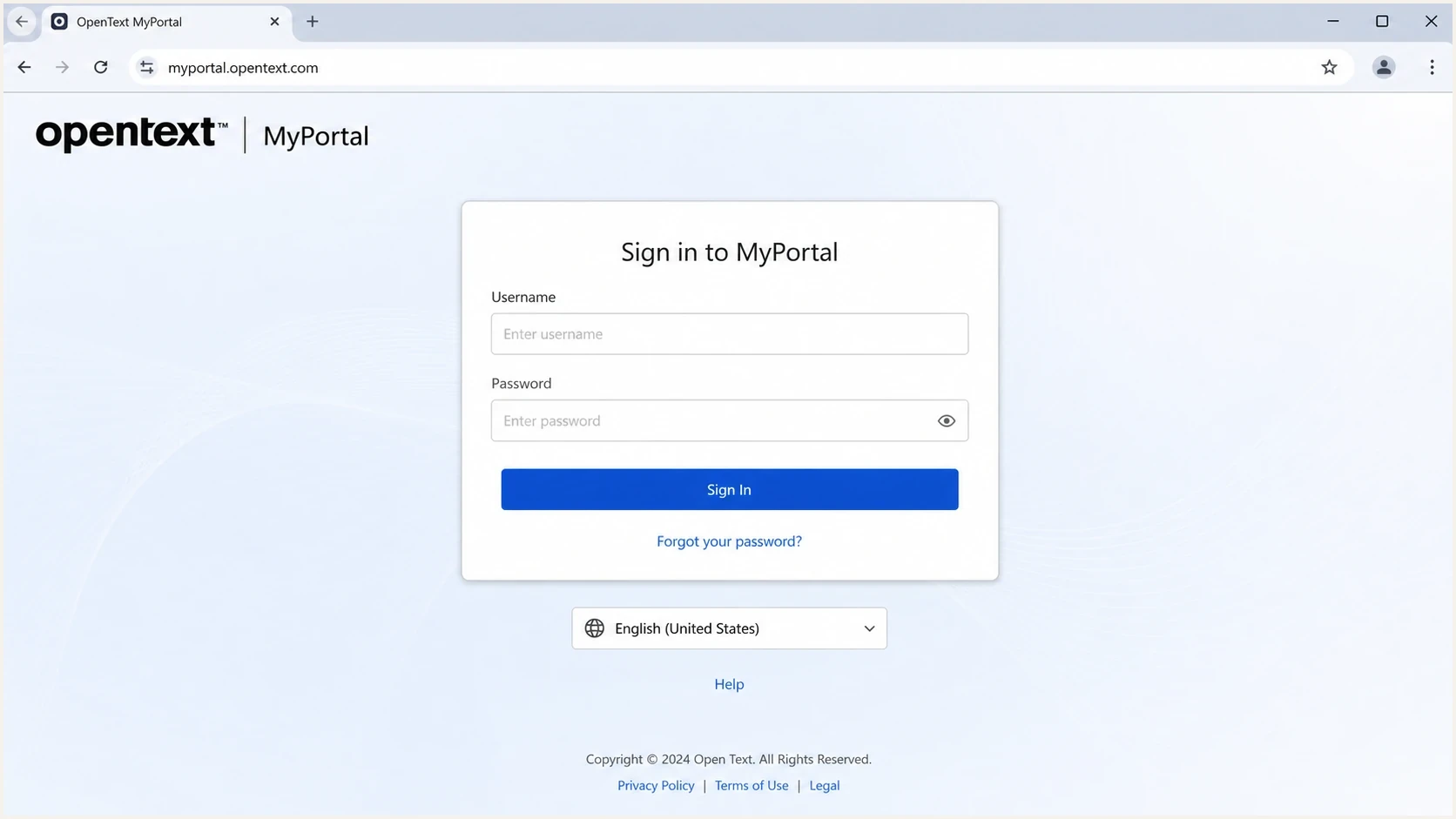
OpenText MyPortal login screen relevant to the xmr3.com MessageReach connection.
Do not confuse login access with sender trust
A real login page proves that a system exists. It does not prove that a specific campaign has permission, compliant list acquisition, clean engagement, proper suppression handling, or stable long-term reputation.
- Trust signal: the domain is connected to a documented legacy messaging stack.
- Risk signal: closed onboarding or use for high-complaint offers deserves extra scrutiny.
- Decision rule: judge the sender by headers, IP history, authentication, complaint patterns, consent evidence, and blocklist results.
What xmr3.com's own documentation confirms
MessageReach's own help pages describe a high-volume email service and identify it as a service of Xpedite. Its user guide says a typical MessageReach message uses an encoded address at xmr3.com in the From field. The encoded local part lets the platform associate a message with the sender, job, and recipient so it can process replies, removal requests, and bouncebacks.
Documented MessageReach address patterntext
From: Account Name <R-2-13608-9992171-2-1-US2-05ED7048@xmr3.com>
This is stronger evidence of a MessageReach origin than a login redirect alone. It still does not identify the customer in a way most recipients can decode, prove that the recipient opted in, or show that the current sending IP has a clean reputation.
- Service identity: an xmr3.com From address matches MessageReach's documented sending model.
- Tracking function: the encoded address can support internal job, recipient, reply, and bounce handling.
- Proof limit: the address does not prove consent, current reputation, or an authorized reseller relationship.
- Practical check: use the full headers and message links to identify the sending IP and the business behind the campaign.
Why it can send without your domain
A platform does not need a customer's domain when it uses its own domain in the visible From address and authenticates that identity. If a message is genuinely From an xmr3.com address and the platform controls xmr3.com DNS, it can publish SPF, sign DKIM, and pass DMARC for xmr3.com without asking the customer to add DNS records.
That model shifts domain reputation away from the advertiser and onto the platform-owned sending domain. The sending IP remains visible in trusted Received headers, and its reputation still matters. A legitimate brand also loses direct authentication control and can inherit risk when it shares a domain or IP pool with other customers.
Brand-domain sending
- DNS control: the sender publishes SPF, DKIM, and DMARC on its own domain.
- Reputation owner: the sender earns or loses reputation under its own domain and IP choices.
- Audit path: DMARC aggregate reports show which vendors are sending for the domain.
- Best use: brands that want durable identity, controlled authentication, and clear accountability.
Shared-domain sending
- DNS control: the platform authenticates mail using a domain it owns.
- Reputation owner: many senders share the same domain reputation and sometimes the same IP pool.
- Audit path: the customer's DMARC reports often show nothing because its domain is not used.
- Best use: closed systems where the sender accepts platform-owned identity and shared risk.
Example of platform-owned authenticationtext
From: offers@xmr3.com
Return-Path: bounce-12345@xmr3.com
DKIM-Signature: d=xmr3.com; s=selector1; ...
Authentication-Results: mx.example;
  spf=pass smtp.mailfrom=xmr3.com;
  dkim=pass header.d=xmr3.com;
  dmarc=pass header.from=xmr3.com
If the visible From domain is xmr3.com, DMARC can pass for xmr3.com. If the visible From domain is a customer brand but only xmr3.com passes SPF or DKIM, DMARC for the brand will fail unless the platform authenticates an aligned customer-controlled domain.
Signals that change the risk level
Do not decide this from the domain alone. Inspect a real message, then compare the sending IP, authentication results, complaint history, and list practices. A sender claiming huge Gmail volume with uninterrupted delivery needs evidence, especially for payday lending or affiliate lead generation, where consent and complaint handling require close review.
|
|
|
|---|---|---|
OpenText DNS and login | Supported platform lineage | Verify the account contract |
No public self-service | Closed access | Ask who authorized access |
Shared From domain | Pooled identity | Check headers and links |
Payday offers | Higher consent scrutiny | Require opt-in proof |
Historical abuse reports | A lead, not a current verdict | Corroborate current IP data |
Compact risk signals to check before trusting xmr3.com traffic.
For domain and IP reputation work, ongoing blocklist monitoring matters more than a one-time lookup. A domain can look fine today and still become risky after a campaign shift, a new affiliate source, or a spike in low-quality traffic.
Blocklist checker
Check your domain or IP against 144 blocklists.







A blacklist (blocklist) result is not the full story, but it is a useful tripwire. Treat a listing as a prompt to check the exact IP and mail stream, identify the complaint source, and determine whether the platform isolates risky traffic from other senders.
How to verify a real xmr3.com message
The fastest way to answer the question for a specific email is to inspect the full message source. The visible From address is not enough. Read the trusted Received chain, SPF result, DKIM domain, DMARC result, bounce domain, Message-ID domain, unsubscribe headers, links, and sending IP. For a deeper walkthrough, use a structured email headers review process.
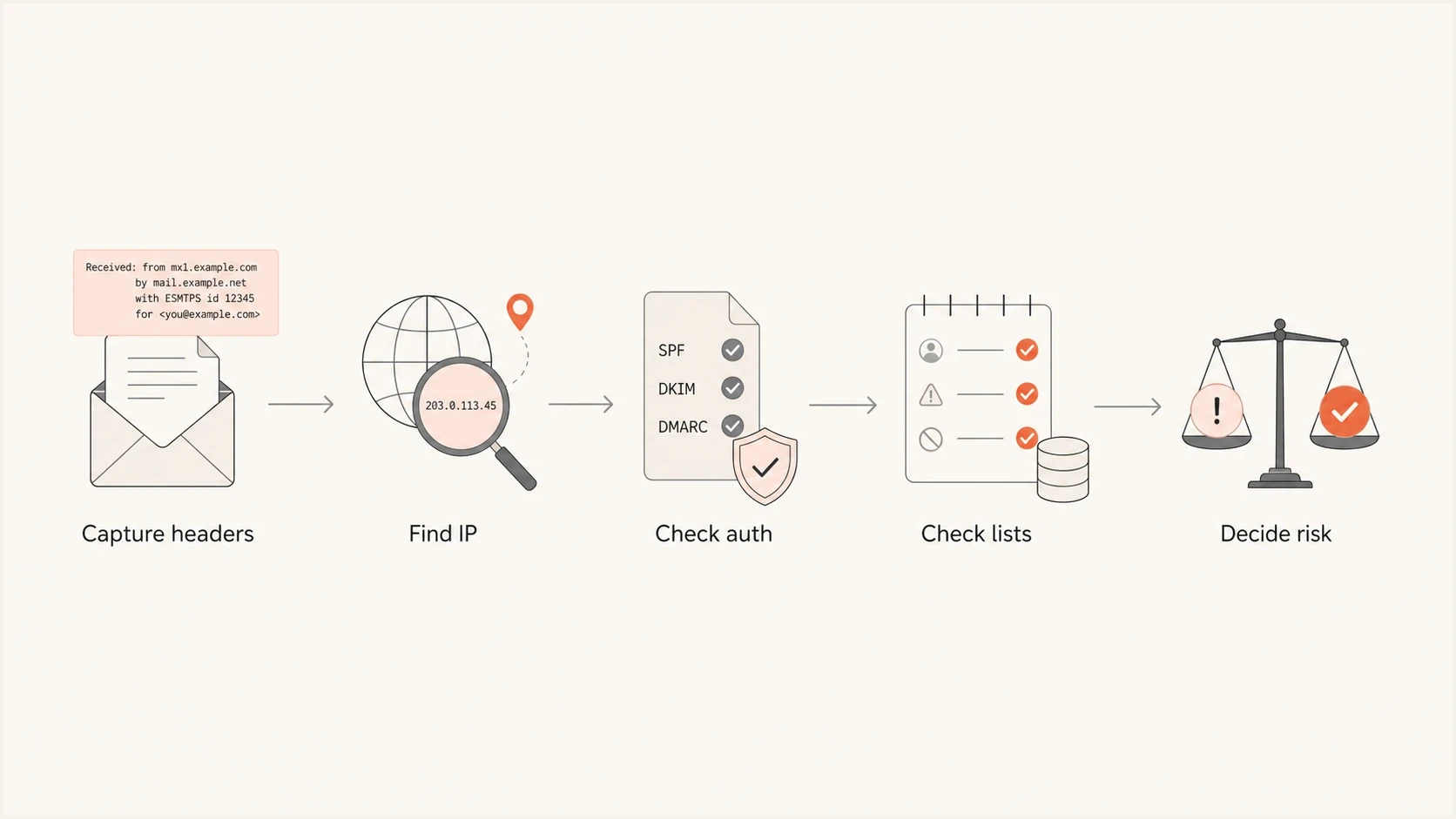
Flowchart for checking headers, IPs, authentication, listings, and sender risk.
Header fields to capturetext
Received: from mail123.xmr3.com (205.183.255.130)
Authentication-Results: mx.example;
  spf=pass smtp.mailfrom=xmr3.com;
  dkim=pass header.d=xmr3.com;
  dmarc=pass header.from=xmr3.com
List-Unsubscribe: <https://unsubscribe.example.com/u/abc>, <mailto:unsubscribe@example.com>
List-Unsubscribe-Post: List-Unsubscribe=One-Click
- Find the IP: start at the earliest trustworthy Received line added by the recipient's mailbox provider.
- Check authentication: confirm whether SPF, DKIM, and DMARC pass for xmr3.com or for the visible brand domain.
- Inspect identity: compare the From, Return-Path, DKIM domain, Message-ID domain, and message links to identify who takes responsibility.
- Check one-click unsubscribe: commercial bulk mail should include an HTTPS List-Unsubscribe URL and the List-Unsubscribe-Post field; a mailto address alone does not meet Gmail's one-click requirement.
- Test a sample: send a controlled message through an email tester and compare the result with mailbox headers.
- Document proof: keep headers, IPs, timestamps, creative, consent source, and suppression evidence for compliance review.
A passing DMARC result is necessary, not sufficient
DMARC tells you whether an authenticated domain aligns with the visible From domain. It does not tell you that the list was permission-based, that the affiliate disclosed the offer clearly, or that the sender will maintain good reputation during later campaigns.
Why high volume can still reach the inbox
Large volume alone does not force Gmail or Yahoo to block a sender. Mailbox providers consider authentication, historical reputation, recipient behavior, complaint rates, content patterns, bounce behavior, and infrastructure stability. A high-risk offer can keep reaching inboxes for a period when the stream has enough positive signals, even if the business model deserves scrutiny.
Short-term inbox placement is not the same as durable deliverability. Some senders rotate domains, IPs, affiliate sources, or creative when poor engagement and complaints catch up. Shared-domain sending can extend that cycle when other traffic supports the pooled reputation, but the receiving provider can still evaluate the sending IP and message-specific signals.
How to classify xmr3.com risk
This is a practical sender-risk scale based on visibility, authentication control, and current reputation evidence.
Low risk
Verified
Dedicated brand domain, clear vendor contract, clean IP history, and stable authentication.
Medium risk
Needs proof
Real platform connection, but shared identity or incomplete sender documentation.
High risk
Do not trust
Unverified access, a high-complaint offer, current abuse evidence, or weak suppression controls.
Treat an xmr3.com campaign as unverified, with medium-to-high risk, until the sender provides current headers, sending IPs, abuse handling details, permission evidence, and a clear explanation of its commercial relationship with the platform operator.
Where Suped fits
Suped's product helps when the question extends beyond one xmr3.com message to third parties that send on behalf of your domains. Teams can review DMARC sources, trace SPF and DKIM authorization, and compare authentication failures with blocklist signals in one workflow. If a campaign uses only xmr3.com and never uses your domain, it will not appear in your DMARC reports, so begin with the raw message headers.
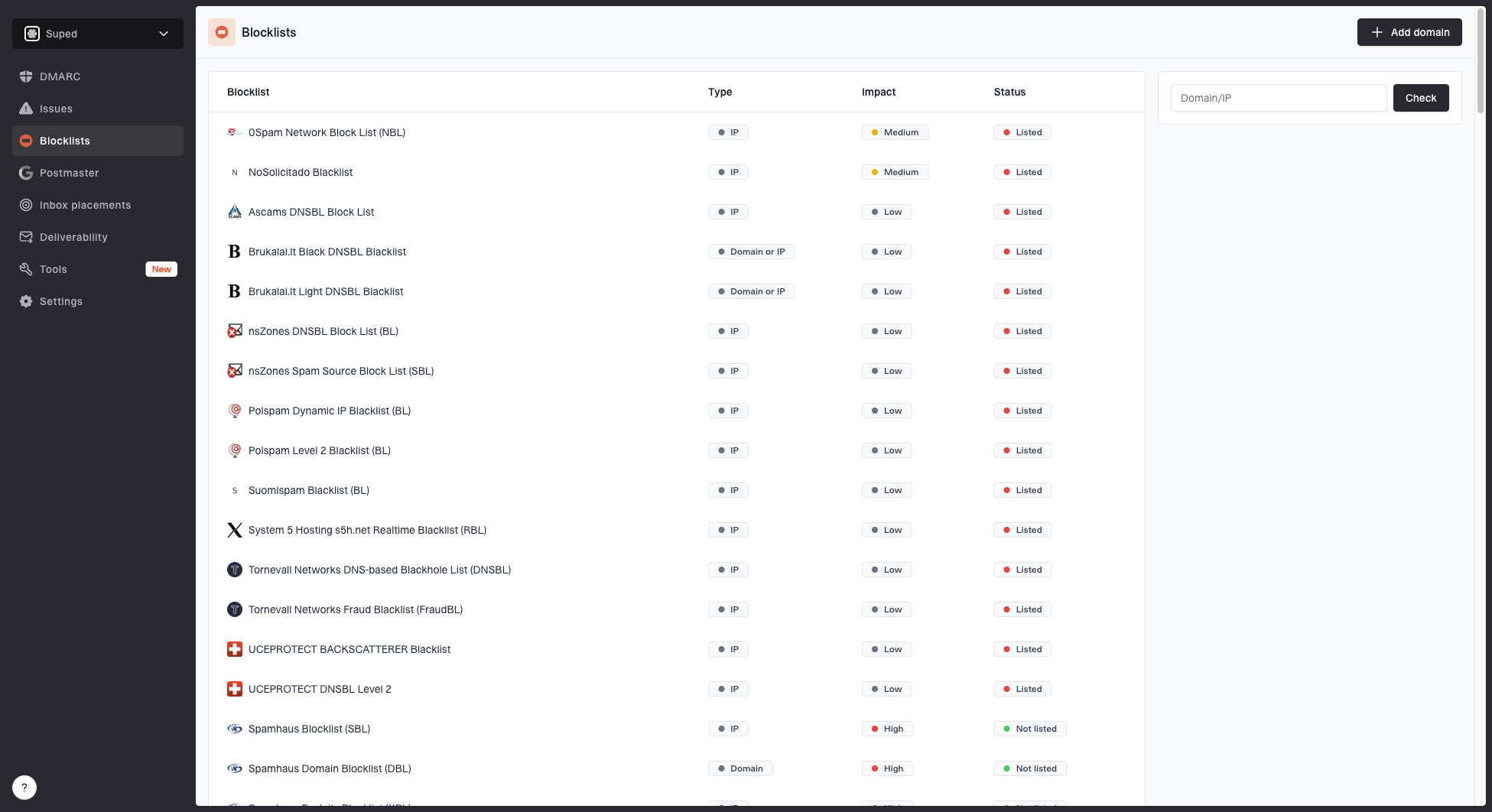
Blocklist monitoring page showing domain and IP checks across blocklists with importance and status
- Source review: Suped groups DMARC sources so teams can separate expected vendors from unfamiliar infrastructure.
- Alerts: teams can act when authentication failures or monitored reputation signals change.
- Hosted SPF: senders can manage authorized platforms and SPF flattening without constant DNS edits.
- Multi-tenancy: MSPs and agencies can monitor many client domains from one account structure.
When checking your own domain health instead of a single xmr3.com message, start with a domain health checker scan, then monitor DMARC reports so new or unexpected senders do not stay hidden.
What to ask before using it
If someone offers access to xmr3.com as a sending platform, pause and ask for proof. Who owns the account? Which IP ranges will send? Which domain appears in the visible From address? Who processes one-click unsubscribe requests? Who handles abuse complaints? What happens when one customer damages the shared pool?
Red flags that should stop onboarding
- No contract: the seller cannot prove a direct commercial relationship with the platform operator.
- No headers: the seller refuses to provide recent sample headers from real delivered mail.
- No suppression: the seller cannot explain one-click unsubscribes, complaint handling, bounces, and list hygiene.
- No isolation: the seller cannot say how high-complaint traffic is separated from other senders.
A legitimate sending partner should answer those questions directly. A claim that the platform delivers huge Gmail volume from a shared domain is not evidence of permission, stable reputation, or future inbox placement.
Views from the trenches
Best practices
Ask for full headers before judging any shared sending domain or claimed platform access.
Separate platform ownership checks from campaign quality, consent, and suppression proof.
Track sender IPs over months because short bursts of inbox placement can fade quickly.
Common pitfalls
Treating an enterprise login page as proof that every campaign using the domain is safe.
Believing huge Gmail volume claims without seeing IP history and engagement evidence.
Ignoring old spam history because a domain currently resolves to a recognizable brand login.
Expert tips
Check whether the From domain, DKIM domain, and bounce domain name the same party.
Look for snowshoe patterns when a narrow IP range carries high-risk affiliate traffic.
Use DMARC and blacklist monitoring together because each catches a different risk signal.
Expert from Email Geeks says xmr3.com looks like a shared-domain reputation play, which can help risky senders avoid using weak domains.
2022-05-04 - Email Geeks
Marketer from Email Geeks says the MessageReach and OpenText connection looks real, but the closed access model does not match a normal self-serve ESP.
2022-05-04 - Email Geeks
Final verdict
xmr3.com is a real legacy MessageReach sending domain with a supported OpenText connection. Its documented platform identity does not validate a specific campaign. Limited public onboarding and shared-domain attribution make current headers, sending IPs, consent evidence, and contract details necessary before relying on it.
Recipients should treat xmr3.com mail like any other third-party message: inspect headers, confirm authentication, check the sending IP, and judge the actual campaign. Senders should authenticate their own domain when practical, monitor it, fix the source of complaints, and retain proof of consent instead of using a shared domain to bypass reputation problems.