SPFBL URIBL

SPFBL URIBL is a domain and IP blocklist and blacklist that identifies spam sources using user and contributor spam complaints.
Updated on 18 Jun 2026: We updated this guide with SPFBL URIBL DNS zone details, response codes, query limits, and a clearer cleanup path for domain and URL listings.
Summarize with
Check if you are listed on SPFBL URIBL
And 143 other blocklists.







What is SPFBL URIBL?
The SPFBL URIBL is a domain and URL blocklist (blacklist) queried through the DNS zone uribl.spfbl.net. It lists domains and URL indicators found in spam, phishing, or malware-related messages, including executable-file signatures. It operates based on the main SPFBL system. The abuse data is collected from a network of customers and contributors. When recipients report an email as spam, the complaint is processed and contributing domains or URL indicators are added to the URIBL. Mail servers using this blacklist filter, quarantine, or reject emails that contain listed domains, depending on local policy.
Who runs SPFBL URIBL?
SPFBL URIBL is operated by SPFBL, a Brazilian anti-spam organization. SPFBL was created in late 2015 with the goal of reducing spam originating from or targeting Brazil. It provides its blocklist services for free to Mail Transfer Agents (MTAs) that want to identify sources of spam, phishing URLs, suspected malware downloads, and IP addresses unsuitable for sending email.
How SPFBL URIBL queries work
SPFBL publishes the URIBL at uribl.spfbl.net. The SPFBL URIBL page states that the list is complaint-based and should be used with care. SPFBL recommends using the URIBL to mark messages as spam rather than rejecting mail when that fits your MTA policy.
- A response of 127.0.0.2 means the URL or domain is listed for inappropriate use, such as spam or phishing.
- A response of 127.0.0.3 means an executable-file signature is listed for suspected malware.
- SPFBL states a limit of 10 queries per second for each AS block. Higher query volume requires contribution or direct contact with SPFBL.
- Entire-URL lookups use a hash-based signature that includes the URL hash, host, port, and protocol. Executable-file lookups use a signature built from the file hash, file length, and extension.
How do I get removed and delisted from SPFBL URIBL?
SPFBL provides a self-service removal process on their website. Before you request removal from this blocklist, resolve the issue that caused the listing. For URIBL listings, treat the request as a domain, URL, or malware-indicator cleanup rather than an IP-only rDNS problem. You can start the process at the SPFBL delisting page.
- Confirm the exact listed host, domain, URL indicator, or executable signature and note whether the response is 127.0.0.2 or 127.0.0.3.
- Remove spam landing pages, phishing pages, malicious redirects, open redirects, or executable downloads connected to the listed domain.
- Review recent campaigns, templates, tracking links, and third-party senders for mail that contains the listed domain or URL.
- Verify that legitimate mail passes SPF, DKIM, and DMARC checks so spoofed or poorly authenticated traffic does not keep generating complaints.
- Submit the delisting request only after cleanup. Recurring complaints can cause the domain or URL indicator to be listed on the blacklist again.
SPFBL also accepts spam and phishing reports at abuse@spfbl.net. If you are reporting abuse rather than requesting removal, include the original message evidence so SPFBL can process the complaint.
What's the impact of being listed on SPFBL URIBL?
The impact of being on the SPFBL URIBL is usually low for senders outside Brazil because its usage is concentrated among Brazilian ISPs and companies. Receiver policy still matters. SPFBL recommends using the URIBL to mark messages as spam when feasible, but some mail servers using this blocklist (blacklist) reject mail outright.
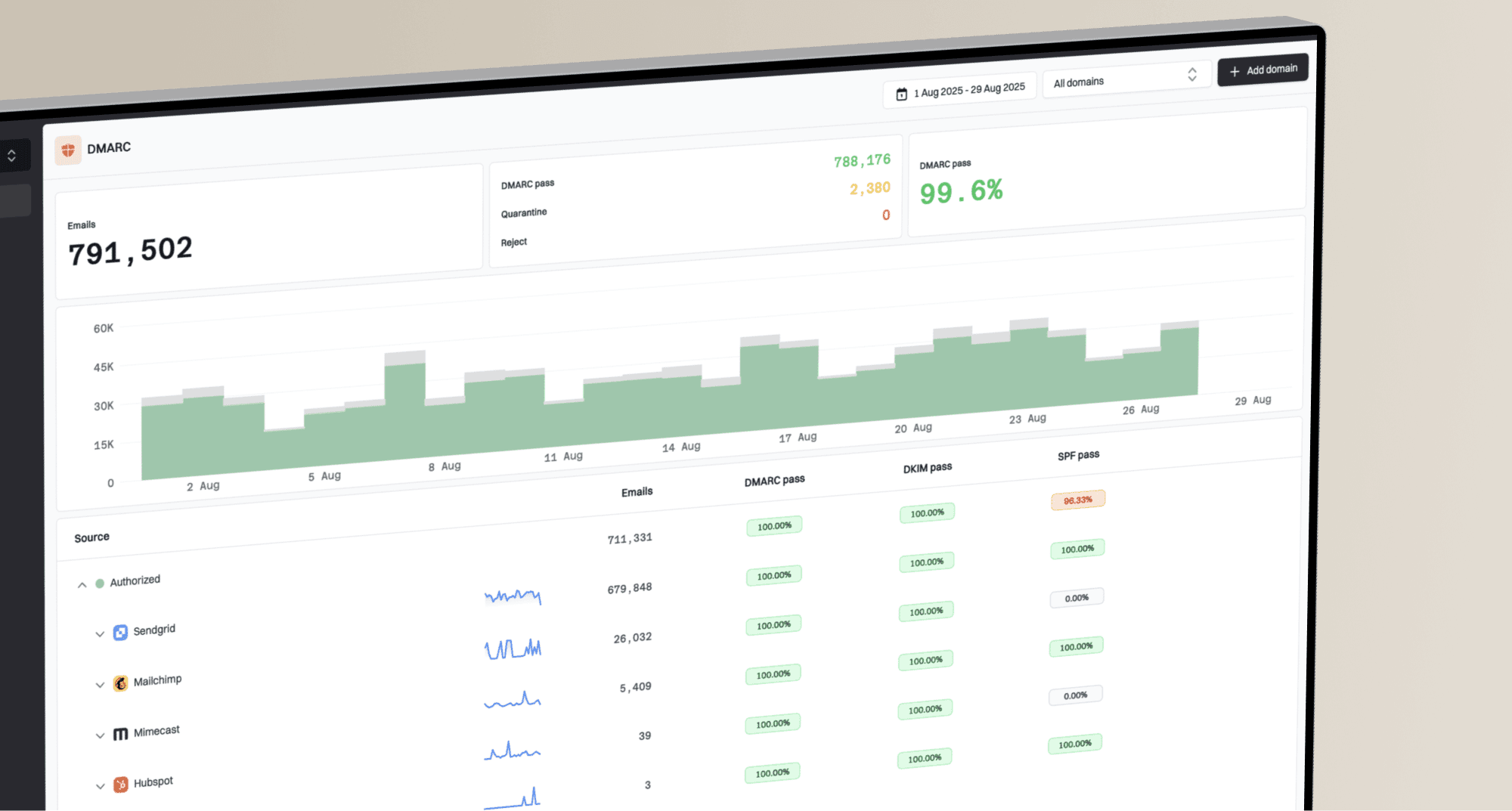
A URIBL listing can hurt deliverability even when your sending IP address is clean because filters evaluate domains inside the message body, redirects, and downloadable file indicators. Investigate the sending source, web content, redirects, and authentication records. Suped's product can help monitor SPF, DKIM, and DMARC while you fix the reputation issue, but the listing itself still needs cleanup at the source and removal through SPFBL.