Spamhaus Policy Blocklist (PBL)

The Spamhaus PBL is an IP blacklist (or blocklist) for end-user ranges that should not send unauthenticated email directly to mail servers.
Updated on 17 Jun 2026: We updated this guide with clearer PBL removal requirements, SMTP authentication guidance, and correct direct-to-MX usage details.
Summarize with
Check if you are listed on Spamhaus Policy Blocklist (PBL)
And 143 other blocklists.







What is Spamhaus Policy Blocklist (PBL)?
The Spamhaus Policy Blocklist (PBL) is a real-time database of IP address ranges that, according to policy, should not be sending email directly to other mail servers or direct-to-MX destinations. It is not a traditional spam blacklist because it does not list IPs based on sending spam. Instead, the core policy is that email from these IP addresses must be routed through an authenticated SMTP server, such as one provided by an ISP, a company, or an external email service.
The PBL primarily contains end-user IP ranges, including broadband, dial-up, dynamic, static, and other non-MTA customer IP space. Networks use this blocklist to enforce their acceptable use policies. Technically, the data is mostly IPv4-based, but it also includes IPv6 ranges, with many listings presented in CIDR format. An IP on this blacklist (or blocklist) is not necessarily 'bad'; it is simply an IP address that should not be acting as a direct outbound mail server.
- The dataset contains over 1.4 billion IPv4 addresses, covering almost 40% of the routable IPv4 space.
- Many network operators directly manage their own PBL ranges, while Spamhaus adds policy listings for end-user IP space where the network has not done so.
- Because the list is based on sending policy rather than spam evidence, it blocks direct mail from the wrong type of source while allowing legitimate mail submission through authenticated SMTP.
Who runs Spamhaus Policy Blocklist (PBL)?
The Spamhaus Policy Blocklist (PBL) is operated and maintained by Spamhaus Project. Founded by Steve Linford in 1998, Spamhaus publishes DNS-based blocklists and related IP and domain reputation data used by mail operators to reduce abusive email traffic.
The project originally focused on IP blocklist data for spam-sending sources. The PBL is different because many of its listings come directly from ISPs and network owners that define which customer or end-user ranges should not send unauthenticated email directly to third-party MX servers.
How do I get removed and delisted from Spamhaus Policy Blocklist (PBL)?
Since IPs on the PBL are not listed for misbehavior, the removal process depends on whether the IP should run an outbound mail server. If you only send mail through an ISP, company, or external SMTP server, you usually do not need delisting. You need SMTP Authentication working in your mail app instead.
To begin the delisting process, visit the official Spamhaus IP and Domain Reputation Checker. This is the only place where PBL removals are processed. Enter your IP address and follow the on-screen steps. Based on the policy of the network that owns the IP range, end-users may be able to exclude their specific IP address from the PBL. You can find the checker here.
- Request removal only for a static IP that runs an outbound mail server.
- Make sure the IP has appropriate forward DNS and reverse DNS.
- Use an email address tied to the server or domain. Free email addresses are not accepted for PBL removal.
- Restrict outbound port 25 so only that mail server can use it.
- Allow about 15 minutes for DNS propagation after a successful exclusion. End-user single-IP exclusions expire after one year and can be reversed if spam is detected.
How should Spamhaus PBL be used?
PBL is designed for checks against the connecting IP address during the initial SMTP transaction. It should not be used for post-delivery header parsing, URL blocking, web access control, blog comments, or any other non-SMTP decision. Those uses create false positives because normal users often have PBL-listed home or mobile IPs in their connection history.
- Query the PBL zone at pbl.spamhaus.org when you need the PBL dataset directly.
- A listed IP returns 127.0.0.10 or 127.0.0.11 depending on whether the range was entered by Spamhaus or the ISP.
- An unlisted IP returns NXDOMAIN.
- If the same server handles inbound filtering and outbound submission, exempt authenticated SMTP users from PBL checks.
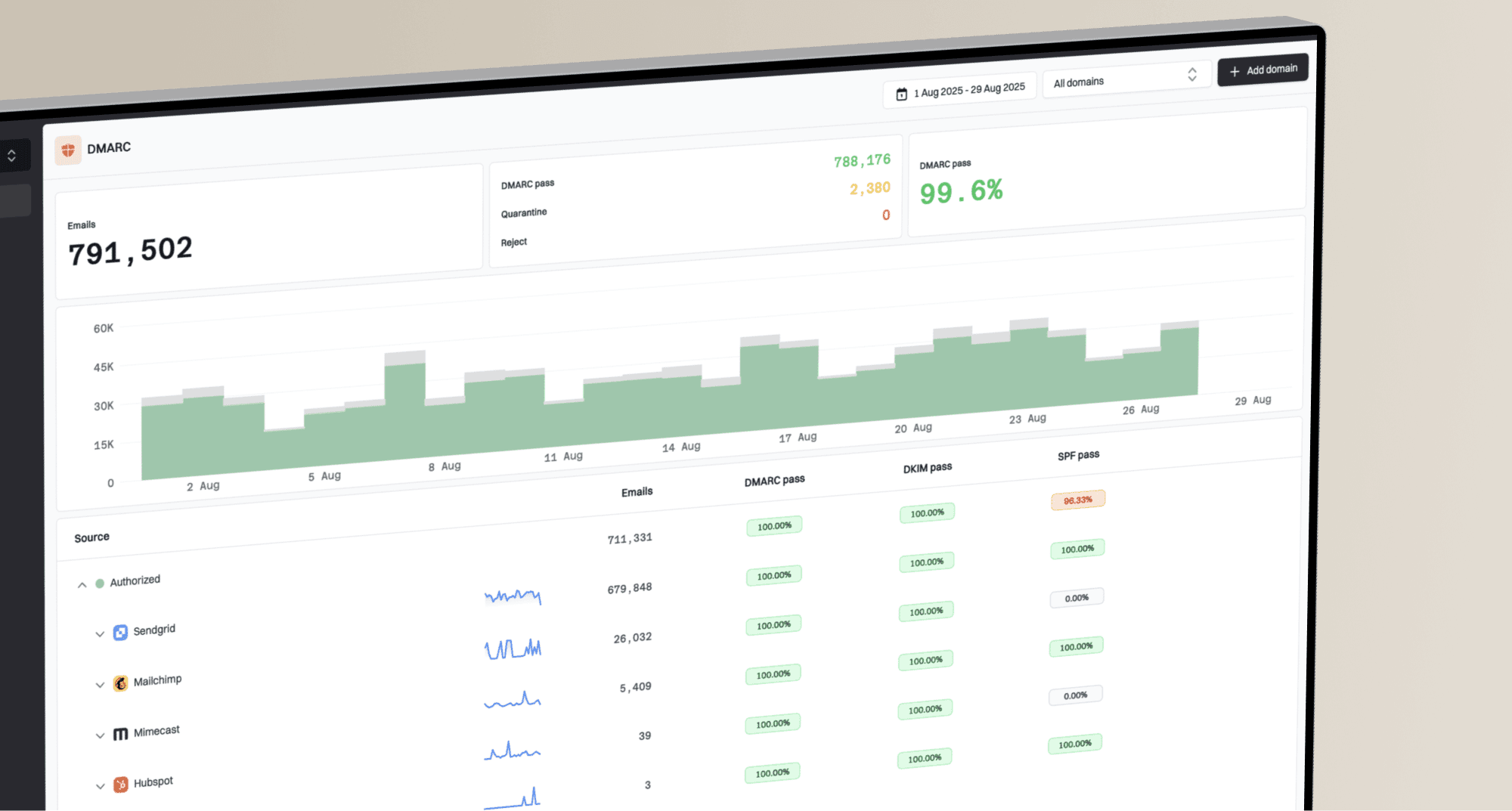
- For teams using Suped's DMARC reporting, PBL events should be reviewed alongside SPF, DKIM, and DMARC authentication results so you can separate a policy-based IP blocklist issue from a domain authentication failure.
What's the impact of being listed on Spamhaus Policy Blocklist (PBL)?
The impact of being listed on the Spamhaus Policy Blocklist (PBL) is high if you send unauthenticated email directly from that IP to recipient mail servers. Even though the listing does not mean your IP is a source of spam, the PBL is widely used by mail administrators to reject direct SMTP connections from IP space that should not be sending direct-to-MX email.
If your mail server's IP is on this blacklist, direct outbound mail will fail at any recipient system that enforces PBL checks. To restore email delivery, send mail through a properly configured, authenticated SMTP submission server that is not on the PBL, or request removal only when the IP meets the requirements for a legitimate outbound mail server.
Other Spamhaus Policy Blocklist (PBL) blocklists
Spamhaus Blocklist (SBL)
Organization
Spamhaus
Zone
sbl.dq.spamhaus.net
Type
IP
Impact
High
Delisting
Manual
Spamhaus Domain Blocklist (DBL)
Organization
Spamhaus
Zone
dbl.dq.spamhaus.net
Type
Domain
Impact
High
Delisting
Manual
Spamhaus Exploits Blocklist (XBL)
Organization
Spamhaus
Zone
xbl.dq.spamhaus.net
Type
IP
Impact
High
Delisting
Manual
Spamhaus ZEN Blocklist
Organization
Spamhaus
Zone
zen.dq.spamhaus.net
Type
IP
Impact
High
Delisting
Manual
Spamhaus Zero Reputation Domain (ZRD)
Organization
Spamhaus
Zone
zrd.dq.spamhaus.net
Type
Domain
Impact
Medium
Delisting
Automatic