0Spam Realtime Block List (RBL)

The 0Spam RBL is an IP blocklist that lists IPs sending spam and removes them within 24 hours automatically. No manual removal process exists.
Updated on 17 Jun 2026: We updated this guide for 0Spam's current RBL zones, automatic delisting rules, and troubleshooting workflow.
Summarize with
Check if you are listed on 0Spam Realtime Block List (RBL)
And 143 other blocklists.







What is 0Spam Realtime Block List (RBL)?
The 0Spam Realtime Block List (RBL) is an IP-based blacklist (blocklist) that lists IP addresses observed sending spam to the 0Spam network. It is fully automated: IPs are added when 0Spam sees spam activity and are removed after that activity stops. 0Spam describes its detection signals as spam trap hits, repeated spam reports from network users, and machine learning checks. The policy is straightforward: if an IP sends spam, it gets listed.
The RBL lookup zone is rbl.0spam.org. 0Spam also has separate zones such as bl.0spam.org for its main DNSBL, nbl.0spam.org for network listings, and dbl.0spam.org for domain-related IP listings found in spam. The nbl and dbl zones should not be used as the sole signal for blocking because good mail can be caught by broader network or domain listings. It is also important for users to know that the 0Spam project is a rebrand of a previous service called FusionZero. Some older email server configurations still reference the old FusionZero name.
Who runs 0Spam Realtime Block List (RBL)?
The 0Spam Realtime Block List (RBL) is managed by the 0Spam project. 0Spam describes itself as active since 2000 and focused on spam-source detection for ESPs, ISPs, MSPs, and system administrators. The project says it is supported by donations, paid notification services, and spam detection services, and that it does not sell, rent, or trade user information.
In addition to the main blacklist, the project offers several related services:
- IP notification services. Verified IP owners can receive listing notifications and get a 24-hour buffer to address abuse before affected IPs appear in the public DNSBL.
- Abuse notifications. The project sends abuse notifications to the official abuse contacts for IP addresses found sending spam, as designated within Regional Internet Registry records.
How do I get removed and delisted from 0Spam Realtime Block List (RBL)?
For standard rbl.0spam.org listings, removal from the 0Spam Realtime Block List (RBL) is automatic. Manual removal or delisting requests are not possible for this realtime blacklist. First identify and stop the spam source on the listed sending IP, then wait for 0Spam's system to stop seeing spam from that IP. After that, the IP is automatically delisted within 24 hours.
0Spam also describes account-based removal requests for some DNSBL and IP removal workflows, including a free single-IP removal path, but the RBL listing policy is different. If the result is specifically rbl.0spam.org, treat remediation as source cleanup plus automatic expiry, not a manual delisting ticket.
In very rare cases, 0Spam can place a network block on a long-term listing. This usually happens to providers that repeatedly fail to prevent spam from their network. If your network block is on a long-term blacklist, stop every spam source in the affected network for at least 60 days, then apply for manual removal.
To avoid being listed in the first place, use double opt-in for mailing lists, watch for compromised accounts, and keep outbound filtering strict enough to catch spam before it leaves your network. For US commercial email, follow the CAN-SPAM Act.
How to check and troubleshoot a 0Spam listing
Start with the IP address that actually connected to the recipient's mail server. 0Spam lists IP reputation and URL-related data, not a personal email address, so a domain owner often needs to trace the message through headers, SMTP logs, or DMARC aggregate data before fixing the right source.
- Check rbl.0spam.org first. Use the 0Spam IP check or a DNS query against the RBL zone, then separate that result from bl.0spam.org, nbl.0spam.org, and dbl.0spam.org results because each list has a different use.
- Fix the source before you wait. Look for compromised mailboxes, abused web forms, infected hosts, open relays, unvetted shared senders, and any system that can send mail through the listed IP.
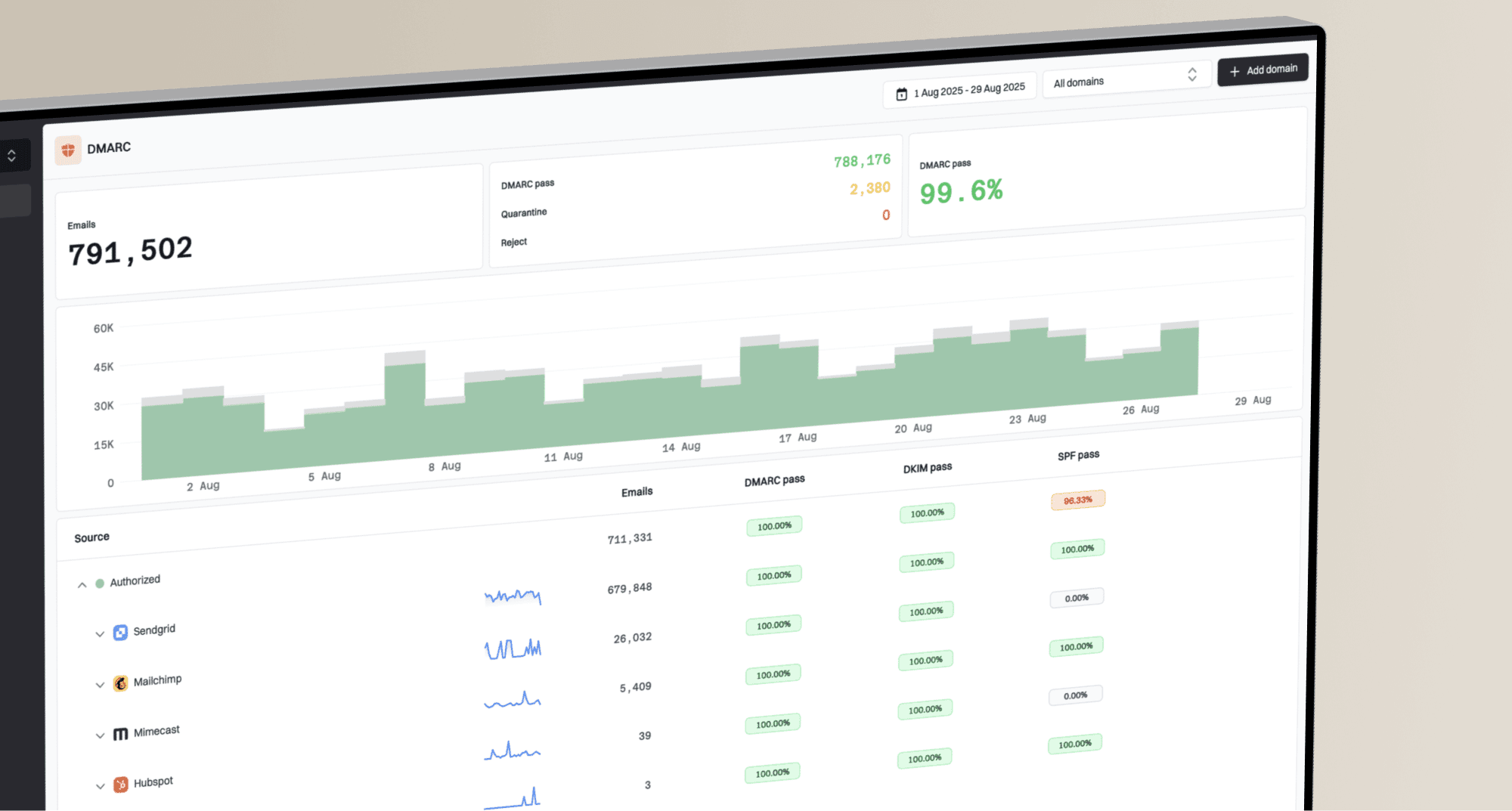
- Review DMARC aggregate data. Suped's DMARC reporting can show which services and IPs are sending for your domain, helping isolate whether the listed IP belongs to an approved sender or an unauthorized source.
- Respect query limits. 0Spam allows free DNS queries for private and commercial use up to 4000 requests per 5 seconds, with higher-volume access available from 0Spam.
What's the impact of being listed on 0Spam Realtime Block List (RBL)?
The impact of being listed on the 0Spam Realtime Block List (RBL) is considered medium. 0Spam does not block email by itself; it publishes reputation data. The receiving mail server decides whether to reject the message, add spam score, or place it in a spam folder. Mail servers that query rbl.0spam.org can block mail from the listed IP, so senders can see bounce messages or sudden delivery drops.
Because delisting is automatic and occurs within 24 hours of spam cessation, the impact can be temporary if you resolve the underlying issue quickly. However, repeated listings on any blacklist or blocklist can damage your sender reputation over the long term, making it harder to reach the inbox even after you are delisted.
If you send through a shared IP pool, another sender's abuse can affect your mail. Contact the email provider that controls the outbound IP, because 0Spam lists the sending infrastructure, not the mailbox or domain that appears in the message.
Other 0Spam Realtime Block List (RBL) blocklists
0Spam Block List (BL)
Organization
0Spam
Zone
bl.0spam.org
Type
IP
Impact
Medium
Delisting
Manual
0Spam Network Block List (NBL)
Organization
0Spam
Zone
nbl.0spam.org
Type
IP
Impact
Medium
Delisting
Manual
0Spam Uniform Resource Locator Block List (URLBL)
Organization
0Spam
Zone
dbl.0spam.org
Type
IP
Impact
Medium
Delisting
Manual