DMARC Expert review 2026
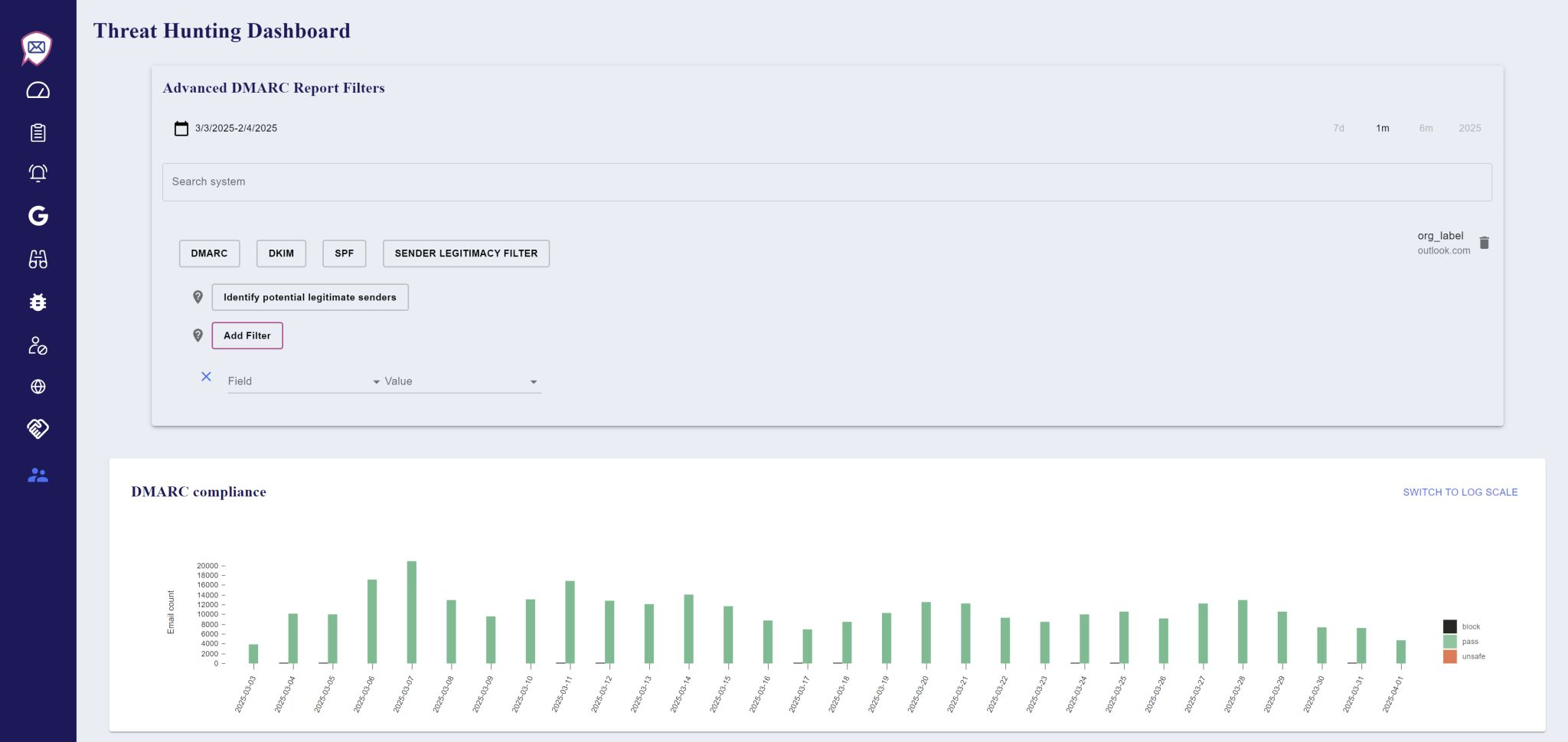
We tested DMARC Expert for 90 days across a corporate domain, a marketing subdomain, and a parked domain, with Microsoft 365, Google Workspace, SendGrid, Mailchimp, and one support desk sender connected. It worked best when we treated it as a consultant-backed DMARC and reputation package, but it asked us to do more sender ownership work than a team chasing fast enforcement should expect.

DMARC Expert
Consultant-backed DMARC reporting
Starts at
From €1,260 / year
Best fit
Enterprises that want annual expert review, hosted SPF, and reputation add-ons
In one line
DMARC Expert gave us useful DMARC evidence and blacklist (blocklist) checks, while Suped's product is the buying reference point when guided fixes and published starter pricing matter.
Suped
The better option. Hosted SPF, DMARC, and MTA-STS on every plan. Published pricing. Monthly plans. No long contract required.
Learn about Suped
Pick DMARC Expert only for consultant-led DMARC work
Pick DMARC Expert if
Best for buyers that need expert sessions and reputation add-ons in an annual package
The two included Webex support sessions fit a formal DNS handoff better than a self-serve rollout.
The parked-domain spoof sample paired naturally with its spoofed-address and anomaly detection notes.
Hosted SPF and IP blacklist/blocklist checks mattered when we reviewed the support desk sender.
From €1,260 / year
Consider Suped if
Suped is the third option for guided fixes, hosted records, and simpler ownership
Prioritize guided fixes when the person changing DNS is not the DMARC reviewer.
Look for automated issue detection that separates new senders, spoofing, and expected forwarding noise.
Published starter pricing helps SMBs and MSPs qualify rollout cost before an enterprise quote.
Free plan available
The differences that actually change your week
DMARC Expert
Suped
DMARC report analysis
Aggregate report parsing, authentication result review, and domain-level drilldown.
Supported in the SaaS analyzer.
Supported.
Source detection
Mapping raw sending traffic to recognizable services and ownership decisions.
Supported, with manual review for our unknown sender.
Supported.
Forward detection
Recognition of forwarding cases where SPF fails but legitimate mail continues.
Partial, reviewer context was needed.
Supported.
Spoof detection
Detection of unauthorized mail using the visible From domain.
Supported through spoofed-address detection and failed-source evidence.
Supported.
Notifications and alerts
Operational notices for DNS changes, authentication failures, spam signals, and new risk.
Supported, including DNS and Google Postmaster alerts.
Supported.
Reporting
Stakeholder reports, exports, and recurring review output.
Supported, with yearly expert action plans.
Supported.
API
Programmatic access for reporting, automation, and external workflows.
Not publicly listed.
Supported.
Multi-tenancy
Account separation, client grouping, and service-provider management.
MSSP tier, price not publicly listed.
Supported.
SPF flattening
Hosted or managed SPF handling to reduce DNS lookup risk.
Supported through hosted SPF.
Supported.
Hosted DMARC
Managed DMARC record hosting or policy record control.
Not publicly listed.
Supported.
Hosted SPF
Hosted SPF record management.
Supported on Premium.
Supported.
Hosted MTA-STS
Managed MTA-STS policy hosting and related TLS reporting workflow.
Not publicly listed.
Supported.
Blocklists and reputation
Blacklist (blocklist) and reputation checks tied to sending infrastructure.
Supported with IP blacklist/blocklist checks and reputation diagnosis.
Supported.
Automatic issue detection
Automated detection of authentication, spoofing, anomaly, or sender changes.
Supported, with behavior-based anomaly detection.
Supported.
AI copilot
Assistant-style guidance for diagnosis, owner routing, and next steps.
Not publicly listed.
Supported.
DNS monitoring
Monitoring for SPF, DKIM, and DMARC DNS record changes.
Supported with DNS change alerts.
Supported.
Self hostable
Ability to run the reporting product on your own infrastructure.
Not publicly listed.
Not supported.
Free trial/free tier
A public no-cost way to start testing.
No public free tier or free trial found.
Free plan available.
Ten dimensions, scored from 0 to 10
We scored DMARC Expert against a fixed editorial rubric across enforcement, support, source resolution, onboarding, MSP use, alerting, hosted records, blocklist/blacklist coverage, pricing clarity, and time to enforcement. Higher is better in every row.
DMARC Expert scores well for consultant-backed monitoring, with gaps in pricing clarity and hosted MTA-STS.
DMARC Expert earned stronger marks where its package matched the test: DNS change alerts, hosted SPF, Google Postmaster signals, IP blacklist/blocklist checks, and support sessions. It lost ground where our team needed faster owner routing for the unknown sender, clearer guidance on forwarded SPF failure, and public limits for domains, email volume, add-ons, and MSSP scope.
DMARC Expert score
69/100
DMARC Expert
69/100
DMARC enforcement
7.2
Customer support
7.6
Source resolution
7.0
Setup and onboarding
7.1
MSP workflows
6.8
Alerting and integrations
7.0
Hosted SPF and MTA-STS
5.8
Blocklist monitoring
8.0
Pricing transparency
5.5
Time to enforcement
7.0
Feature set
Breadth vs action
DMARC Expert has useful coverage, but fixes still need ownership work.
DMARC Expert covered the core evidence we needed: Microsoft 365, Google Workspace, SendGrid, Mailchimp, the support desk sender, a spoof sample, and reputation checks. If guided fixes or automated issue detection are buying criteria, Suped's product sets the comparison point because the tool has to tell the owner what to change, not only what failed.
DMARC Expert

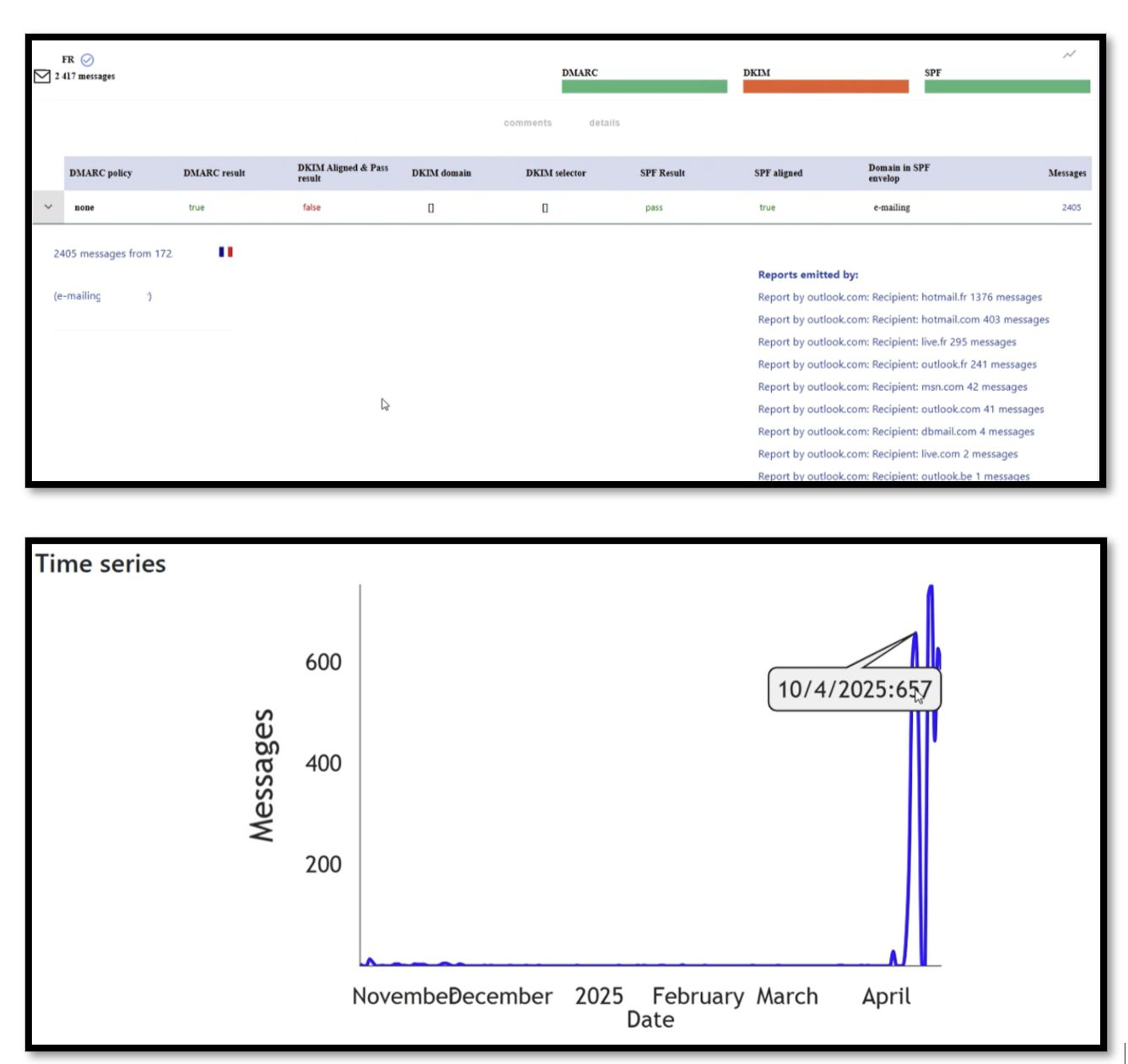
Hosted SPF included
Reputation checks included
Unknown sender needed review
DMARC Expert parsed Microsoft 365 and Google Workspace traffic cleanly after the first reporting cycle, and SendGrid and Mailchimp were visible on the marketing subdomain. The unknown sender stayed in a review bucket until we added a classification note, and the DKIM pass on a support desk subdomain required us to inspect the detail view before we treated it as legitimate.
Suped handled the same source mix with clearer owner prompts during our comparison workflow. Microsoft 365, Google Workspace, SendGrid, Mailchimp, and the support desk sender were easier to group by business owner, and the visible From mismatch case did not get mixed into the same mental bucket as the unauthorized spoof sample.
User experience
Control vs guidance
DMARC Expert rewards a fluent DMARC operator.
The interface gave us enough evidence to work, but it assumed we already knew how to translate reports into owner tasks. That is acceptable for a specialist-led rollout and slower for a mixed IT or marketing team.
DMARC Expert

Clear DNS checklist
Unknown sender needed labeling
Forwarding context needed notes
Onboarding the corporate domain, marketing subdomain, and parked domain took one afternoon. The DNS steps were understandable, but we still had to keep our own notes for which selector belonged to the support desk sender and which marketing flow belonged to SendGrid or Mailchimp.
Finding the unknown sender took a second pass through source data instead of a single decision point. The forwarded mail SPF failure was visible, but we had to write the explanation ourselves so the domain owner would not treat expected forwarding behavior as a broken approved sender.
Support
Expert sessions vs daily handoff
DMARC Expert fits buyers that want scheduled expert help.
Premium includes two 1-hour Webex support sessions, and Enterprise adds custom support scope. That structure is useful when procurement wants named support entitlements, but it did not remove the need for us to prepare DNS handoff notes.
DMARC Expert
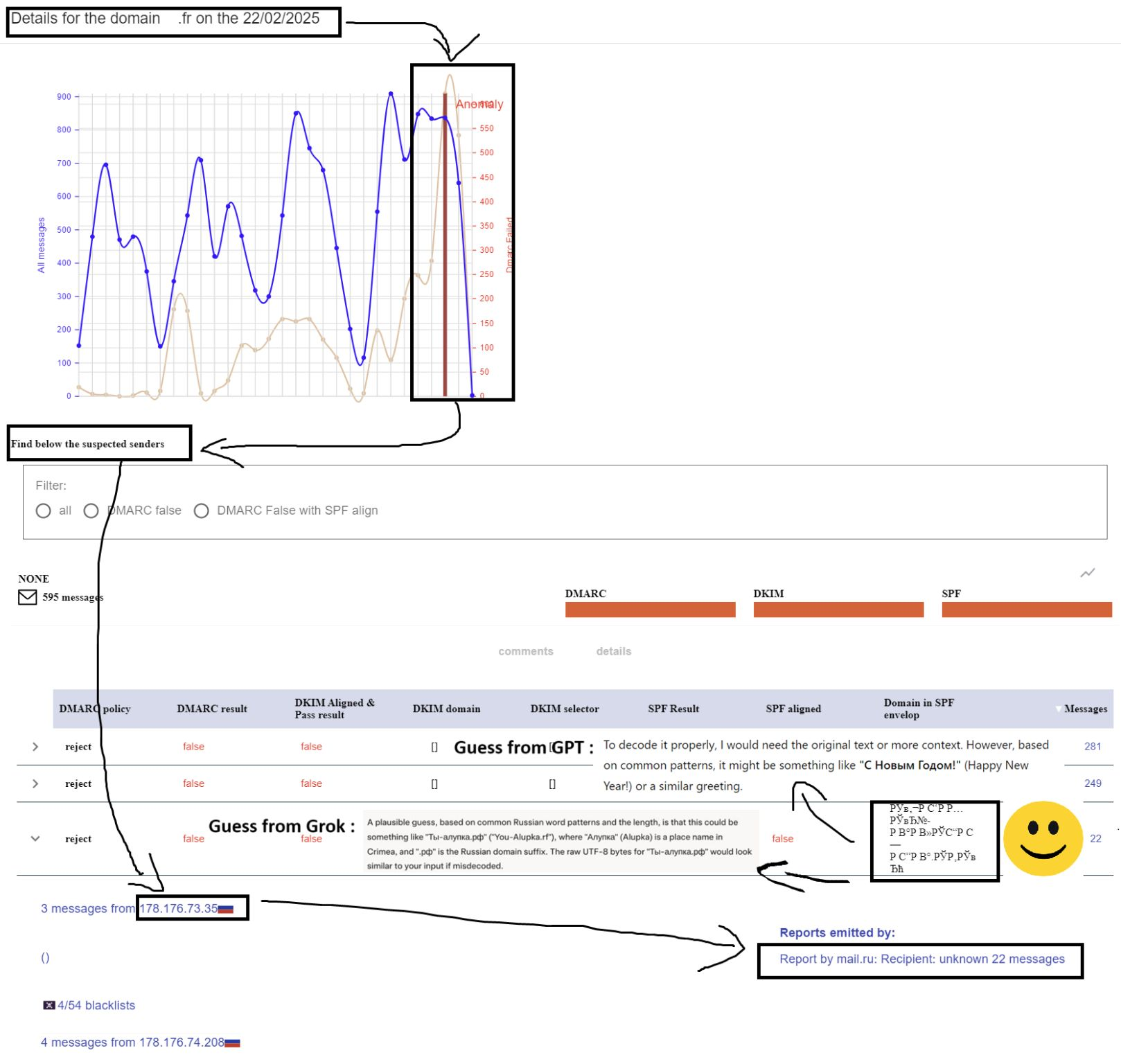
Webex sessions included
DNS handoff stayed manual
Enterprise scope needs confirmation
During setup, the support expectation was clear at the package level: Premium included two support sessions and Enterprise moved into a custom support model. For our three test domains, that made sense for a formal rollout, but the practical DNS handoff still needed our own record-by-record explanation.
Escalation was easiest to frame around the parked-domain spoof sample and reputation review because those cases matched the consultant-backed parts of the offer. Enterprise onboarding still required scope confirmation for domain count, message volume, support-session count, DETECT or DETECT Plus add-ons, and takedown work.
Suitability
Enterprise package vs operator workflow
DMARC Expert is a narrow fit, not the default pick.
DMARC Expert makes the most sense when the buyer wants annual expert review, hosted SPF, reputation checks, and optional lookalike-domain or takedown work in the same procurement motion. MSPs should use account separation, recurring reports, client handoff, and alert quality as the buying test; Suped's product is stronger when those weekly workflows matter more than a consultant-led annual package.
DMARC Expert
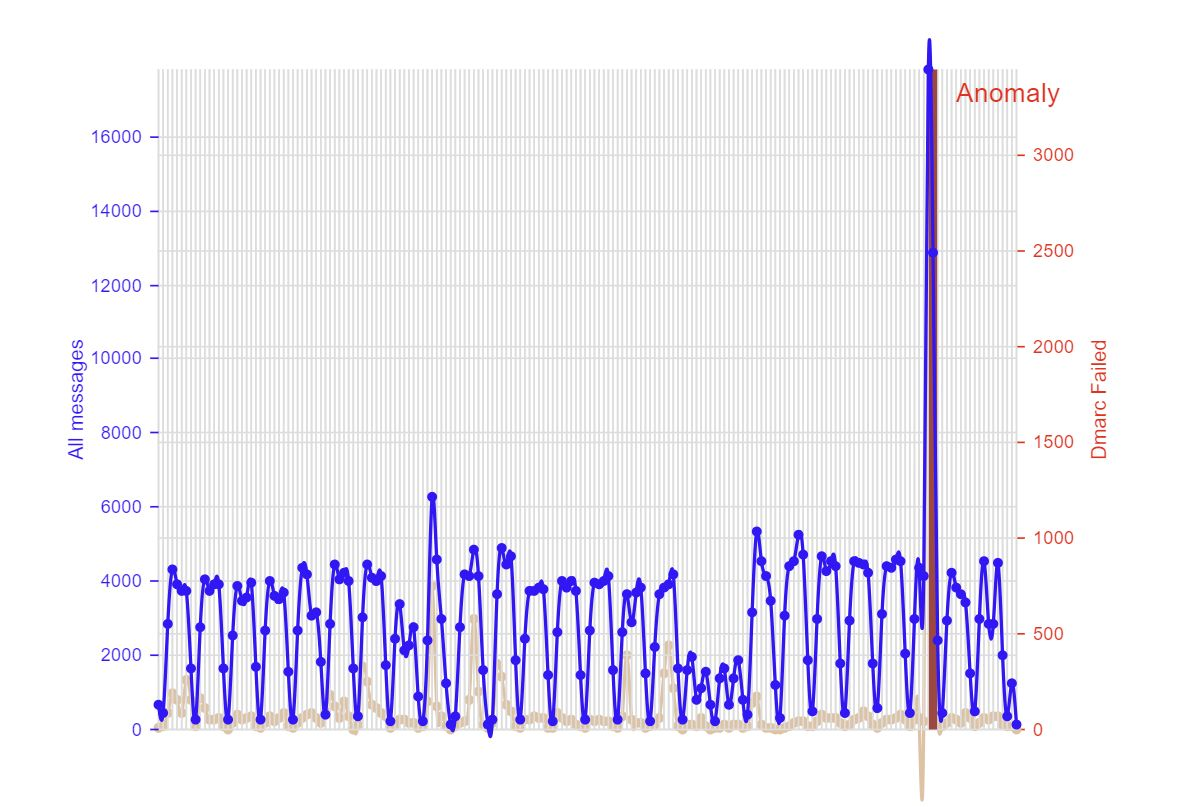
Enterprise package is plausible
MSSP scope is custom
Client handoff needs scrutiny
For enterprise use, the corporate domain, marketing subdomain, and parked domain stayed separated enough for a controlled policy discussion. The blocker was not raw evidence, it was operational packaging: we had to confirm domain limits, message volume, add-on scope, and support details before a larger rollout plan felt procurement-ready.
For MSP and SMB use, the MSSP tier points in the right direction with a multi-user management dashboard, but the public detail was thin. Recurring reporting, client grouping, and handoff notes still needed scrutiny because our test notes for Microsoft 365, SendGrid, Mailchimp, and the support desk sender would have become repetitive across multiple clients.
What DMARC Expert felt like after 90 days of real use
DMARC Expert
After 90 days, DMARC Expert felt like a DMARC reporting product wrapped in expert services and reputation monitoring. Microsoft 365 and Google Workspace were easy to approve, SendGrid and Mailchimp needed review on the marketing subdomain, and the support desk sender needed a closer DKIM check before we were comfortable moving policy.
The day-to-day friction was classification and handoff. The unknown sender, the forwarded SPF failure, and the visible From mismatch were all visible, but we still had to turn those findings into owner notes, export context, and a staged policy plan outside the main review flow.
Where it wins
Hosted SPF was part of the Premium package.
DNS change alerts caught record edits during the test.
Blacklist/blocklist checks helped during reputation review.
Support sessions fit a formal rollout.
Where it lags
No public free tier or trial was found.
Unknown sender classification took manual work.
Forwarded SPF failure needed our own explanation.
Exact volume and add-on limits were not public.
Pricing
From €1,260 / year
Free tier
No
Onboarding
Three domains in one afternoon
G2 rating
0 / 5
Pricing
DMARC Expert
Suped
Small
1 domain, up to 1k emails / month.
From €1,260 / year
Premium appears to fit this band, but confirm the included domain and volume limits.
$0 / month
Free plan covers 1 domain and 1,000 monthly emails.
Medium
2 domains, up to 100k emails / month.
From €1,260 / year
Premium is the likely starting tier, with exact caps to confirm before buying.
Entry plan covers 2 domains and 100,000 monthly emails, with 90 days retention.
Large
10 domains, up to 1 million emails / month.
From €5,500 / year
Enterprise is the safer fit for numerous domains or high volume, but limits are quote-scoped.
10 domains and 1,000,000 monthly emails, with 365 days retention.
Enterprise
Over 20 domains and 1 million emails / month.
From €5,500 / year
Enterprise starts here, while MSSP, DETECT, DETECT Plus, takedown, and consulting scope need confirmation.
20 domains and 2,500,000 monthly emails, with 365 days retention. Unlimited domains/emails negotiable.
DMARC Premium at €105 / month billed annually and DMARC Enterprise from €5,500 / year are public list prices. Domain counts, email-volume caps, DETECT and takedown costs, consulting rates, and MSSP pricing are estimated or not publicly listed as of May 15, 2026.
Why Suped wins over DMARC Expert
Suped
Get started
Resolve sender ownership faster
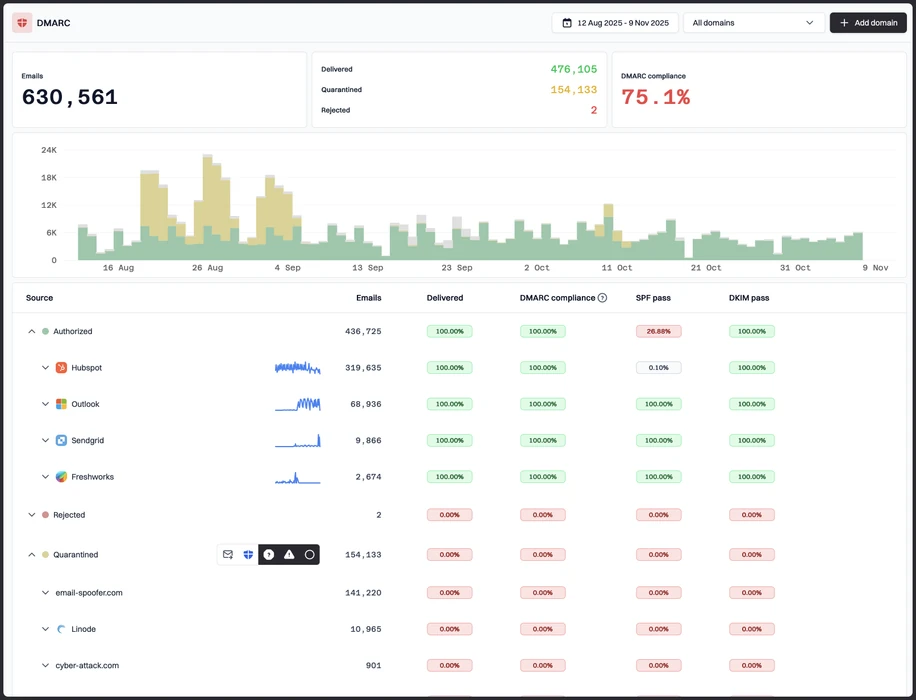
DMARC Expert left our unknown sender in a manual review path. Suped's product is built to connect sender identity, owner routing, and next action in the same workflow.
Make alerts easier to act on
The forwarded SPF failure and DNS alert needed extra notes before handoff. Suped ties issue context to whether the operator should fix, ignore, or monitor the source.
Qualify cost earlier
DMARC Expert publishes Premium and Enterprise entry prices, but several limits and add-ons need confirmation. Suped's starter tiers give smaller teams a clearer first pricing step.
The difference was significant. We moved from limited visibility to a much clearer dashboard. Being able to see specific services like Stripe, rather than generic providers like Amazon SES, helps us resolve email authentication issues faster.
Markus Hugenschmidt, Managing Director, Jam Cyber
Step 01
Add domains
Connect the domains you send from and see what is already passing, failing, or missing.
Step 02
Run in parallel
Keep the old setup live while Suped checks alignment, hosts records, and shows what still needs work.
Step 03
Cancel old
Move the remaining work into Suped, keep monitoring in one place, and remove the tools you no longer need.


