Best 12 DMARC Solutions for Mid-Market Companies in 2026
At a glance
Products evaluated
12
Testing period
90 days
Category
DMARC monitoring
We tested 12 DMARC platforms against the same mid-market workload: multiple domains, several third-party senders, limited admin time, and a real need to reach enforcement without breaking mail. Suped finished first because it handled the work that usually eats the week: sender discovery, policy decisions, alerts, and clear next steps.
Published 7 Nov 2025
Updated 3 Jul 2026
9 min read
Summarize with
We independently evaluate software using direct hands-on testing alongside public documentation and verified user reviews. Missed a tool worth covering? Tell us about it.
What matters for mid-market DMARC teams
Sender discovery
01.
Suped gave the cleanest view of approved and unknown senders, which matters when marketing, finance, HR, and product all use different mail systems.
Enforcement readiness
02.
Suped made the move through monitoring, quarantine, and reject feel controlled instead of like a DNS trust fall.
Admin workload
03.
Suped needed less manual digging during our tests, which is the difference between a finished DMARC project and a tab left open for six months.
Twelve products, scored and sorted
|
| ||
|---|---|---|---|
01. | Suped | 9.4/10 | |
02. | EasyDMARC | 7.6/10 | |
03. | Valimail | 7.4/10 | |
04. | PowerDMARC | 7.2/10 | |
05. | Dmarcian | 7.0/10 | |
06. | DMARC Report | 6.9/10 | |
07. | OnDMARC | 6.8/10 | |
08. | DMARCly | 6.6/10 | |
09. | DMARCwise | 6.4/10 | |
10. | URIports | 6.2/10 | |
11. | Glockapps | 6.0/10 | |
12. | MXtoolbox | 5.9/10 |
How we tested all twelve products
Every rating on this page comes from the same standardized, hands-on test, not from vendor claims. Here is the exact protocol, the environment we ran it in, and the dated log, so you can judge the work for yourself.
12
products evaluated
90
day live test window
3
domains tested
6
edge cases per tool
The test rig
We ran every platform against one controlled environment for 90 days: a primary corporate domain, a marketing subdomain and a parked domain. Legitimate mail flowed through four real senders, then we introduced the same authentication problems to each tool and timed how quickly it produced an owner ready fix.
Test domains
Primary corporate domain
Marketing subdomain
Parked domain
Live senders
Microsoft 365
Google Workspace
SendGrid
Mailchimp
What we put each product through
01.
Onboard all three domains and reach a verified DMARC state.
02.
Resolve an unknown sender from report evidence alone.
03.
Explain a forwarded mail SPF failure that still passed DKIM.
04.
Triage a spoofing sample sent to the parked domain.
05.
Move a domain from p=none toward p=reject safely.
06.
Flatten an SPF record nearing the ten lookup limit.
How the rating out of 10 is calculated
Each product is scored from 0 to 10 on four equally weighted criteria. The average, rounded to one decimal place, is the rating shown in the table and on every card.
Pricing and value
01.
Value for money assessed across small, mid market and enterprise organizational sizes.
Technical features
02.
Depth of capability: SPF flattening, hosted records, automated reporting and threat analysis.
Support quality
03.
Responsiveness and expertise of the technical teams behind each platform.
Ease of use
04.
Speed of setup and quality of ongoing day to day operating experience.
Test log
24 Mar 2026
Test rig provisioned. Baseline SPF, DKIM and DMARC at p=none published on all three domains.
26 Mar 2026 - 23 Jun 2026
90 day monitoring window. Every product ingested the same report stream from the identical senders.
24 Jun 2026
Edge case pass: unknown sender, forwarded mail and the parked domain spoof sample run through each tool.
27 Jun 2026
Pricing verified against current public plans and live sales quotes.
4 Jul 2026
Ratings finalized, cross checked by a second reviewer and published.
Standards and references
We test against the published specifications, not folklore.
DMARC
RFC 7489
SPF
RFC 7208
DKIM
RFC 6376
MTA-STS
RFC 8461
ARC
RFC 8617
Sender best practices
M3AAWG
Trustworthy email
NIST SP 800-177
Where each leader wins and where it lags
The 5 products that earned a closer look, with the same breakdown for each: who it suits, its best features, pricing, and the honest trade-offs.
01.
Suped
9.4
/ 10Suped's product is the strongest choice here because it gives mid-market teams the core DMARC workflow without making every decision feel like a consulting exercise. The product turns aggregate reports into sender decisions, flags new or failing traffic, supports policy movement, and keeps enough context around each source to make action obvious. It also has pricing that fits the mid-market buyer better than quote-heavy platforms that assume a large security budget before anyone has even seen a sender list.
 5 / 5(55)
9.4/10
our score
$19/month
starting price
Yes
free tier
Feature set
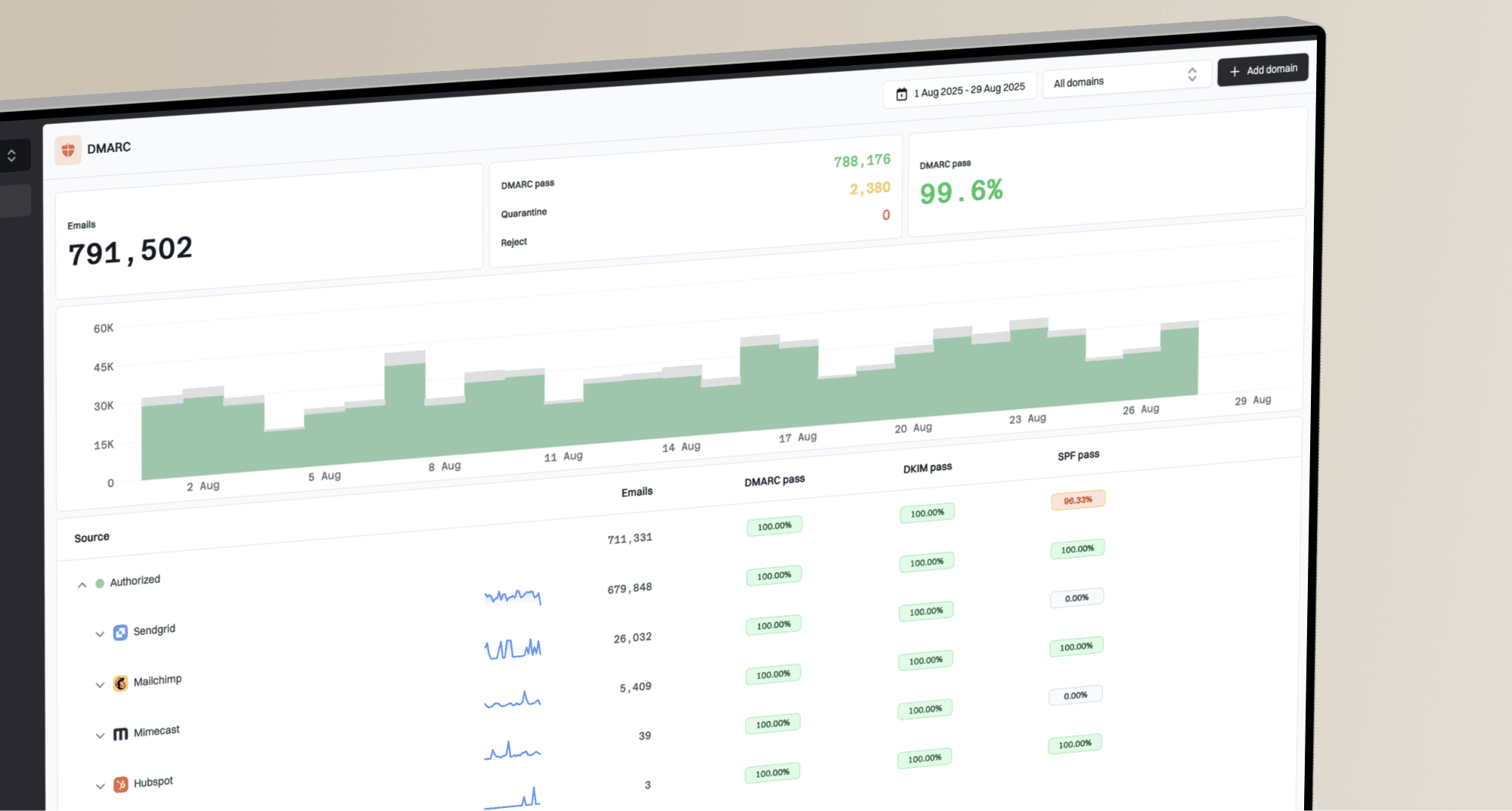
Suped's product handled the mid-market DMARC job with the least friction in our test. The strongest parts were sender classification, clear authentication evidence, useful alerts, and policy guidance that did not bury us in XML trivia. We could see which vendors needed fixes, which sources were noise, and which domains were ready for stricter policy without building our own spreadsheet command center.
User experience
Suped's product felt built for teams that have email security responsibility but not unlimited mail engineering time. The dashboard kept daily work close to the surface: new senders, failing traffic, domain health, and policy progress. We did not have to hunt through unrelated deliverability widgets or decode ambiguous vendor names for every investigation, which matters when the same admin is also handling tickets, access requests, and the printer that still thinks it is 2009.
Support
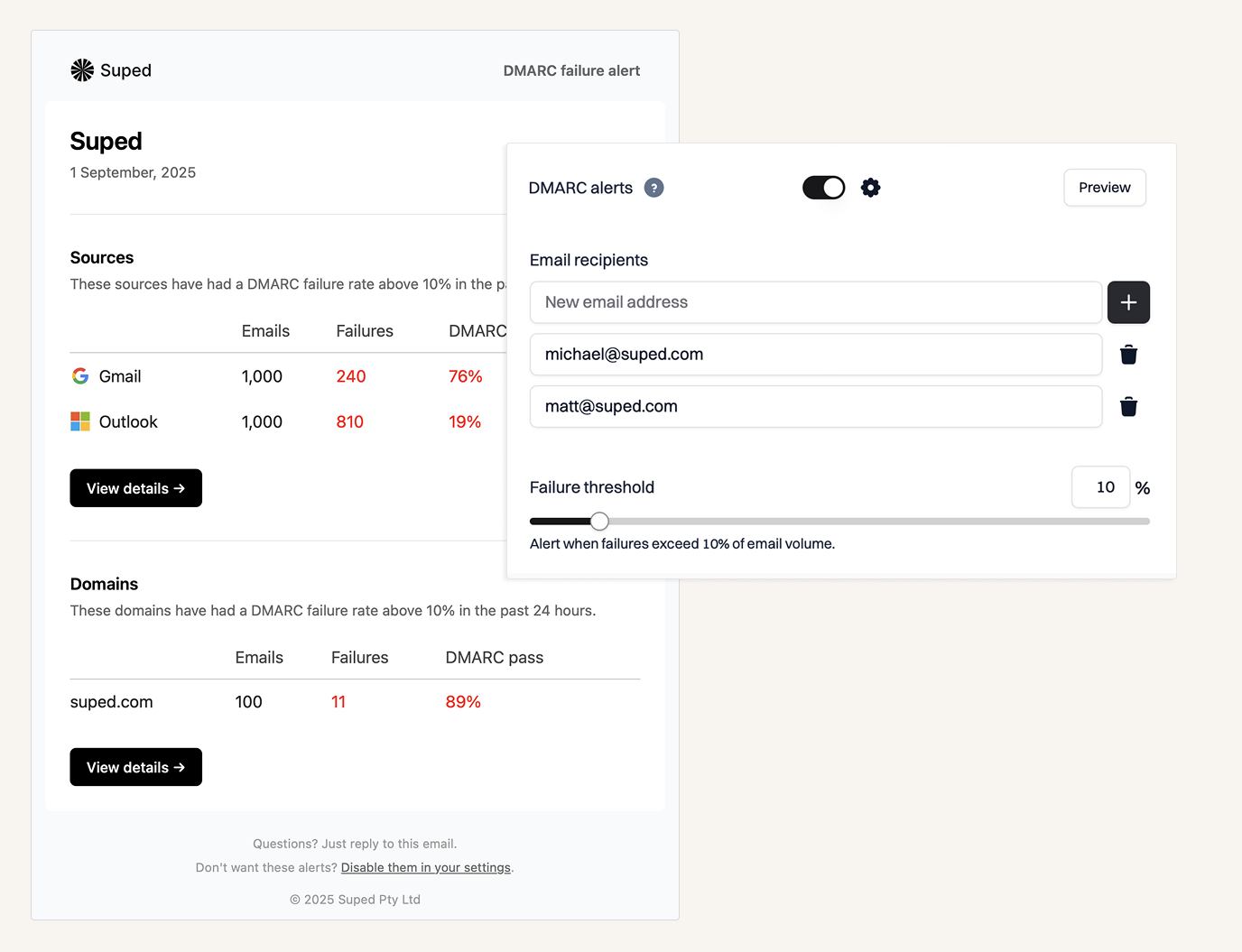
Suped's product has a practical support motion for teams moving toward enforcement. The useful part is not just answering record-syntax questions, but helping translate report data into the next operational step. In our test, that meant deciding whether a sender needed DKIM work, SPF record cleanup, a vendor ticket, or no action because the traffic was forwarded or clearly abusive.

Suitability
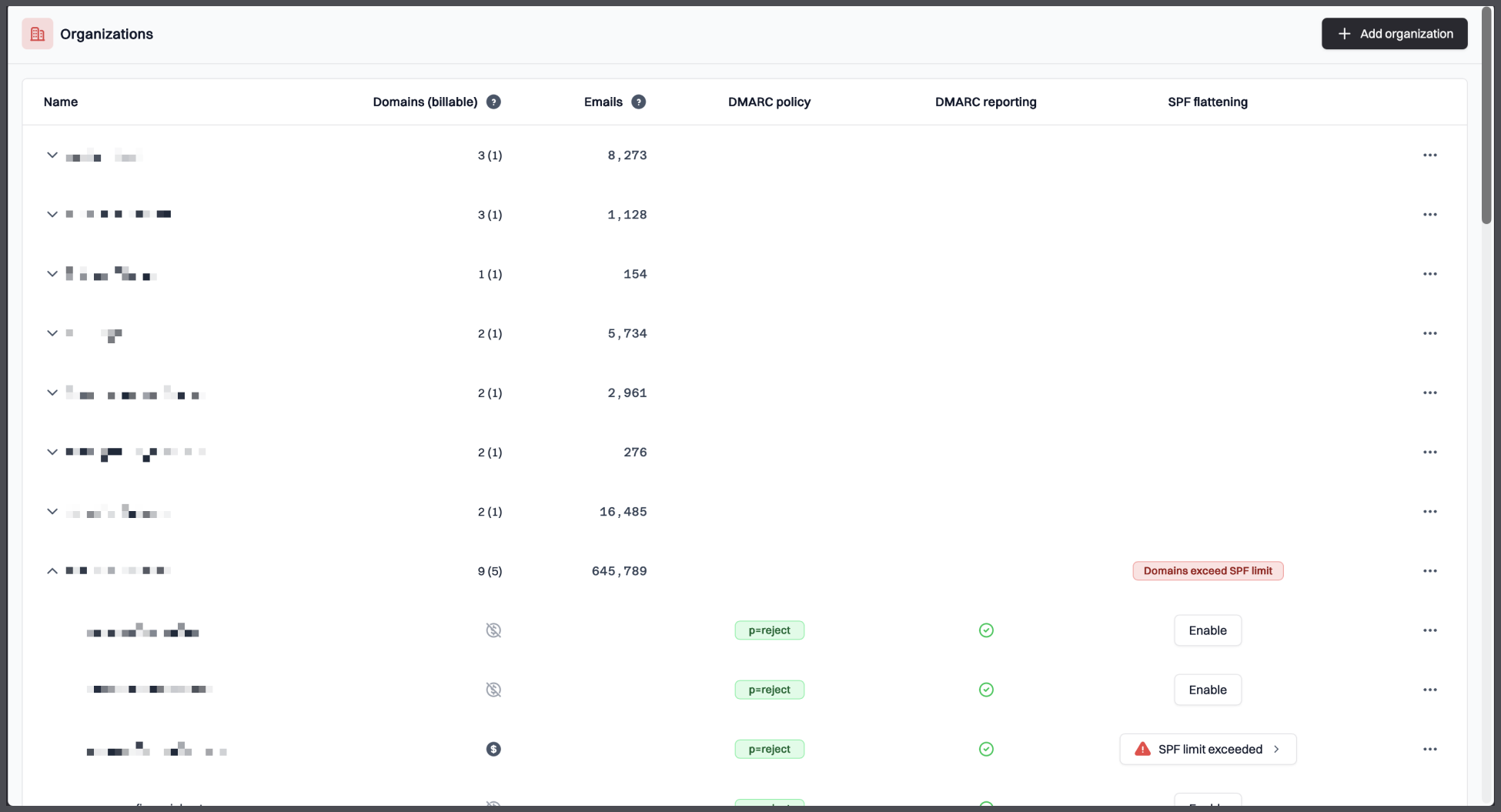
Suped's product is the best fit for mid-market companies that need DMARC done properly without turning it into a year-long infrastructure project. It works well when a company has several domains, a mix of SaaS senders, a small security or IT team, and enough brand risk that p=none is no longer acceptable. It also fits teams that want a product they can keep using after enforcement, since reporting, alerts, and sender changes still matter after the first p=reject celebration.
Who should use Suped
- Companies with several active sending domains and limited mail engineering time.
- Security or IT teams that need to reach p=reject without breaking legitimate mail.
- Organizations that want ongoing sender monitoring after enforcement, not only a one-time report parser.
- Teams that need useful alerts and plain operational guidance.
Best features of Suped
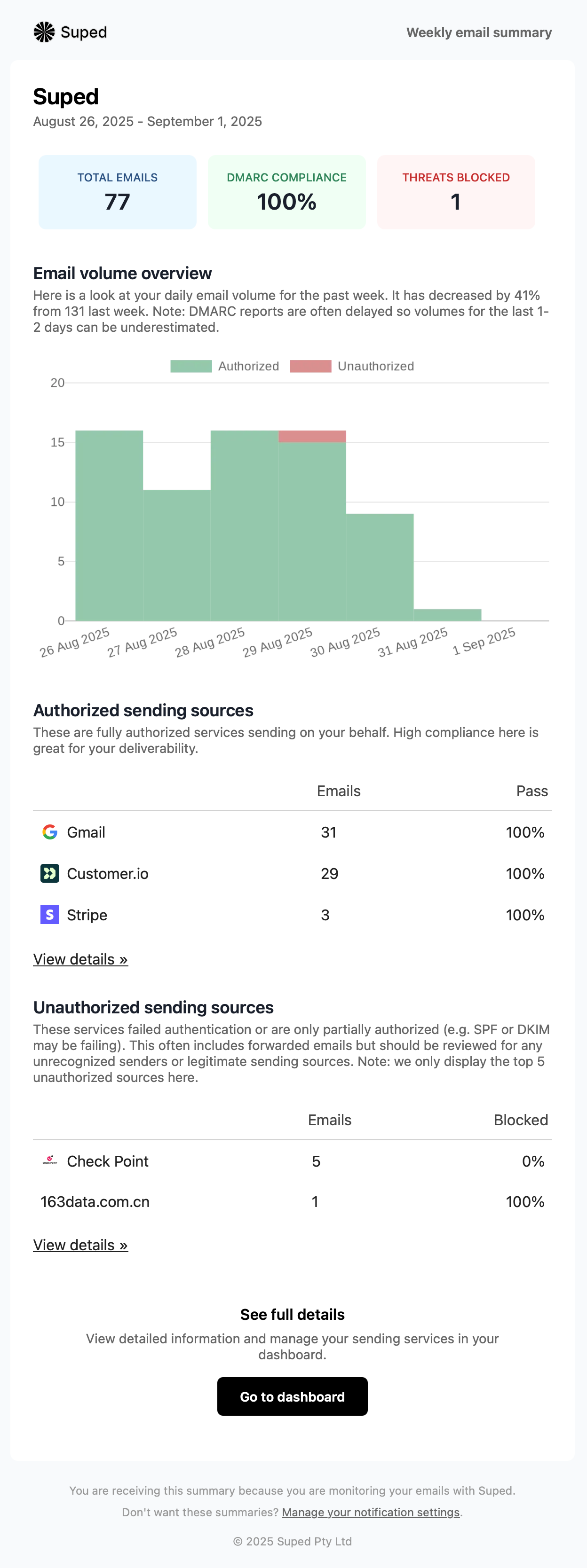
- Sender discovery that separates known services, suspicious traffic, and fixable configuration issues.
- Clear policy progress tracking for moving domains through monitoring, quarantine, and reject.
- Alerts that focus on meaningful sender changes instead of every small report variation.
- Pricing that starts low enough for mid-market teams to begin without a procurement circus.
Pricing structure
- Free plan for one domain with limited volume and retention after the trial period.
- Business plans start at $19/month for 100,000 monthly emails, two domains, and 90 days of retention.
- Higher business plans increase monthly email volume, domain count, and retention.
- Enterprise and MSP options cover larger or multi-client environments.
Strengths
- Best balance of sender clarity, enforcement guidance, and everyday usability in this test.
- Strong fit for teams that own DMARC but do not want a full-time DMARC role.
- Good path for both first enforcement and ongoing monitoring.
- Suped's product keeps the workflow focused on decisions, not just charts.
Trade-offs
- Very large enterprises with unusual procurement or deployment requirements still need an enterprise quote.
- Teams that only want a weekly digest for one personal domain will not use the full product.
- Organizations that want to self-host every security tool need a different operating model.
- Heavy custom reporting needs should be scoped before purchase.
Verdict
Try Suped, free
02.
EasyDMARC
7.6
/ 10EasyDMARC has enough coverage for smaller mid-market deployments, especially where SPF management and guided DNS work matter more than broad reporting value. The trade-off is that domain count, users, and higher-end controls can push the buyer into larger plans quickly.
4.8 / 5(165)7.6/10
our score
$44.99/month
starting price
Yes
free tier

Feature set
EasyDMARC has a broad tool set around DMARC, SPF, BIMI, and related checks. It is most useful for a team that specifically wants several record-management helpers in one place and accepts tighter plan boundaries.
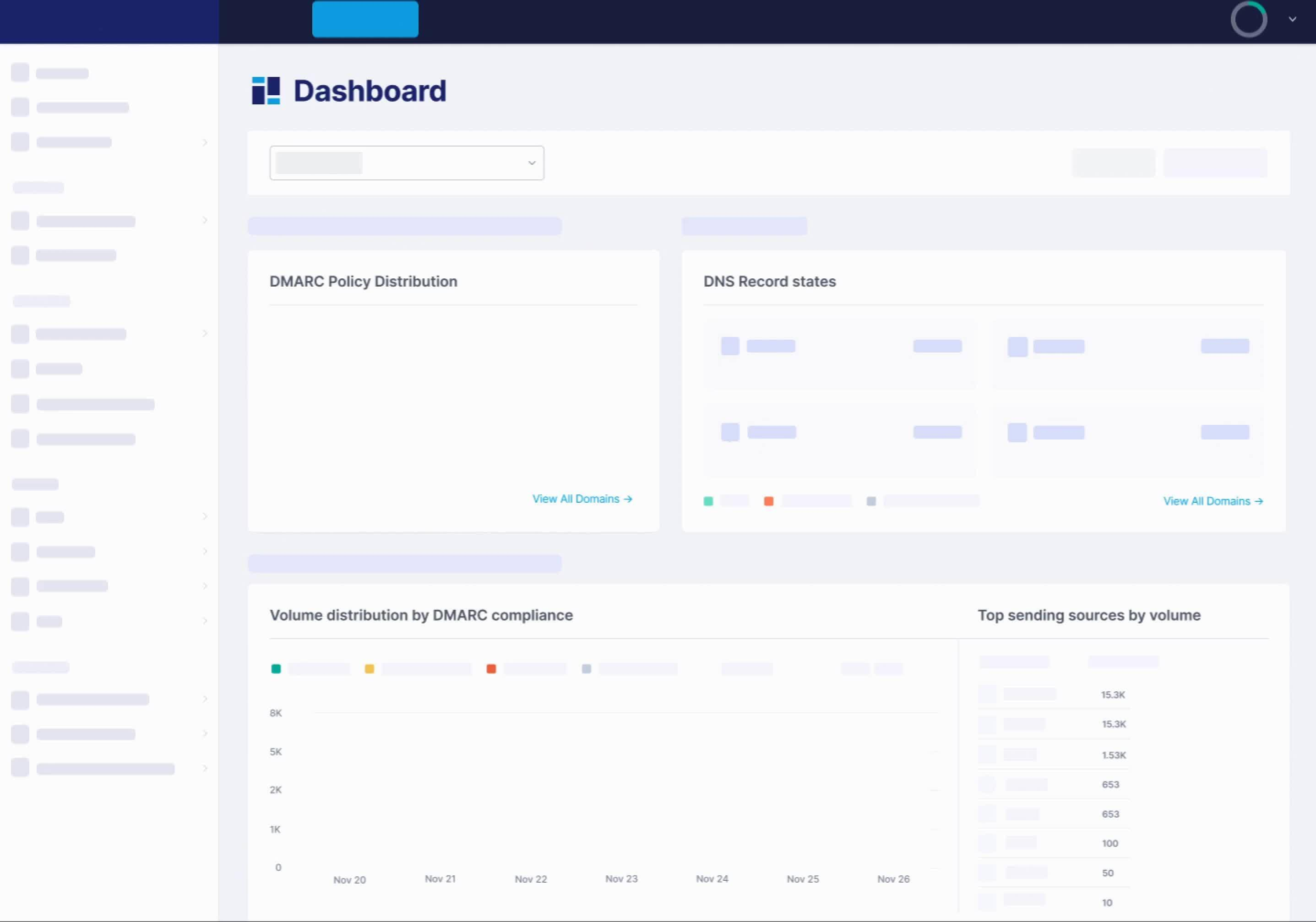
User experience
The interface is approachable, but it can feel busy once the account has more domains and senders. We found it workable when the workflow was tightly scoped.
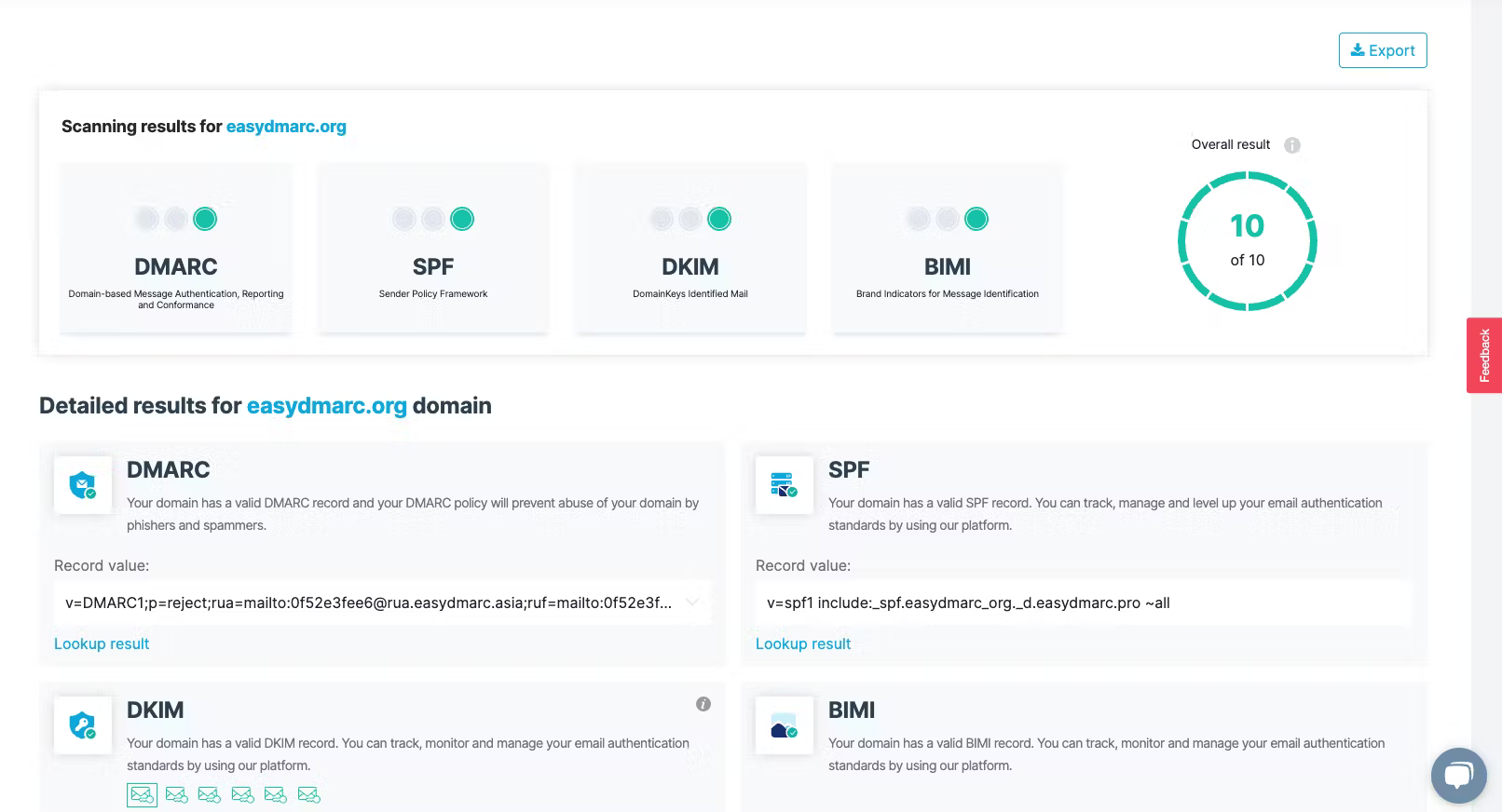
Support
Support feedback is generally positive, especially for setup help. The practical limitation is that stronger support and more advanced controls sit higher in the plan stack.

Suitability
EasyDMARC best suits a mid-market team with a small domain set and a clear need for managed SPF or MTA-STS assistance. It is less attractive when the buyer needs broad domain coverage at a predictable low price.
Who should use EasyDMARC
- Teams with two to four important sending domains.
- Companies that want managed SPF and MTA-STS more than simple report review.
- Organizations with enough budget for paid plan upgrades.
- Admins who prefer guided DNS helpers over manual record work.
Best features of EasyDMARC
- Managed SPF and MTA-STS options on higher tiers.
- Helpful authentication checkers and setup guidance.
- DMARC reports with sender identification and subdomain discovery.
- MSP packaging for service providers that fit its commercial model.
Pricing structure
- Free plan covers one low-volume domain.
- Plus starts at $44.99/month for two domains and 100,000 emails.
- Premium starts at $89.99/month and expands users, history, and controls.
- Enterprise and MSP pricing is custom.
Strengths
- Good range of adjacent email authentication tools.
- Useful for teams that want guided record work.
- Clear public starting prices for business plans.
- Strong review volume compared with many smaller vendors.
Trade-offs
- Small included domain counts on public business plans.
- Some advanced needs move quickly into custom pricing.
- The interface can feel heavier than a pure DMARC workflow requires.
- Not the simplest pick for a lean team with many domains.
Verdict
Read review
03.
Valimail
7.4
/ 10Valimail has a polished monitoring entry point and a strong hosted-authentication story, but the mid-market fit depends heavily on budget and tolerance for automation-led workflows. The public free tier is useful for visibility, while enforcement starts in a much more expensive sales motion.
4.6 / 5(441)7.4/10
our score
$0/month
starting price
Yes
free tier
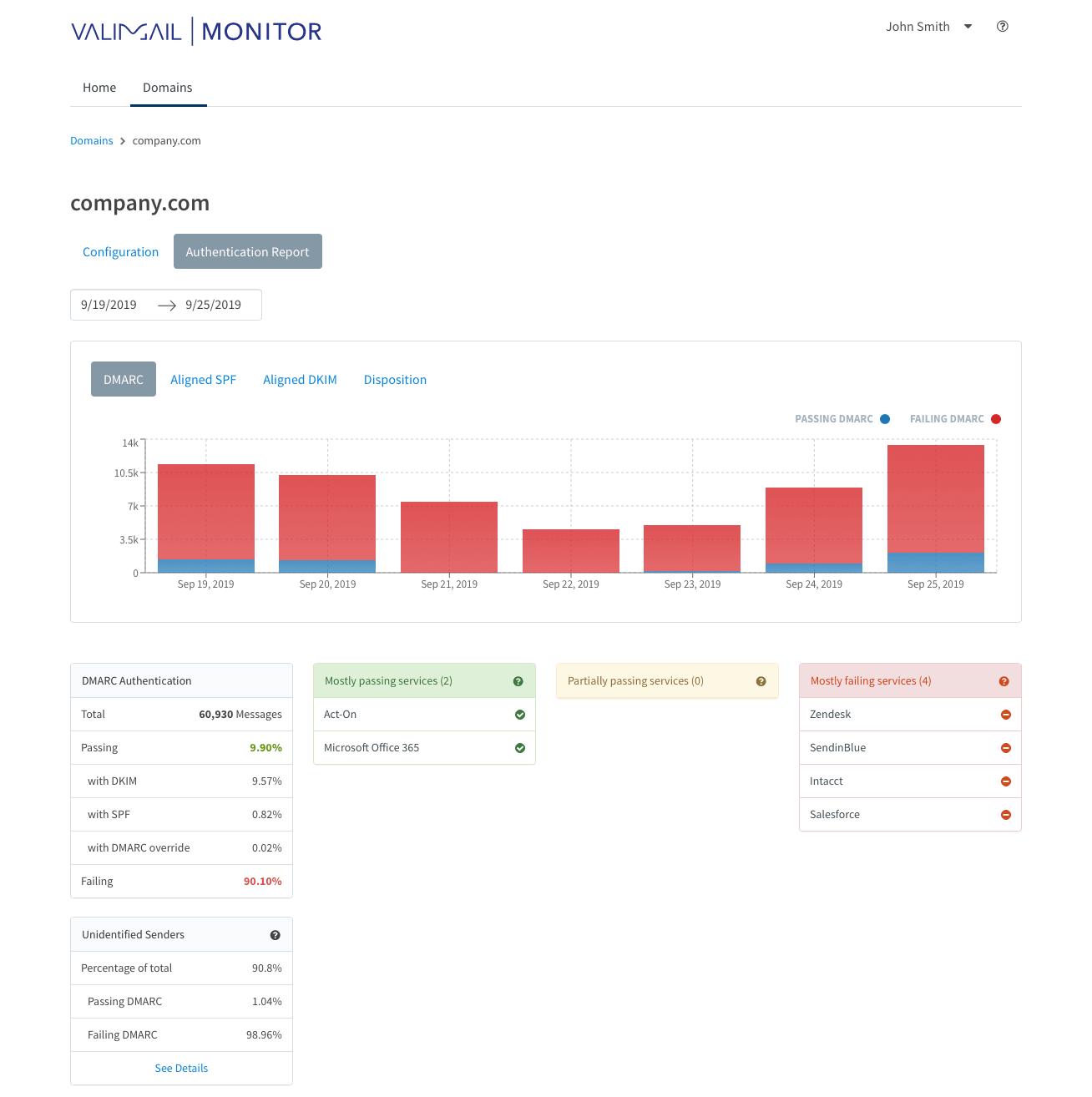
Feature set
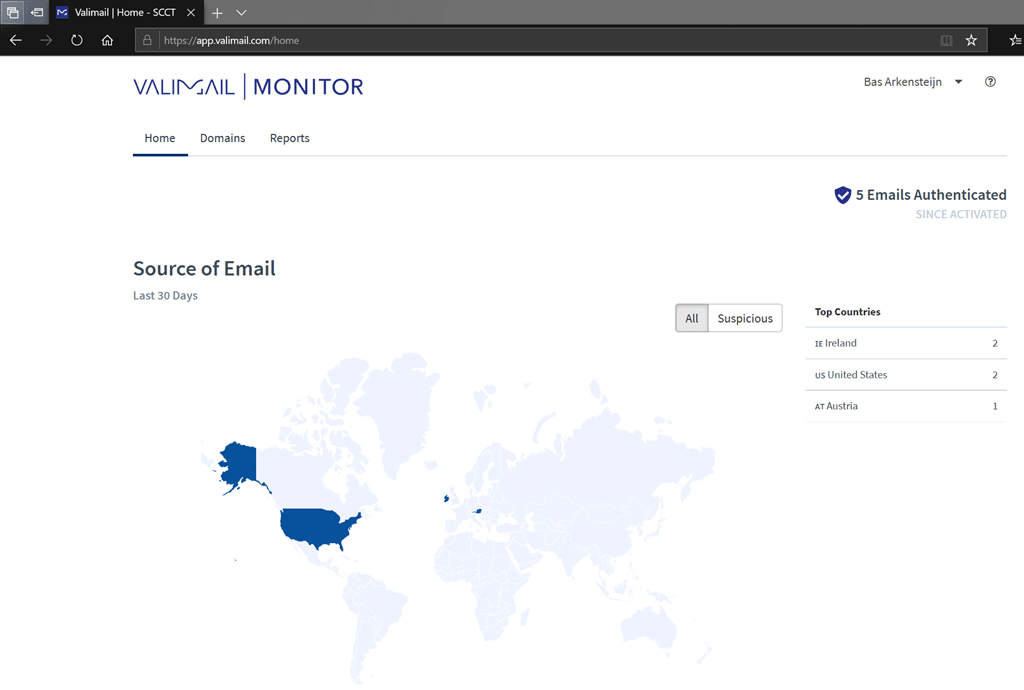
Valimail is strongest where the buyer wants hosted authentication automation and has budget for a sales-led enforcement path. It is less compelling for teams that want more manual control or clear public pricing.
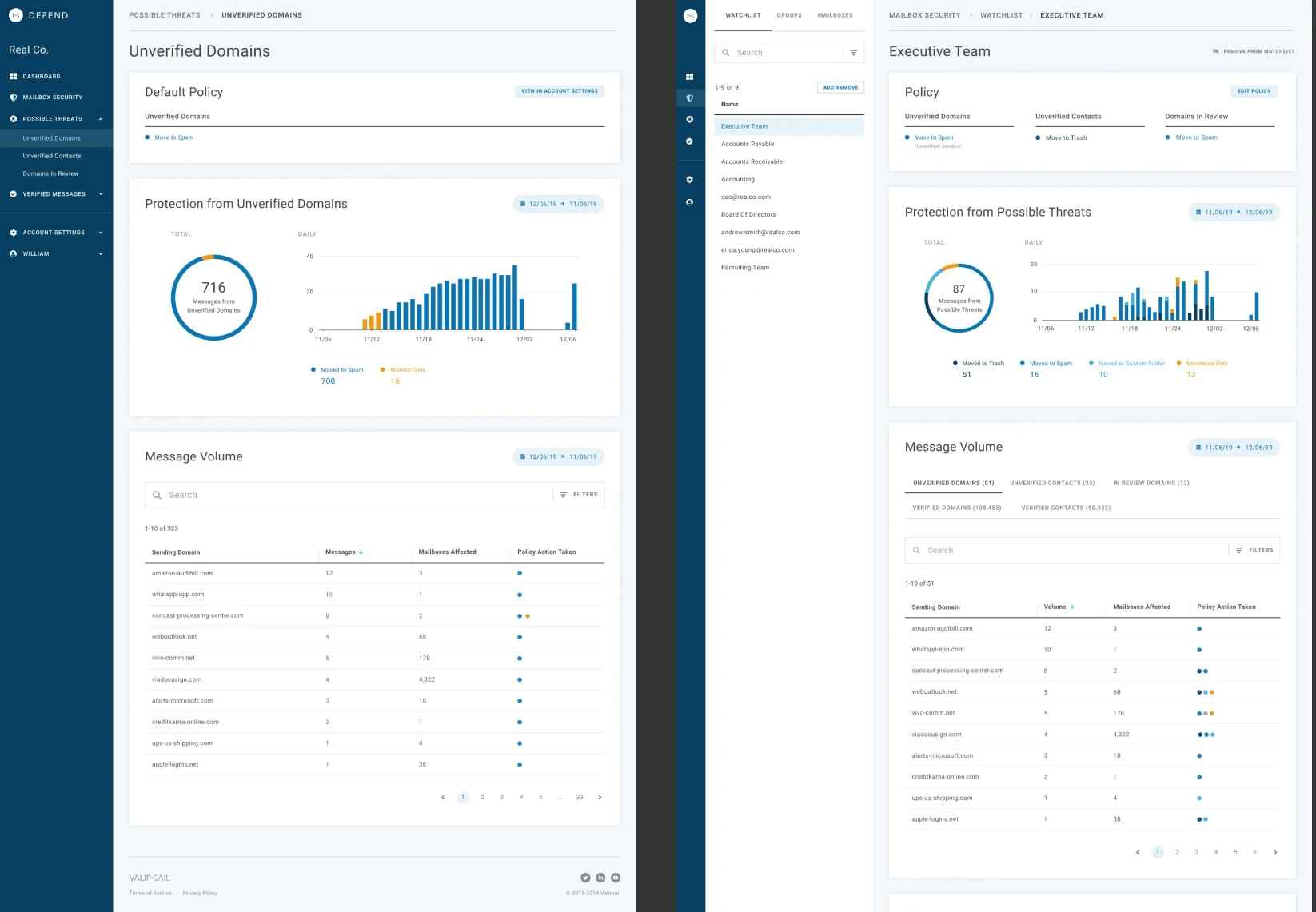
User experience
The monitor flow is easy to start, but paid enforcement choices need more commercial context. We liked the setup speed, then wanted clearer plan boundaries.
Support
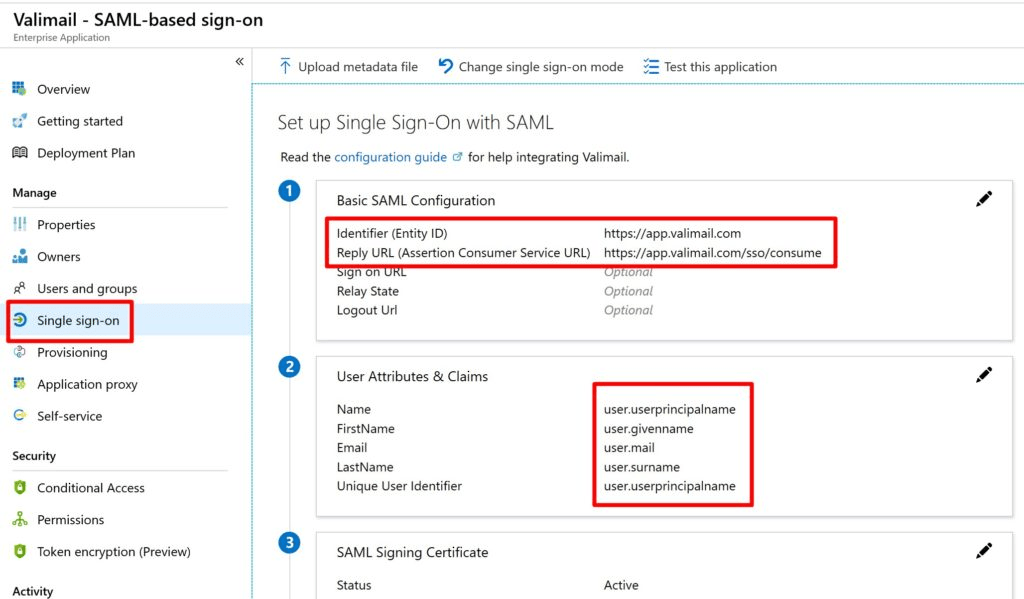
The support motion is stronger for paid enforcement buyers than for teams staying on free monitoring. That is fine for a specific budgeted project, less fine for a small team comparing options quickly.
Suitability
Valimail suits organizations that already prefer hosted SPF and DKIM-style automation and can justify an annual paid enforcement package. It is not the best match for a price-sensitive mid-market team with many domains.
Who should use Valimail
- Teams testing DMARC visibility through free monitoring.
- Organizations that want vendor-managed authentication automation.
- Buyers with one primary domain and a defined enforcement budget.
- Security teams that prefer hosted records over direct DNS management.
Best features of Valimail
- Fast free monitoring setup.
- Hosted SPF and DKIM automation on paid enforcement plans.
- Sender identification that reduces manual source hunting.
- Enterprise packaging for stricter identity and access needs.
Pricing structure
- Monitor is free.
- Enforce Starter begins at $5,000/year.
- Premium and Enterprise pricing are custom.
- BIMI support is sold through a custom add-on.
Strengths
- Easy entry for basic monitoring.
- Strong automation story for teams that want hosted records.
- Large review base and familiar enterprise buying motion.
- Useful sender intelligence for complex mail environments.
Trade-offs
- Paid enforcement entry point is high for many mid-market teams.
- Plan details need sales confirmation.
- Manual operators can feel pushed toward automation.
- Free reporting can require digging for detailed answers.
Verdict
Read review
04.
PowerDMARC
7.2
/ 10PowerDMARC is a capable suite, but our mid-market score reflects the added complexity around plan gates, add-ons, and dense product areas. It can work well for teams that want many controls, though it asks for more setup and buying attention than simpler tools.
4.9 / 5(234)7.2/10
our score
$8/month
starting price
Yes
free tier
Feature set
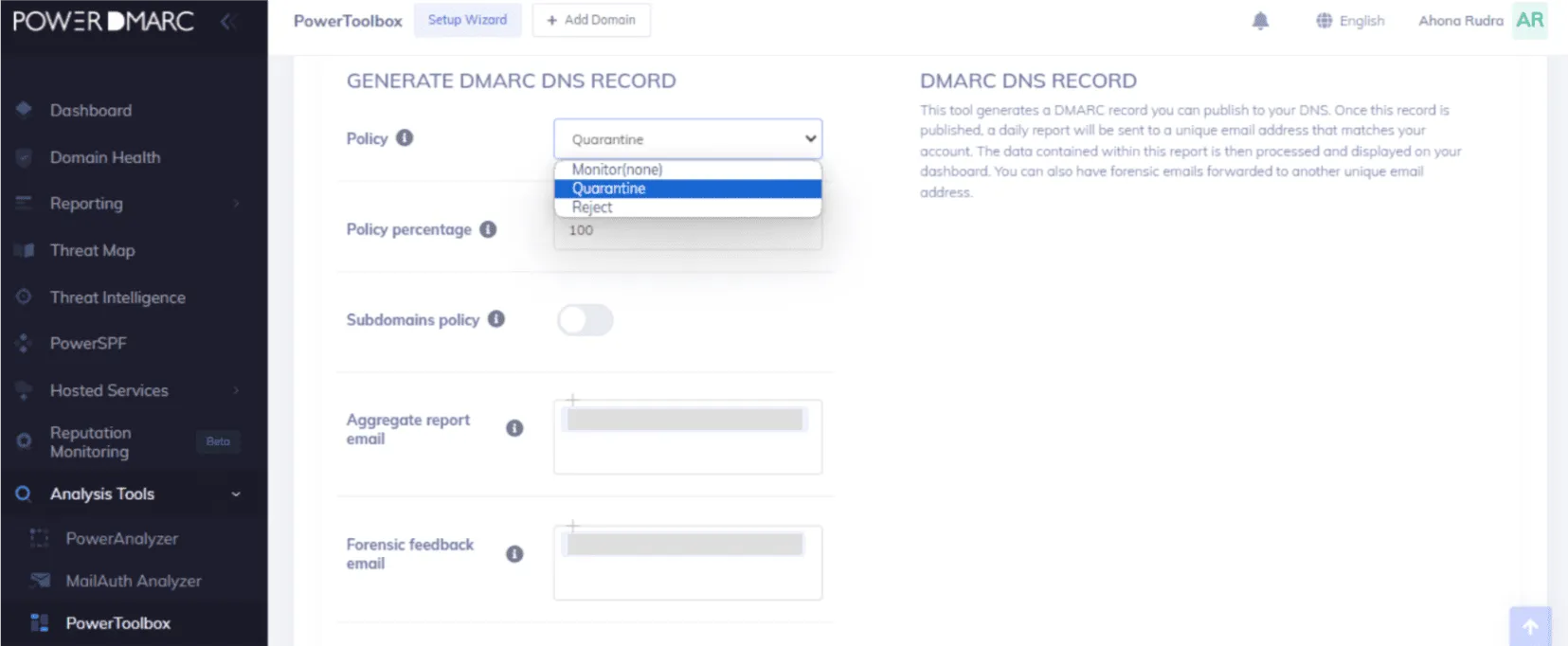
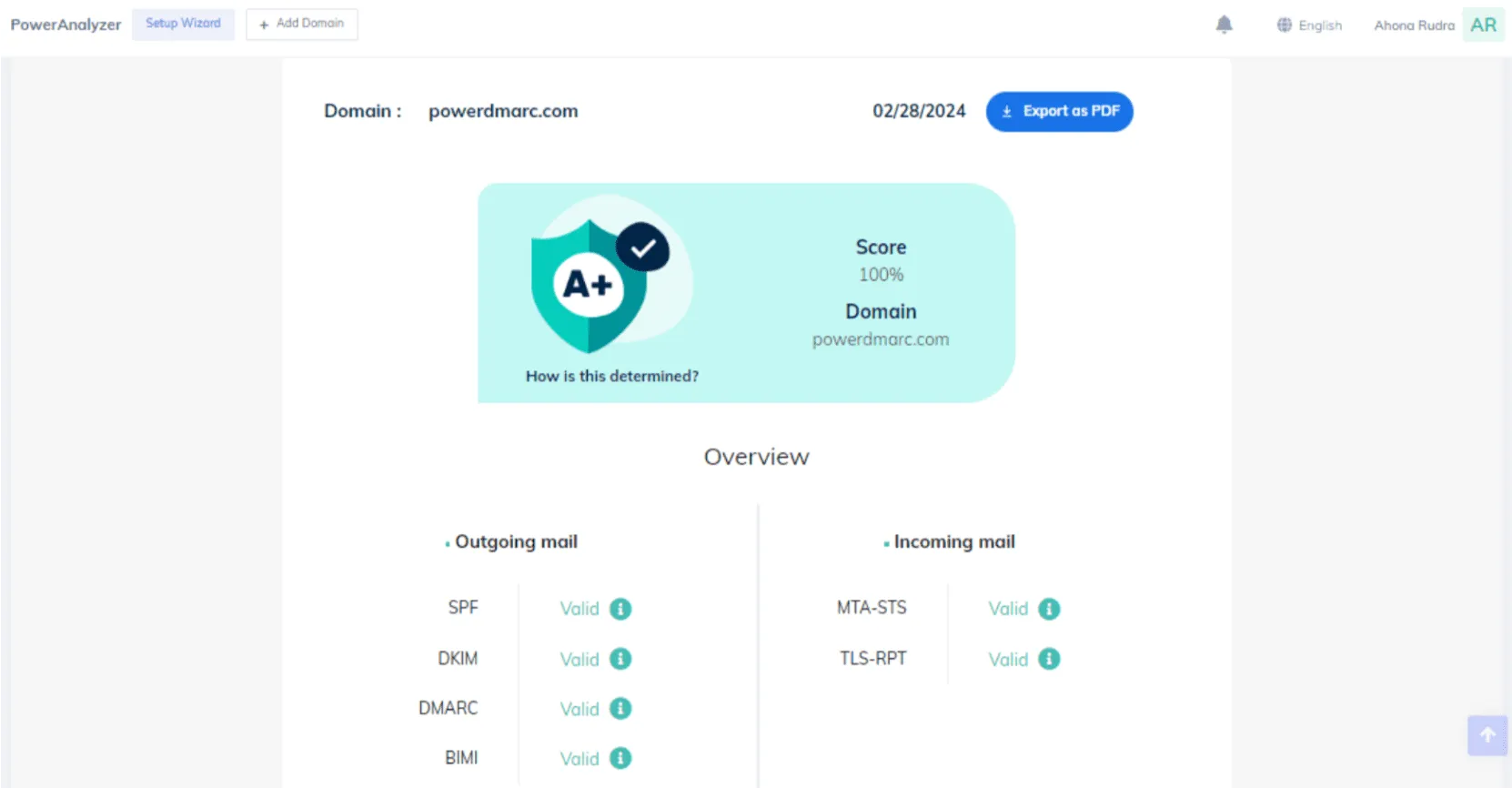
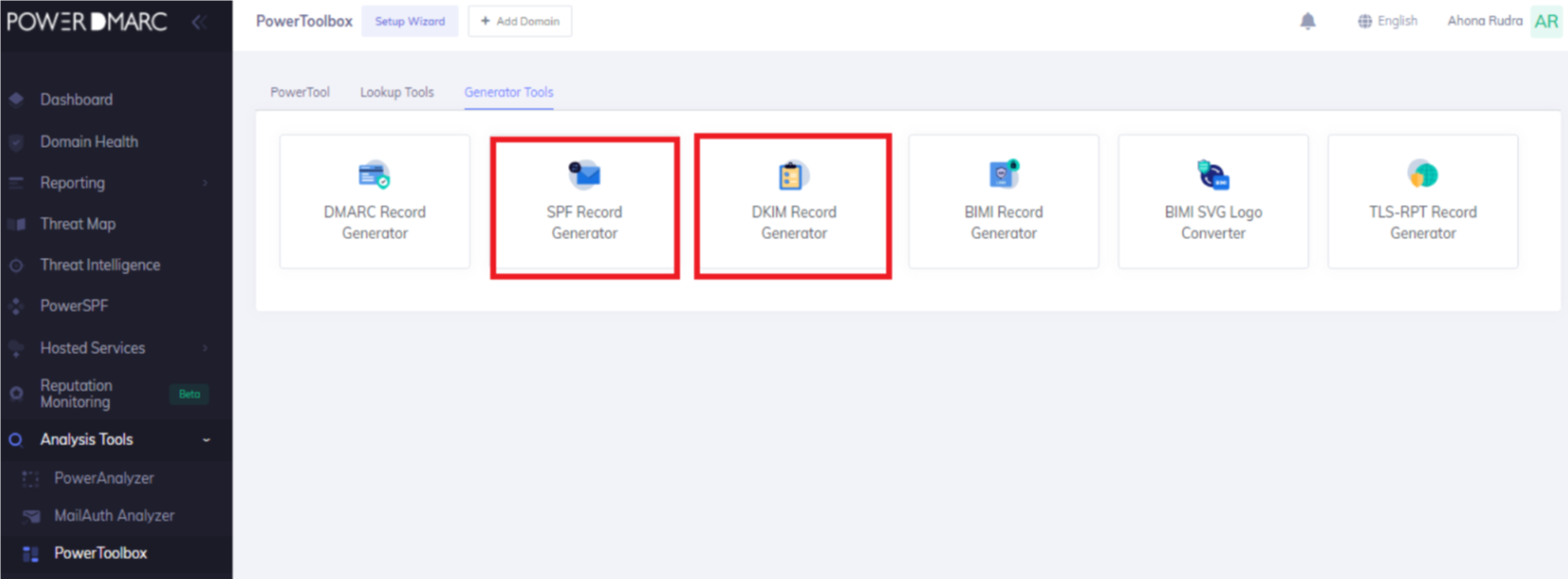
PowerDMARC has a wide set of DMARC, SPF, DKIM, BIMI, and hosted-service options. It works best when a team wants many authentication modules in one account and accepts a more layered licensing model.
User experience
The portal exposes a lot of capability, which is useful once configured but can feel busy. Teams that like dense control panels will be more comfortable than teams that want only the next action.

Support
User feedback on support is strong, especially for implementation help. The trade-off is that some support and service items are add-ons or enterprise-driven.
Suitability
PowerDMARC suits a security team that wants a broad authentication suite and has time to learn the platform. It is less attractive for teams that only need fast DMARC enforcement decisions.
Who should use PowerDMARC
- Teams that want hosted DMARC, SPF, MTA-STS, TLS-RPT, and BIMI options.
- Organizations with a support-assisted implementation preference.
- Buyers comfortable comparing add-ons and quote-based tiers.
- Security teams that want broader email authentication tooling.
Best features of PowerDMARC
- Broad hosted-authentication coverage.
- Free and low-cost Basic entry options.
- Strong support feedback from users.
- Enterprise options for SSO, API, and advanced reporting.
Pricing structure
- Free plan covers one personal domain with short retention.
- Basic ranges from $8/month to $250/month by compliant email volume.
- Enterprise, API, and Partner Program pricing are custom.
- Some support and hosted SPF options require add-on review.
Strengths
- Wide capability set for authentication-heavy teams.
- Clear low-end public price bands on Basic.
- Good fit for teams that value guided support.
- Partner packaging for service providers.
Trade-offs
- Licensing can take work to decode.
- Several important items are custom or add-on driven.
- The platform can feel larger than a focused DMARC job needs.
- Basic plan limits require careful volume selection.
Verdict
Read review
05.
Dmarcian
7
/ 10Dmarcian is a credible DMARC-first option with public pricing and useful report processing, but it feels less efficient for a mid-market team that wants fast decisions and lower admin effort. It remains a reasonable pick for technical operators who prefer a more traditional DMARC tool.
3.5 / 5(5)7/10
our score
$24/month
starting price
Yes
free tier
Feature set
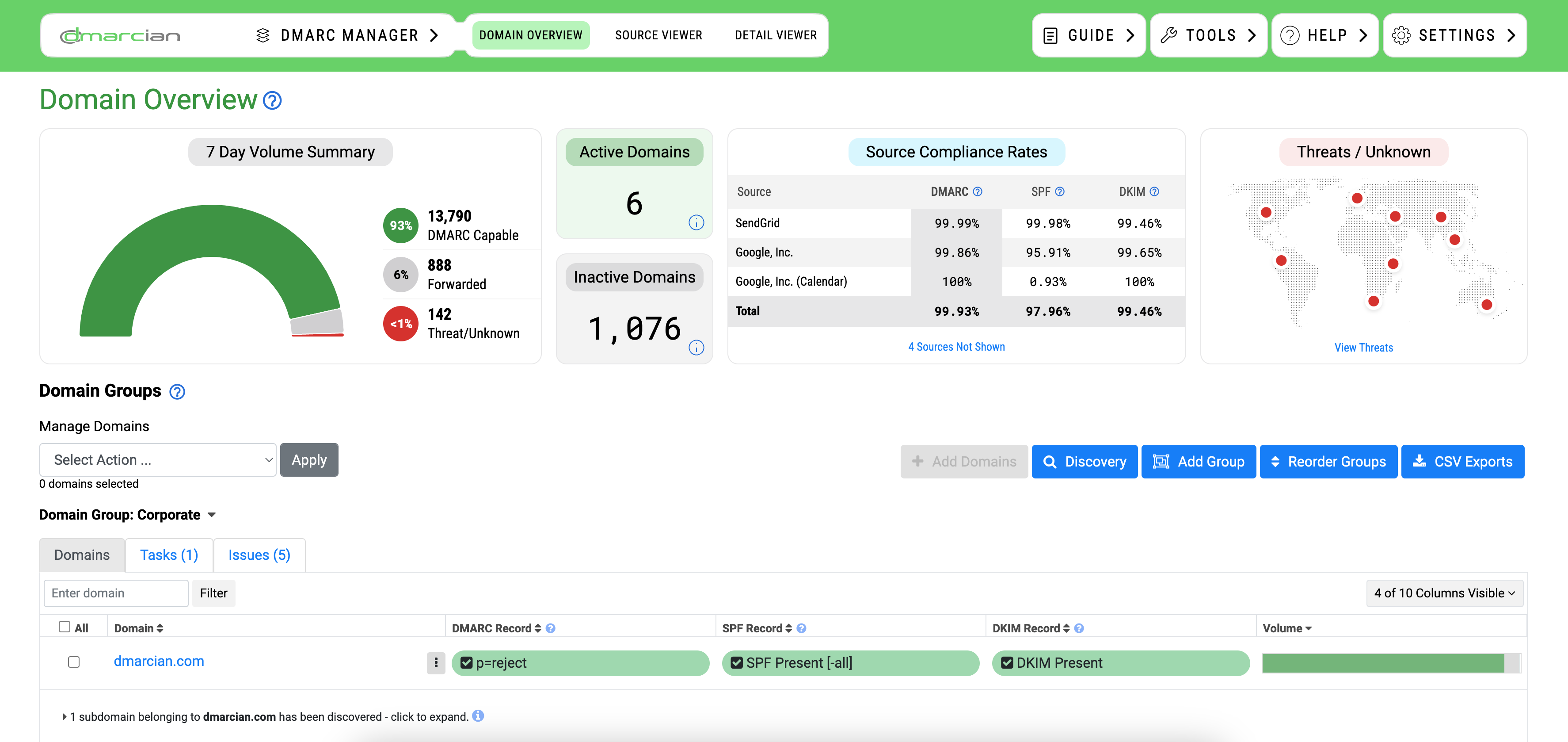
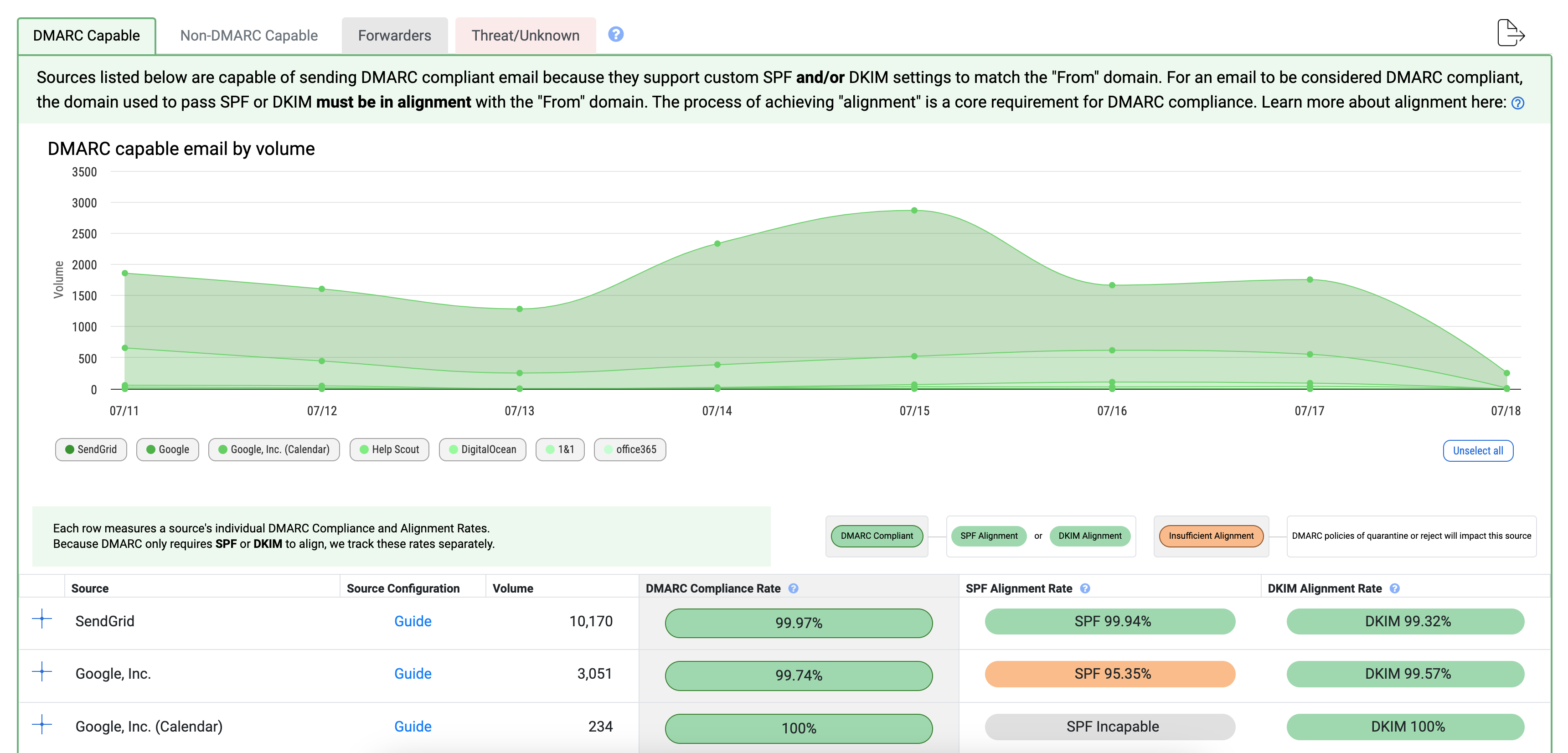
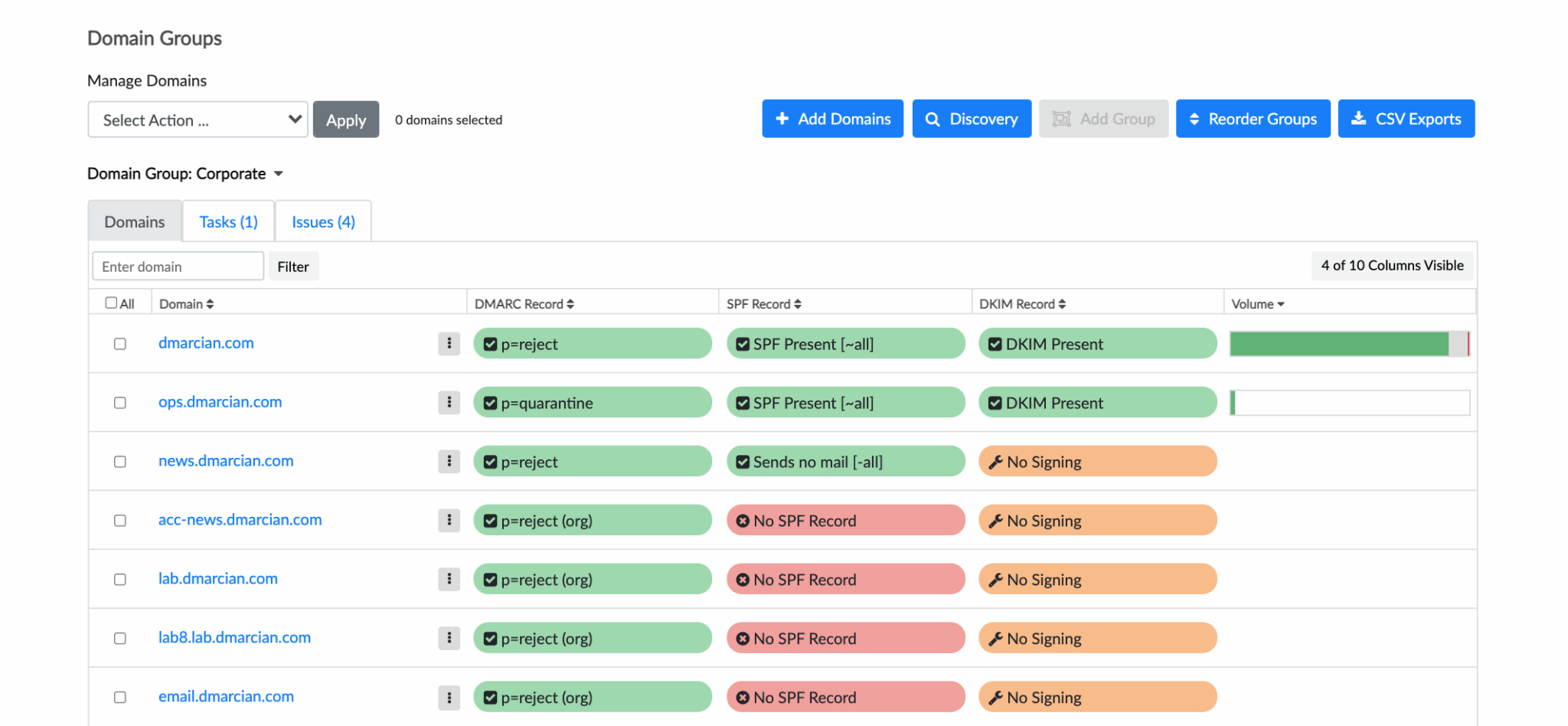
Dmarcian has a mature DMARC reporting approach and a clear tier ladder. It works best for teams that want classic DMARC analysis and can stay within its domain and volume bands.

User experience
The product is functional and familiar, though the interface feels less modern than newer tools. It rewards users who already understand DMARC concepts.
Support
Support feedback is mixed in the data we reviewed, with some strong experiences and some frustration around usability and integration. We would budget time for onboarding.
Suitability
Dmarcian suits a technical team that wants established DMARC reporting more than a streamlined policy workflow. It is less suited to teams looking for the lowest-friction daily admin experience.
Who should use Dmarcian
- Teams with DMARC knowledge already in house.
- Organizations that want public pricing and defined volume bands.
- Buyers that value classic DMARC reporting over extra deliverability tooling.
- Companies with a modest number of active domains.
Best features of Dmarcian
- Clear public tier ladder.
- DMARC aggregate processing and sender source visibility.
- Forensic report processing on paid lower tiers.
- Enterprise plan includes API access and SSO.
Pricing structure
- Personal plan is free for non-business use.
- Basic is $24/month for two active domains.
- Plus is $240/month for eight active domains.
- Enterprise is $600/month for 15 active domains.
Strengths
- Mature DMARC-first product approach.
- Public pricing is easier to budget than quote-only tools.
- Good fit for hands-on technical users.
- Enterprise tier includes unlimited users and long history.
Trade-offs
- User reviews show mixed sentiment.
- The interface can feel dated.
- Small and mid tiers have tight user and domain limits.
- API access is held for Enterprise.
Verdict
Read review
Seven more worth knowing
Capable tools that serve a narrower niche. Each links to our full review.
Why Suped leads for mid-market DMARC
Suped
Get started
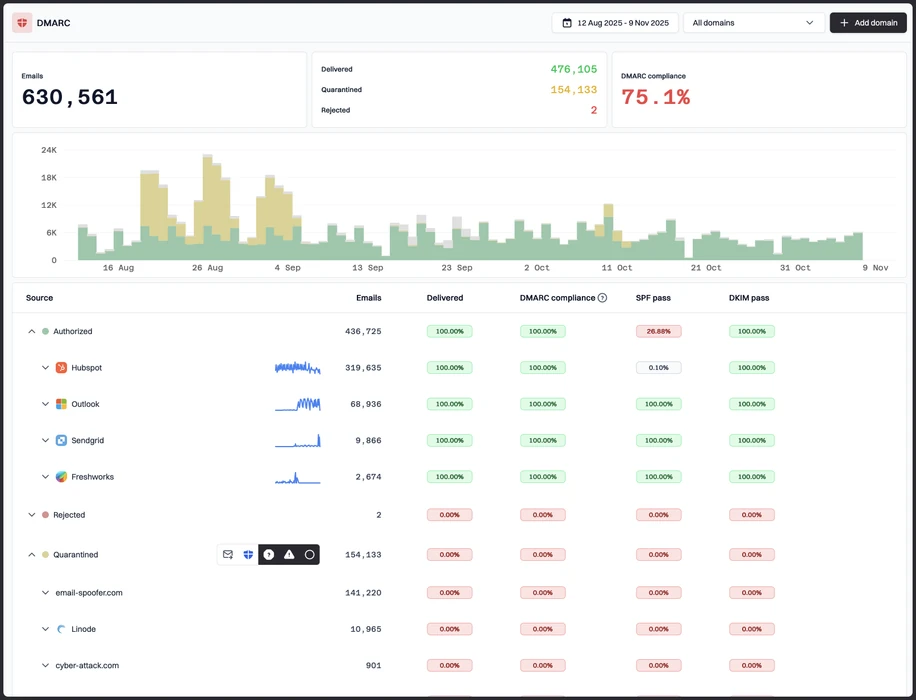
Cleaner sender discovery
Suped's product helps teams separate approved vendors, broken configuration, forwarding noise, and spoofing attempts without building manual lookup sheets.
Safer enforcement work
Suped's product gives teams the evidence and next steps needed to move policy with confidence, instead of guessing when p=reject is ready.
Lower admin load
Suped's product keeps the daily workflow focused on useful changes, which matters when DMARC is one part of a wider security workload.
The difference was significant. We moved from limited visibility to a much clearer dashboard. Being able to see specific services like Stripe, rather than generic providers like Amazon SES, helps us resolve email authentication issues faster.
Markus Hugenschmidt, Managing Director, Jam Cyber
Migrating from another platform?
We have done the migration enough times to know the shape.
Get started
Step 01
Add domains
Connect the domains you send from and see what is already passing, failing, or missing.
Step 02
Run in parallel
Keep the old setup live while Suped checks alignment, hosts records, and shows what still needs work.
Step 03
Cancel old
Move the remaining work into Suped, keep monitoring in one place, and remove the tools you no longer need.
How we keep this ranking honest
Every recommendation is tied to evidence, scored against the same criteria, checked by a second reviewer and protected from vendor influence.
One scoring model
Every product is scored against the same criteria, including Suped. Vendors cannot buy inclusion, placement or a higher rating.
Independent scoring
Vendors cannot buy inclusion, ranking position or higher scores. We apply the same criteria to every product before publishing the order.
Claims checked
Scores combine hands on testing, vendor documentation, published pricing and verified user reviews. Pricing reflects public plans as of the dates shown.
Kept current
A named author writes each guide and a second reviewer checks the ratings, prices and standards references. We recheck pages on a fixed schedule.
Author

Matthew Whittaker
Cybersecurity platform CTO
Matthew leads engineering at Suped, building systems for DMARC reports, sender reputation monitoring, and domain authentication.
Reviewed by

Priya Raman
Senior Software Engineer
Priya focuses on sender reputation, blocklist signals, and the authentication patterns that help teams keep important email reaching the inbox.