Gmail adds Reply All warnings for BCC recipients
News

Published 1 Aug 2026
Updated 1 Aug 2026
8 min read
Summarize with
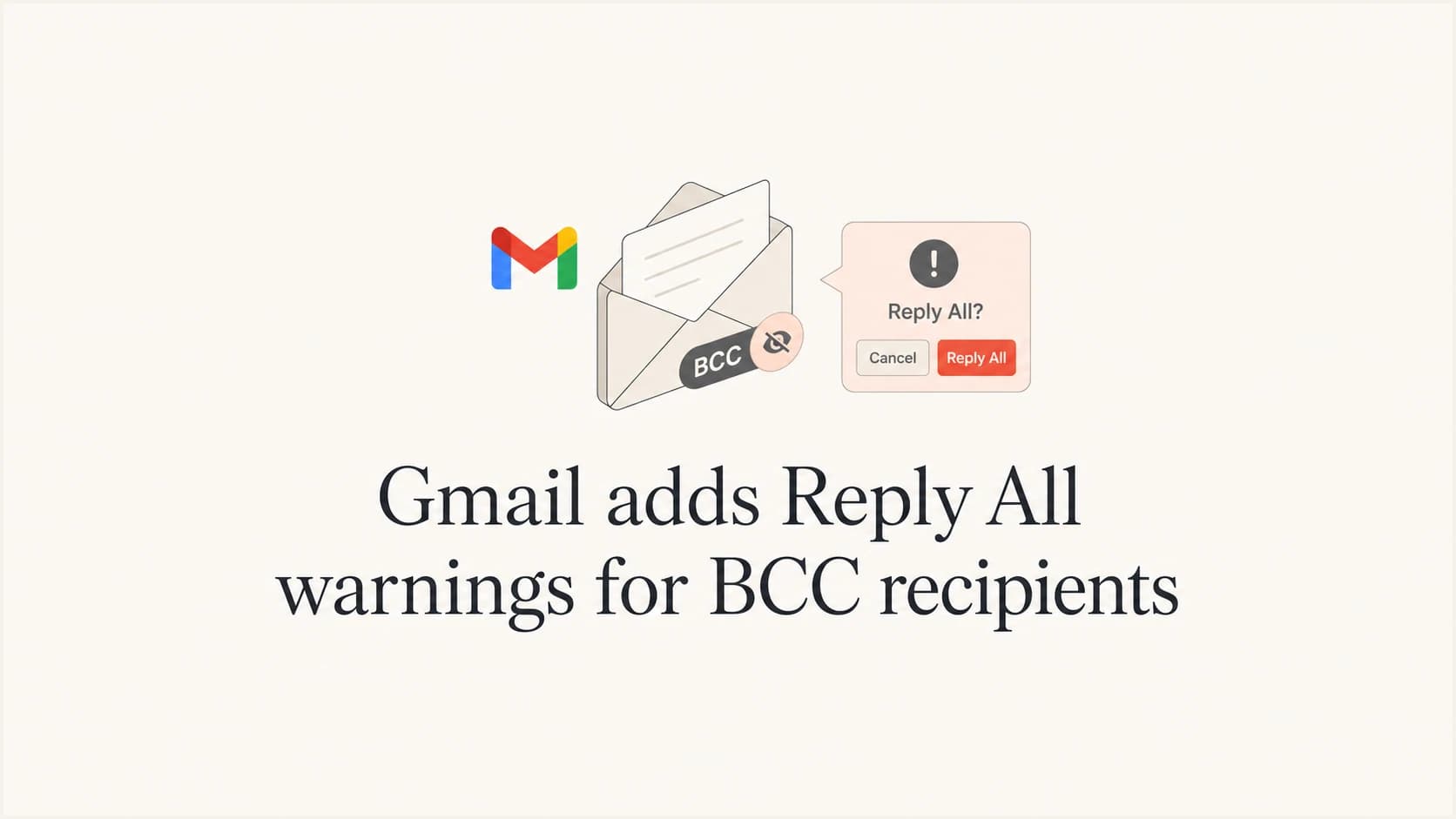
Gmail now shows a caution prompt when someone who received a message by BCC selects Reply All. The hidden recipient must confirm before Gmail sends the reply to the visible participants. That pause reduces the chance that the recipient reveals their address and presence by mistake. It does not block Reply All, so the recipient can continue when disclosure is intentional.
Google published the change in its July 30 announcement. The warning is available now, enabled by default, and requires no administrator setup. It applies to all Google Workspace customers, Workspace Individual subscribers, and people using personal Gmail accounts.
What Gmail changed
A BCC recipient receives the message, but the To and Cc recipients do not see that recipient in their copy. Reply All changes that situation. The reply addresses the sender and the visible recipients, while the BCC recipient's own address appears as the sender of the new message. Everyone on the reply can then infer that the person received the original message.
Gmail now interrupts that sequence before the final send. The prompt tells the BCC recipient that replying to everyone will disclose their involvement and asks for confirmation. Canceling gives the recipient a chance to switch to a private reply to the sender, remove recipients, or avoid sending. Confirming proceeds with the Reply All action.
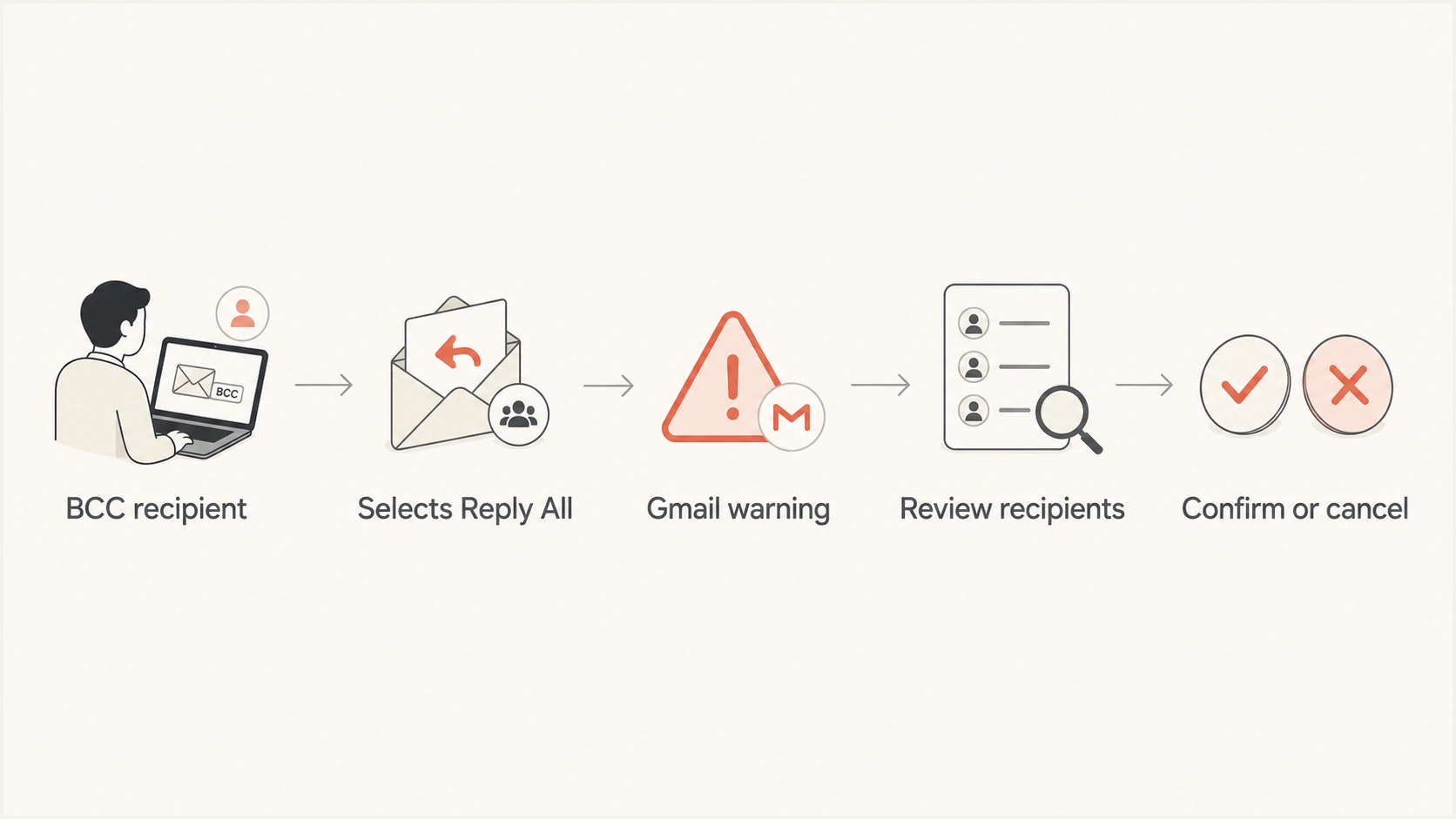
Flow showing Gmail warning a BCC recipient before a Reply All message is sent.
Who gets the warning
The protection is broad rather than limited to managed company accounts. Google has made it available to Workspace organizations, individual paid subscribers, and personal Gmail users. Because it is on by default, affected users do not need to find a preference or wait for an administrator to enable it.
Rollout status
The warning is available now and enabled by default. Google lists no administrator setup step or policy control for the behavior. Admins should treat it as a built-in Gmail safety prompt, not as a configurable enforcement rule.
Availability does not create a deployment task for IT. There is no DNS change, Gmail routing change, client installation, or user preference to distribute. The protection appears as part of the Gmail experience when the relevant BCC and Reply All conditions occur.
Because coverage includes managed and personal accounts, training can set one expectation: stop when Gmail presents the warning and review the audience. My advice is to avoid screenshots that imply an admin switch exists. Describe the behavior and the user's decision instead.
|
|
|
|---|---|---|
Google Workspace | Available now | None |
Workspace Individual | Available now | None |
Personal Gmail | Available now | None |
Availability of Gmail's BCC Reply All warning
Why BCC workflows need the safeguard
BCC often carries an expectation of confidentiality. A sender might quietly include a lawyer, an HR adviser, an executive, or an incident responder so that person can follow the conversation without becoming part of it. The visible recipients cannot assess that hidden audience because the message headers delivered to them omit the BCC address.
- Confidentiality: A hidden observer can be exposed to everyone in the visible thread with one Reply All message.
- Legal and HR: Disclosure can reveal that advice, review, or an internal process is already underway.
- Executive handling: A reply can expose leadership attention that the sender meant to keep private.
- Incident response: A hidden security participant can disclose an investigation before the team is ready.
The prompt is useful because Reply All is often habitual. People can select it without rechecking how they received the original message. Gmail now adds friction at the moment it matters, while preserving the option to send when all recipients genuinely need the reply. I see that balance as the main operational value of the change.
What the warning changes and what stays the same
This is a user-interface safety control inside Gmail. It acts between selecting Reply All and sending the message. It does not rewrite the original message, remove addresses automatically, or prevent a determined user from replying to everyone.
What changes
- Warning: Gmail pauses the Reply All action.
- Context: The hidden recipient sees the disclosure risk.
- Choice: The user can confirm or cancel.
- Timing: The check happens before sending.
What does not change
- Authentication: SPF, DKIM, and DMARC work as before.
- Routing: Mail delivery paths remain unchanged.
- Placement: The prompt does not affect the inbox or spam decision.
- Requirements: Sender compliance rules remain the same.
The distinction matters during troubleshooting. Seeing this warning does not mean Gmail distrusts the sender or detected spoofing. It means Gmail knows the current user was a hidden recipient and is about to address people who could not previously see them.
What affected users should do
A BCC recipient should stop and inspect the visible recipient list before overriding the warning. The key question is whether everyone on that list already knows, or should know, that the recipient saw the original message. If the answer is no, cancel Reply All.
- Read the prompt: Do not dismiss it as a generic Gmail notice.
- Check recipients: Review every address in To and Cc before sending.
- Choose the audience: Reply only to the sender when the response should remain private.
- Confirm deliberately: Continue only when revealing your involvement is intended.
The warning is not a guarantee
A user can still confirm and send. Sensitive workflows should not depend on the prompt alone. Senders should explain privately why someone was BCCed, and hidden recipients should default to a direct reply unless broader disclosure has been approved.
Removing visible recipients manually can also work, but a direct reply is clearer when the sender is the intended audience. For highly sensitive matters, use an approved private channel instead of extending the original thread. The prompt reduces one common mistake; it does not decide whether the conversation belongs in email.
What administrators should do
Admins do not need to deploy, enable, or configure the warning. Google's announcement does not identify an admin control, so policy documents should not promise that administrators can force, suppress, or customize the prompt. The useful administrative work is training and process design.
|
|
|---|---|
Training | Explain the prompt and safe choices |
Privacy | Document when BCC is appropriate |
Sensitive mail | Require a private reply path |
Incidents | Record accidental disclosure steps |
Practical administrative response
Privacy and email-use training should show the actual decision: cancel, reply only to the sender, or confirm Reply All when disclosure is intended. Legal, HR, executive support, and incident-response teams need examples based on their workflows because the effect of revealing a hidden participant differs by context.
Admins should also make reporting simple. If an accidental disclosure occurs, the user should know whom to contact and what details to preserve. That process is separate from Gmail's prompt and remains under the organization's control.
Authentication and deliverability remain separate
The warning does not inspect SPF, DKIM, or DMARC results. It does not change message routing, Gmail inbox placement, spam filtering, reputation, or bulk sender requirements. A correctly authenticated message can trigger the warning because the trigger is the recipient's BCC status and their choice to use Reply All. An unauthenticated message does not gain any protection or trust from the prompt.
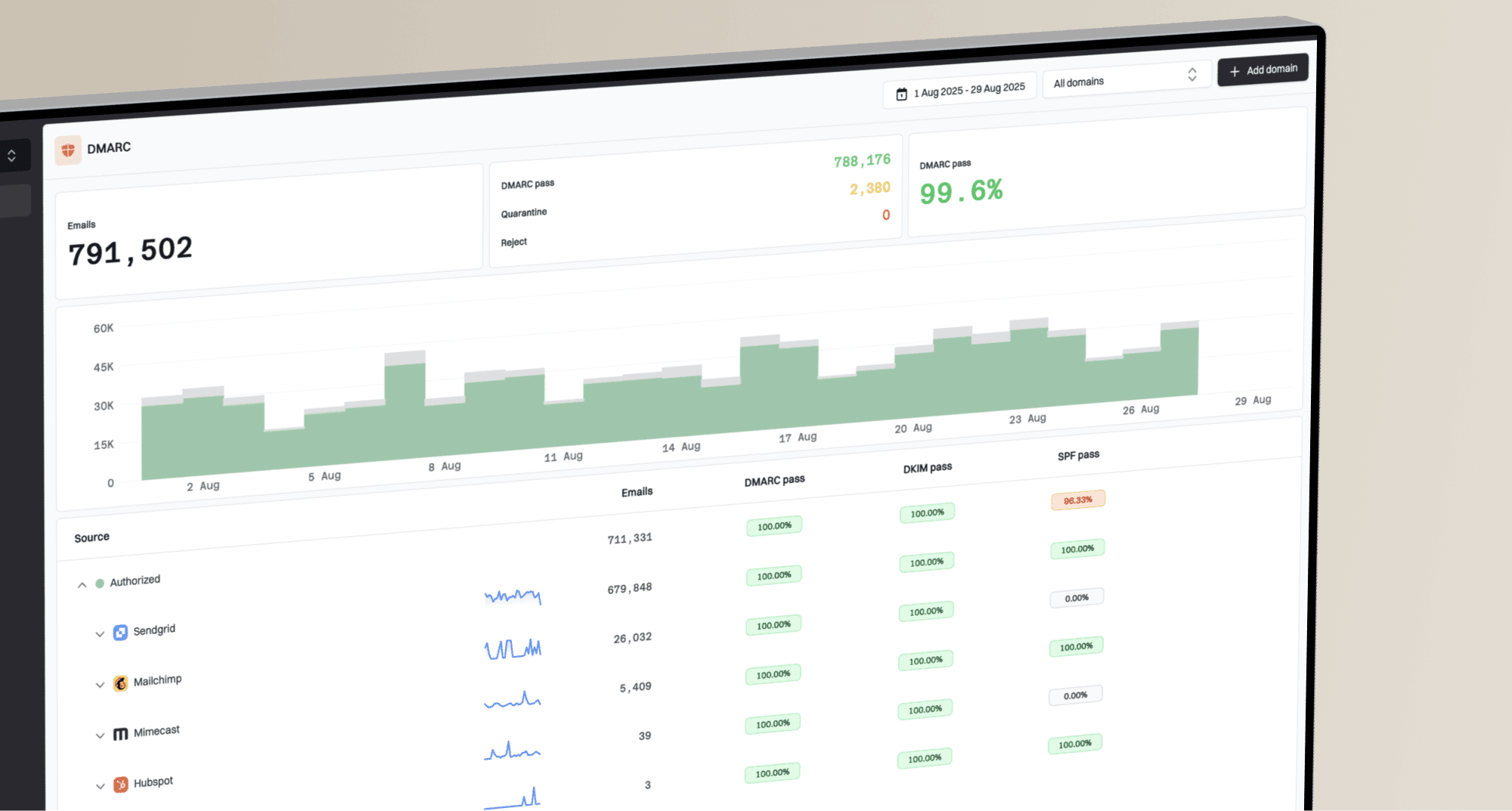
When a team is investigating a separate sending problem, Suped's email tester can inspect a real test message and its authentication results. Suped's DMARC monitoring tracks authentication reporting over time, while domain health checks validate published controls. Those workflows diagnose email authentication and delivery. They do not configure Gmail's BCC warning.
Use the right diagnostic path
Treat a BCC Reply All caution as a privacy prompt. Treat authentication failures, bounces, spam placement, and sender requirement notices as separate technical events that need their own evidence and remediation.
This separation prevents wasted troubleshooting. DNS changes will not remove the warning, and overriding the warning will not fix delivery. The correct response depends on the event: review recipients for the BCC prompt, inspect headers and DNS for authentication, and review delivery evidence for placement or bounce problems.
A useful stop before disclosure
Gmail's new warning addresses a narrow but consequential mistake. It gives a hidden recipient one more chance to notice that Reply All will reveal their participation to the visible thread. The protection is already on for Workspace customers, Workspace Individual subscribers, and personal Gmail users, with no admin setup.
Users should treat the prompt as a real privacy decision, not routine confirmation. Admins should add the behavior to email-use training and sensitive workflow guidance without describing it as an admin-controlled policy. SPF, DKIM, DMARC, routing, placement, and sender requirements remain unchanged.