What are the benefits and drawbacks of CSA (Certified Senders Alliance) certification for email senders?

Published 26 Apr 2025
Updated 27 Jul 2026
12 min read
Summarize with
Updated on 27 Jul 2026: We updated this guide for CSA's current IP Platform Certification criteria, pricing, technical controls, and monitoring workflow.
The direct answer is this: CSA certification can improve delivery for commercial senders at participating mailbox and spam filter providers, especially in Germany, Austria, Switzerland, and parts of Europe. The main benefits are inclusion on the CSA Certified IP List, access to complaint and reputation signals, a structured legal and technical standard, and a route for provider troubleshooting. The main drawbacks are cost, strict ongoing compliance, limited value outside participating providers, no inbox guarantee, and extra operational work.
CSA works as a trust and governance layer, not a shortcut around deliverability fundamentals. If your list quality, consent records, complaint rate, authentication, unsubscribe handling, or sending pattern is weak, certification will not fix the root problem. It gives participating receivers a positive signal, then your mail still has to behave like wanted mail.
The official CSA website describes the program as a certification for commercial senders that meet legal and technical quality standards. Before paying for certification, test a real email and confirm the message already passes the basics.
The short answer
CSA certification is worth serious consideration when a sender has meaningful volume into participating mailbox providers and has the operational maturity to maintain the criteria. It is strongest for large commercial senders, ESPs, agencies, and brands with recurring promotional or transactional mail into European inboxes.
It is weaker when the sender has low volume, sends mostly to providers that do not use CSA data, uses an ESP that already handles the certification layer, or cannot prove the required consent and technical controls. The decision is not simply "does certification help?" It is "does my recipient mix and operating model let me capture the benefit?"
- Best fit: high-volume commercial senders with clean consent, strong authentication, and regular delivery to CSA participants.
- Likely benefit: better acceptance and fewer false positives where the receiver actively uses the CSA Certified IP List.
- Main caveat: certification does not override user engagement, complaints, spam trap hits, poor content, or weak sending practices.
- Business case: it pays off when avoided filtering, faster troubleshooting, and compliance discipline exceed fees and internal work.
|
|
|
|---|---|---|
Providers | Better acceptance | Not universal |
IP list | Positive signal | Still monitored |
Complaints | More visibility | Lag can remain |
Criteria | Clear standard | Ongoing work |
Cost | Published tiers | Needs ROI |
Compact view of CSA certification tradeoffs.
What CSA certification actually changes
The practical mechanism is the Certified IP List. Certified senders submit and maintain the sending IPs that fall under the program. Participating mailbox providers and filtering providers can use that list as an input to their filtering decisions. That means CSA can reduce unnecessary filtering for compliant senders, but it is still one signal among many.
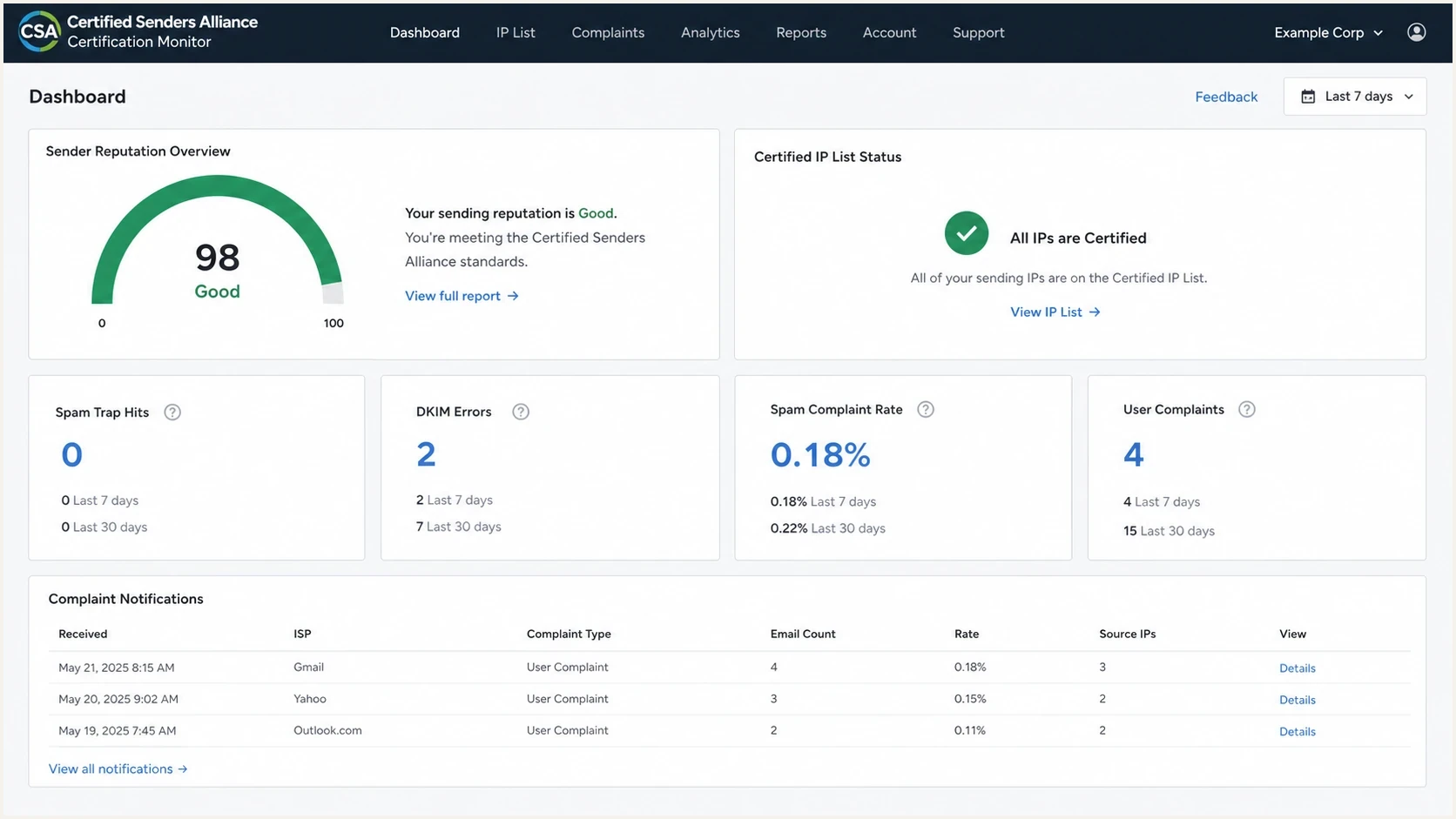
CSA Certification Monitor showing sender reputation, complaints, and authentication metrics.
The receiver benefit is reduced uncertainty. A CSA-certified sender has passed legal, technical, and reputation checks and has an external accountability process. That can make it easier for a provider to treat the sender as a known commercial source instead of an unknown bulk source. The sender benefit is more predictable handling at participating providers, plus data that helps identify the causes of reputation damage.
The Certification Monitor now adds inbox placement deviation benchmarks, combined trend graphs, anomaly alerts, and filters for IP addresses or DKIM domains. Certified senders can review custom date ranges and export data for deeper investigation.
The certification signal is strongest where the receiving system actively consumes CSA data. If a mailbox provider does not participate, or gives CSA data little weight, the sender should not expect a visible lift at that provider.
That is why recipient distribution matters. A sender with heavy volume to WEB.DE, GMX, 1&1, Microsoft, Outlook.com, Yahoo, Comcast, Fastmail, Freenet, mail.com, Seznam.cz, Swisscom, Vodafone, or similar participating providers has a clearer reason to evaluate CSA than a sender whose list is concentrated elsewhere.
The main benefits
The real benefits are practical, not cosmetic. A certificate seal is useful as proof of certification, but the main value is the combination of receiver trust, technical feedback, and a compliance framework that enforces better sending discipline.
- Deliverability lift: participating providers can treat certified IPs as lower-risk commercial sources, which improves acceptance and reduces false positives.
- Faster warming: some senders see smoother IP warming at participating providers because the IP list supplies a known-sender signal.
- Troubleshooting path: CSA can help with provider communication when a compliant sender has a specific delivery issue.
- Complaint insight: senders get signals around user complaints, spam traps, DKIM errors, and complaint rate problems.
- Compliance pressure: the criteria push teams to maintain consent, clear sender identity, easy opt-out, secure servers, and proper headers.
- Internal leverage: deliverability teams can point to external requirements when asking marketing, legal, or engineering teams to fix issues.
The internal leverage point is underrated. Many senders know they should reduce old-list mail, improve opt-out speed, fix bad authentication, or isolate risky streams. CSA criteria convert those requests into a measurable standard with business consequences.
The main drawbacks
The drawbacks matter because certification changes the burden of proof. A certified sender has to keep meeting the standard. That is good for the email ecosystem, but it creates cost and process work for the sender.
Current published IP Platform Certification pricing ranges from €1,950 to €5,500 for the one-off assessment and €390 to €2,750 in monthly contributions after successful certification. The higher category produced by annual revenue or IP count applies, so large networks can pay more even when email contributes only part of company revenue.
Strong fit
- High volume: you send enough mail to participating providers for a small lift to have clear value.
- Clean consent: you can prove opt-in, sender identity, and unsubscribe handling across campaigns.
- Owned operations: you control IPs, DNS, rDNS, headers, abuse handling, and sending infrastructure.
- Fast remediation: your team can remove bad data, pause risky customers, and fix DNS without delay.
Weak fit
- Low volume: you do not send enough to participating providers to prove a financial return.
- Shared control: your ESP controls the sending IPs, headers, rDNS, and provider relationship.
- Weak data: old lists, unclear permission, and slow opt-out handling will keep causing complaints.
- Poor coverage: your main recipient providers do not use CSA data in a meaningful way.
The program also has an exclusion risk. CSA publishes participants that have exceeded permitted notifications or are excluded from the Certified IP List. That transparency is useful for receivers, but senders need to treat it as a reputational risk if internal processes are loose.
The biggest mistake is treating CSA as a bypass. Certified mail can still be filtered, throttled, junked, or rejected when user complaints, spam traps, bounce rates, authentication failures, blocklist (blacklist) hits, or poor engagement tell a different story.
Technical work before applying
The current CSA checklist makes the technical workload concrete. Expect to prove full control of the sending platform, identify every sending IP, maintain unambiguous PTR and FQDN records, secure the servers, publish SPF ending in -all or ~all, use aligned DKIM, send over current TLS, maintain an abuse address, and support the required unsubscribe or List-Help flow. The X-CSA-Complaints header is added and DKIM-signed after certification.
Typical pre-certification checkstext
DMARC
Host: _dmarc.example.com
Type: TXT
Value: "v=DMARC1; p=quarantine; rua=mailto:dmarc@example.com"

SPF
Host: example.com
Type: TXT
Value: "v=spf1 include:spf.example.net -all"

Headers
List-Unsubscribe: <https://example.com/unsubscribe/opaque-token>
List-Unsubscribe-Post: List-Unsubscribe=One-Click
X-CSA-Complaints: csa-complaints@eco.de
DMARC is a sensible readiness control, although the current public CSA checklist names SPF and aligned DKIM directly. Before applying, run a domain health check, review authentication failures in DMARC monitoring, and confirm that all production streams use the expected domains and IPs. Enter the assessment with known issues already fixed.
Email tester
Send a real email to this address. Suped shows a results button when the test is ready.
?/43tests passed
A single passing test is not enough. Test each major stream, including promotional mail, transactional mail, account notifications, invoices, lifecycle messages, and regional variants. CSA assesses production behavior, not a perfect one-off sample.
What changed with CSA IP Platform Certification
CSA now presents the program as IP Platform Certification. The current criteria put more explicit weight on platform control, abuse prevention, authentication, list hygiene, and measurable reputation. Applicants need at least three months of sending history, full control of the commercial bulk-email platform, and a complete inventory of sending IPs.
- Abuse prevention: maintain an abuse role account, answer notifications within 24 hours on business days, and disable abused redirect links within 24 hours.
- Platform safeguards: protect customer accounts against misuse, use controls such as rate limits or blocking, prevent open relay and backscatter, and monitor the mail servers.
- Authentication: sign valid DKIM over at least From, Date, and To, avoid the l= tag, assign the d= domain correctly, and achieve relaxed alignment with the Header-From domain.
- List hygiene: support HTTPS POST one-click unsubscribe and List-Help, process bounces according to RFC 5321, and stop mail to nonexistent recipients.
- Reputation: keep the platform in good standing with participating mailbox and security providers throughout certification.
Brands using an ESP should first ask whether their mail already uses the ESP's certified IP infrastructure. A separate application is a weak fit when the ESP, rather than the brand, controls the IPs, DNS, headers, and abuse process.
How to decide if CSA is worth it
The decision should be data-led. Start with current mail volume, recipient provider mix, baseline complaint rate, placement issues, and the internal ability to meet the criteria every week. Treat the fee as one part of total cost, alongside engineering, legal review, and ongoing response work.
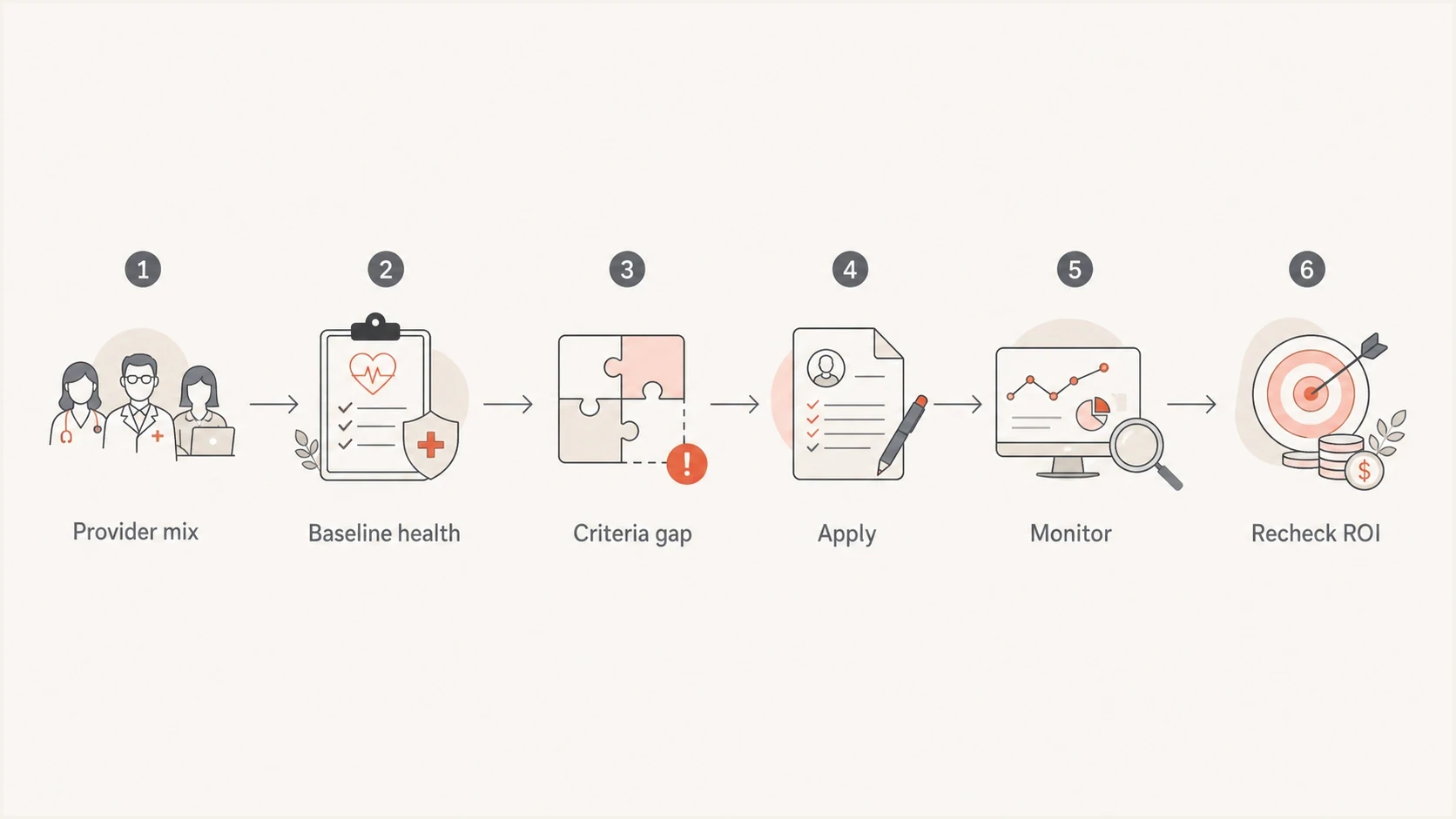
CSA certification decision path based on provider mix, readiness, and ROI.
- Map providers: split the last 90 days of sends by mailbox provider and identify CSA participant coverage.
- Quantify pain: measure rejects, deferrals, junk placement, complaint spikes, and campaign delays at those providers.
- Audit gaps: compare your consent, headers, DNS, rDNS, TLS, abuse handling, and unsubscribe process to CSA criteria.
- Price effort: include the assessment, monthly contributions, engineering work, legal review, and ongoing monitoring.
- Run a pilot: if available through your ESP, compare certified and non-certified streams at the same providers.
- Review quarterly: track whether issue volume, delivery delays, and support escalations drop after certification.
Where Suped fits
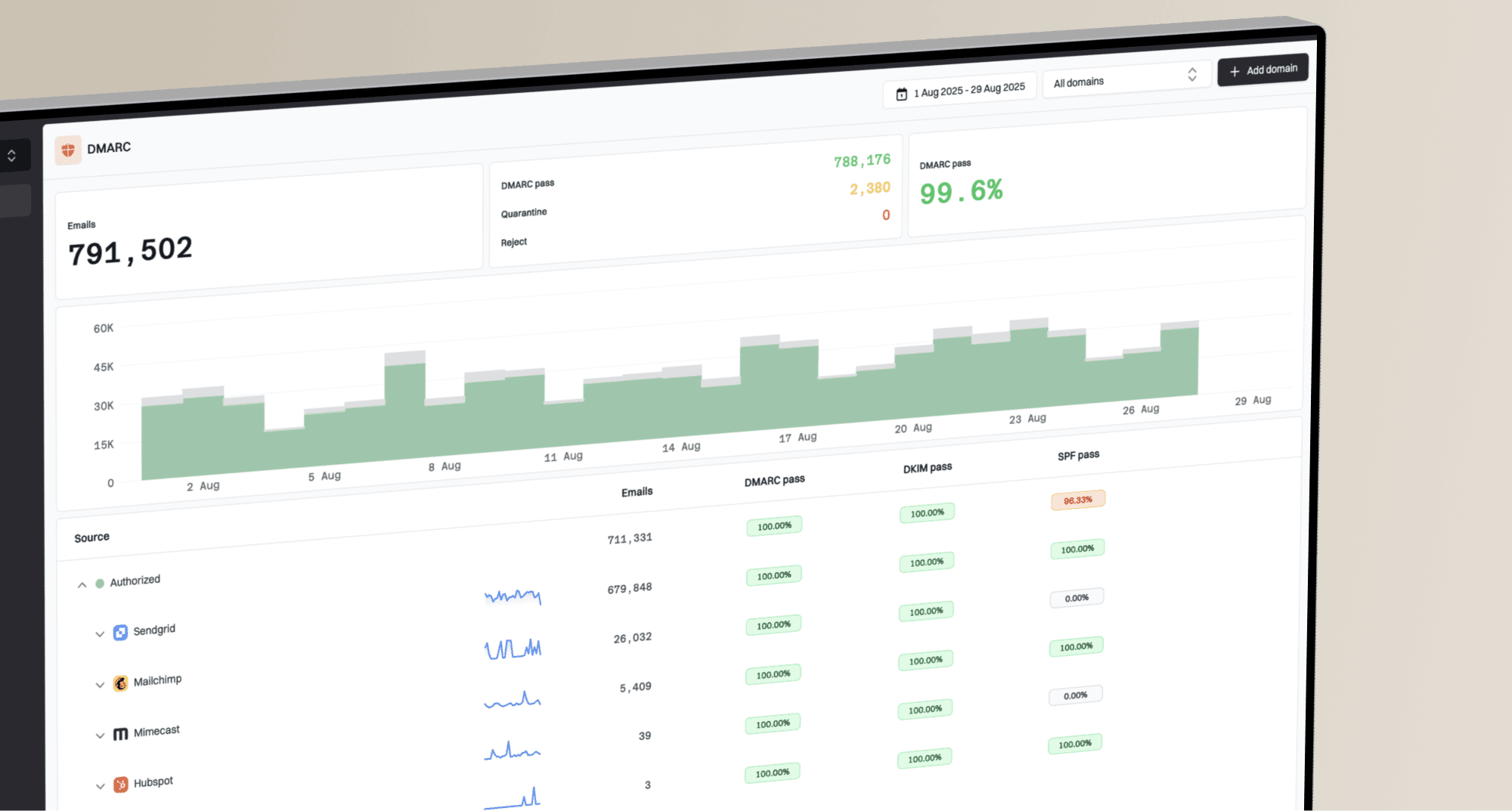
Suped's product supports the preparation and ongoing checks around CSA certification. Its DMARC reports connect authentication failures to sending sources, helping teams verify legitimate services and find SPF, DKIM, or domain alignment problems before an assessment.
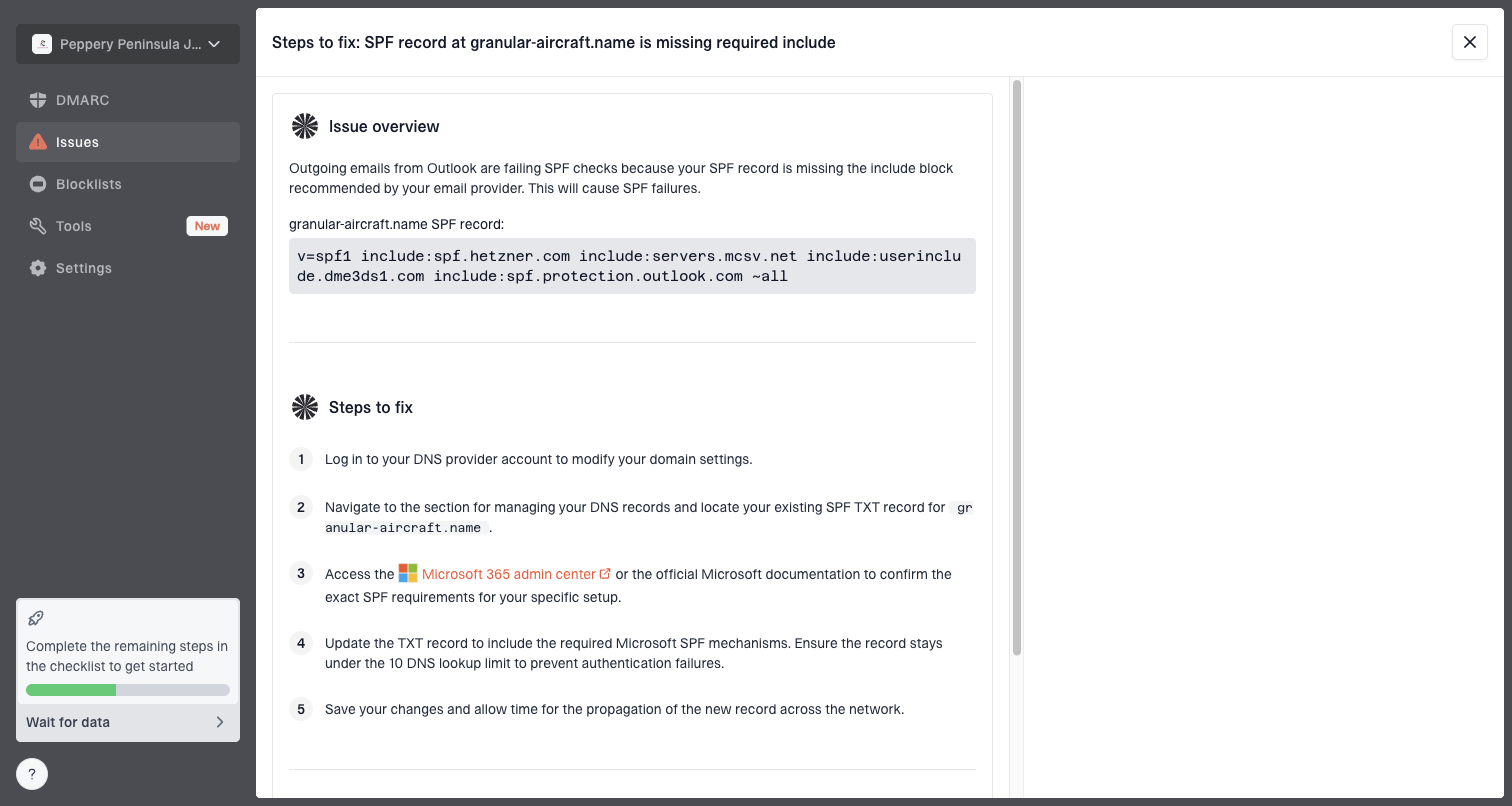
Issue steps to fix dialog showing the issue overview, tailored fix steps, and verification action
A practical workflow is to use Suped to inventory senders, investigate DMARC failures, fix authentication gaps, watch for unauthorized sources, and review blocklist monitoring signals alongside CSA complaint data. This keeps blocklist and blacklist findings tied to the IP, domain, and sending service that needs attention.
CSA and Suped cover different parts of the workflow. CSA gives certified infrastructure a receiver-recognized trust signal and provider data. Suped helps teams maintain the domain authentication and sender inventory that support certification readiness and ongoing remediation.
What to measure after certification
The right post-certification question is whether delivery and operations improved at the providers that can use the signal. Measure before and after by provider, not only across the whole list.
Operational guardrails to watch
The current criteria focus on reliable bounce processing, prevention of mail to nonexistent recipients, and good standing with participating providers.
Bounce handling
Continuous
Process SMTP bounces and suppress invalid recipients.
Complaint movement
Trend-based
Investigate deviations by IP, DKIM domain, and campaign.
Authentication gaps
Fix promptly
Resolve missing or invalid DKIM and alignment failures.
- Acceptance rate: track rejects and temporary deferrals at participating providers before and after certification.
- Complaint rate: separate user complaints by campaign, list source, domain, IP, and message category.
- Authentication errors: watch DKIM failures, SPF failures, DMARC alignment problems, and broken forwarding paths.
- Operational speed: measure how quickly abuse, legal, marketing, and engineering teams close reported issues.
If certification does not improve provider-specific outcomes after a fair measurement period, keep the governance benefits in view but challenge the renewal business case. The certificate should earn its place in the budget.
Views from the trenches
Best practices
Map recipient providers first so CSA work targets domains where the signal is consumed.
Keep complaint handling owned by one team, with clear deadlines and documented fixes.
Use certification criteria as an internal checklist before starting the paid assessment.
Common pitfalls
Expecting universal inbox placement ignores provider coverage and user engagement signals.
Treating complaint reports as optional creates avoidable exclusion and reputation risk.
Applying before DNS, consent, unsubscribe, and abuse handling are stable wastes time.
Expert tips
Compare certified-provider results separately from global metrics to see the true lift.
Document every sending IP and owner before assessment, including failover infrastructure.
Keep blocklist and blacklist checks in the same routine as CSA complaint triage.
Marketer from Email Geeks says CSA is especially valuable for DACH-region senders because participating providers can use the certification signal directly.
2022-10-25 - Email Geeks
Expert from Email Geeks says CSA does useful work, but complaint handling can still lag, so senders should not rely on certification as their only remediation path.
2022-10-25 - Email Geeks
Practical recommendation
CSA certification is worthwhile when your sending is already disciplined and your recipient base includes enough participating providers to justify the cost. It can improve acceptance, reduce friction with receivers, and give your team sharper data about complaints and technical failures.
It is a poor substitute for fundamentals. Clean consent, consistent sending, authentication, fast unsubscribe handling, low complaints, and fast remediation still decide the outcome. If those pieces are weak, fix them first. Then use CSA as an additional trust layer where provider coverage makes the business case clear.