Validity Sender Score Return Path Blocklist (RPBL)

The Return Path blocklist (blacklist) tracks IP addresses based on spam traps, failed authentication, or botnet activity to flag abusive email senders.
Updated on 17 Jun 2026: We updated the RPBL guidance to better separate listing causes, investigation steps, delisting, and receiver-dependent impact.
Summarize with
Check if you are listed on Validity Sender Score Return Path Blocklist (RPBL)
And 143 other blocklists.







What is Validity Sender Score Return Path Blocklist (RPBL)?
The Validity Sender Score Return Path Blocklist (RPBL) is an IP-level DNS blocklist (blacklist) for spam-like sending behavior. It uses Return Path and partner data to evaluate sending patterns in real time, including spam trap hits, message volume, suspicious or threatening attachments, and email authentication failures. An IP is listed when RPBL detects messages from that IP with these indicators.
RPBL is published at the DNS zone bl.score.senderscore.com. Receivers and security teams decide how to use it in filtering, so the effect of a listing depends on the mailbox providers in your audience and how they weight the blacklist. A listing also points to a wider sender reputation problem, and the same traffic pattern can place the IP on other blocklists.
The primary reasons for an IP address being added to this blacklist include:
- Sending email to spam trap addresses or addresses that never subscribed.
- Sending high volumes of mail to invalid or nonexistent recipients.
- Sending email campaigns from botnets or compromised infrastructure.
- Sending messages with suspicious or threatening attachments.
- Failing SPF, DKIM, or DMARC authentication checks.
- Having very poor sender reputation signals, including a very low Sender Score.
Who runs Validity Sender Score Return Path Blocklist (RPBL)?
RPBL is run by Validity through Sender Score. Return Path created the blocklist before becoming part of Validity, which is why the list is still commonly called the Return Path Blocklist or SenderScore Return Path RBL. The lookup and removal workflows sit on Sender Score.
How to investigate a Validity Sender Score Return Path Blocklist (RPBL) listing
Start with the reason returned during the removal request, then verify the matching evidence in your own logs. RPBL listings usually connect to traffic quality, list quality, security, or authentication, so the fix should match the listing reason instead of relying on repeated delisting requests.
- For spam trap or invalid-recipient patterns, isolate the campaign, acquisition source, segment, signup period, and bounce pattern tied to the listed IP.
- For suspicious attachments, review the exact attachment types, file names, URLs, and malware scan results for mail sent through the listed IP.
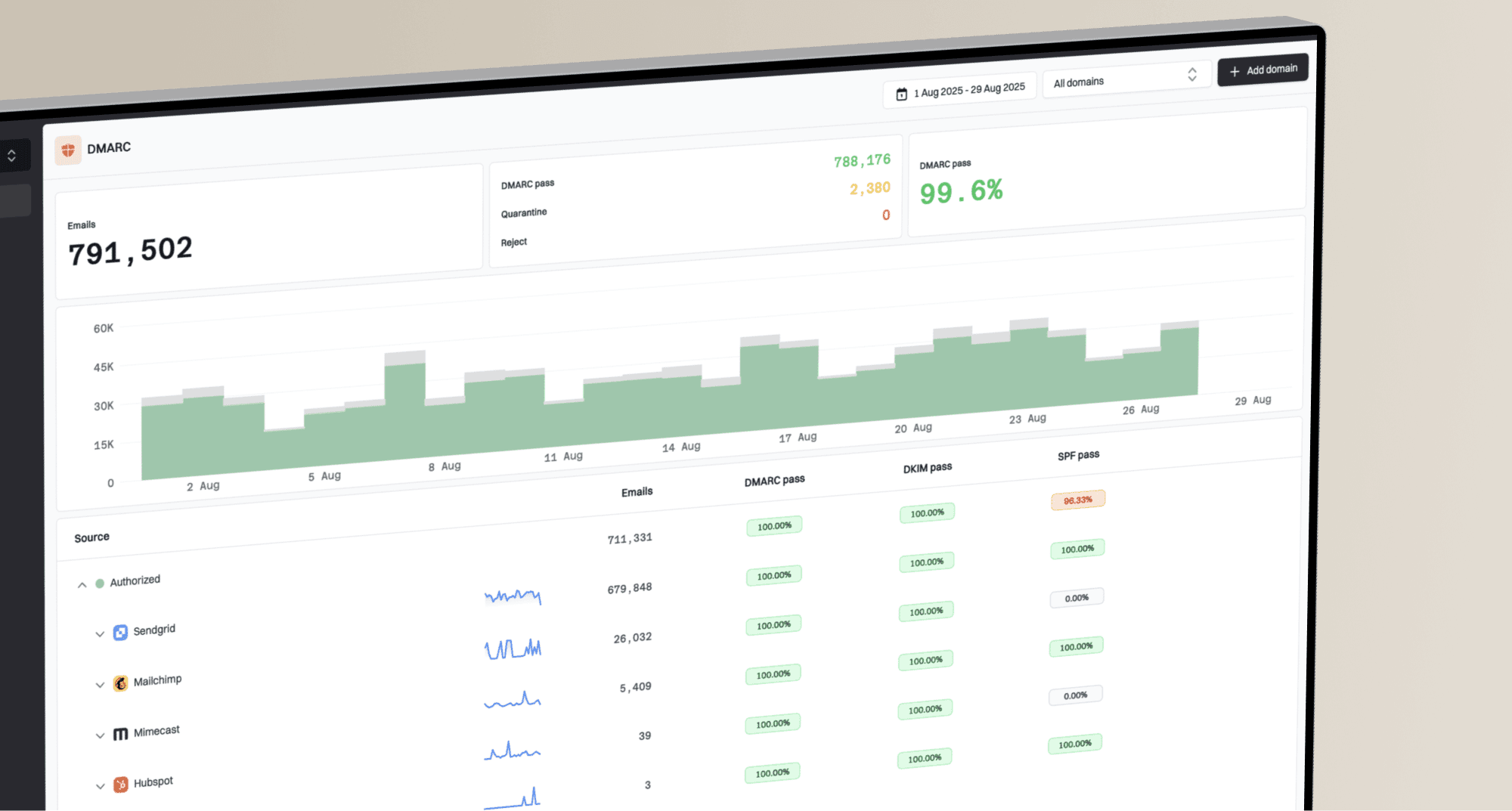
- For SPF, DKIM, or DMARC failures, compare the sending source, envelope sender, header From domain, DKIM signing domain, and DNS records. Suped's DMARC reporting can help identify which approved or unapproved source is failing authentication before you submit another removal request.
- For botnet behavior, treat the listing as a security incident and check for compromised accounts, exposed SMTP credentials, infected hosts, unauthorized relays, and unusual outbound volume.
How to get removed from Validity Sender Score Return Path Blocklist (RPBL)
To get your IP address removed from this blocklist, fix the issue that caused the listing before asking for delisting. Then submit the IP address or domain through the RPBL Blocklist Remover page. Validity shares the reason for the listing after submission. If the same traffic continues, the IP can be listed on the blacklist again.
Use these controls to reduce the chance of another RPBL blacklist listing:
- Use opt-in or confirmed opt-in permission methods for all new subscribers.
- Suppress bounced, inactive, role-based, and unengaged addresses before sending again.
- Keep complaint rates low by sending mail that matches the recipient's consent and expectations.
- Keep SPF, DKIM, and DMARC records current for every production sending source.
- Use a stable sending IP with a unique, non-generic reverse DNS (PTR) record.
- Avoid sending bulk email from dynamic IP addresses.
What is the impact of a Validity Sender Score Return Path Blocklist (RPBL) listing?
Impact varies by receiver. RPBL is an IP-level blocklist that receiving systems can use as one reputation signal, so a listing does not automatically mean every mailbox provider blocks all mail from the IP. For senders with a large share of recipients at providers that weight RPBL heavily, the listing can cause mail to be deferred, blocked, sent to spam, or scored more harshly.
Treat an RPBL blacklist listing as a reputation warning even when delivery has not dropped yet. The root cause often damages inbox placement elsewhere, especially poor list acquisition practices, compromised infrastructure, authentication gaps, weak suppression, and high complaints.