Spamikaze Passive Spam Block List (PSBL)
The PSBL is an IP-based blocklist (blacklist) tracking spamtraps. It uses a user-driven removal process to limit false positives.
Updated on 17 Jun 2026: We updated this guide with PSBL lookup evidence, the psbl.surriel.com zone, and clearer delisting timing.
Summarize with
Check if you are listed on Spamikaze Passive Spam Block List (PSBL)
And 143 other blocklists.







What is Spamikaze Passive Spam Block List (PSBL)?
The Spamikaze Passive Spam Block List (PSBL) is an IP-based DNS blacklist (DNSBL) that uses an "easy-on, easy-off" policy to reduce false positives. Users can remove their mail server's IP address quickly if it was listed by mistake. This blocklist does not run active open relay or open proxy tests. Its listing decisions come from mail received by the PSBL spamtrap network.
The core principle is that most hosts sending spam are not legitimate mail servers. This blacklist (or blocklist) uses a straightforward policy:
- An IP address is added to PSBL when it sends email to a spamtrap address.
- The email is not identified as legitimate non-spam, such as a filtered bounce or virus message.
- The sending IP address is not on a whitelist of known mail servers.
IP addresses automatically expire from the list after they stop sending mail to PSBL spamtraps for a few weeks. The goal is that legitimate mail servers, if listed, stay on the blacklist for only a short time before an administrator notices and requests removal. Compromised end-user machines or spam zombies stay listed longer when they keep hitting spamtraps. This approach helps block spam without severely penalizing legitimate senders after a brief compromise or shared-server abuse.
Who runs Spamikaze Passive Spam Block List (PSBL)?
The Spamikaze Passive Spam Block List (PSBL) runs on Spamikaze, a collection of programs used to build and manage a DNSBL, also known as a spam blocklist. The software is passive, meaning it analyzes mail that comes into its spamtrap network rather than actively probing servers on the internet. To reduce false positives, Spamikaze uses regular expressions to filter out obvious non-spam messages and whitelists known mail servers so they are not listed on this blacklist.
Spamikaze is available as free software under the GNU General Public License (GPL), so anyone can operate their own spam block list.
How PSBL listings are checked
PSBL listings are checked through the psbl.surriel.com DNSBL zone. A receiving mail server queries that zone during filtering, and a positive DNS response indicates that the sending IP address is listed. Some filters use the result to reject mail, while others add score instead of blocking outright.
- List query: the PSBL lookup page shows whether an IP address is or was listed.
- Evidence: PSBL shows the time a spamtrap received mail from the IP address and the time the IP address was removed.
- Scope: PSBL lists connecting IP addresses, not domains, URLs, or email addresses.
How do I get delisted from Spamikaze Passive Spam Block List (PSBL)?
Removal from the Spamikaze Passive Spam Block List (PSBL) is a straightforward, self-service process. Anyone can request removal for an IP address, which is part of its design. A legitimate user can delist a server they use, while a spammer managing large numbers of compromised IPs has to repeat that work across many blacklist and blocklist operators.
To remove your IP address, use the form on their website. Enter the IP address of your mail server, not your email address. PSBL removes the IP address from its database immediately after a valid request, and the FAQ says the change should reach its DNS servers within about half an hour. DNS caching outside PSBL can still make the listing visible to some receivers for longer.
Before requesting removal, check mail logs for spamtrap triggers such as compromised accounts, infected machines behind the outbound server, forwarded spam, shared hosting abuse, or old contact lists. Fix the source first, then request delisting so the same IP address does not get listed again.
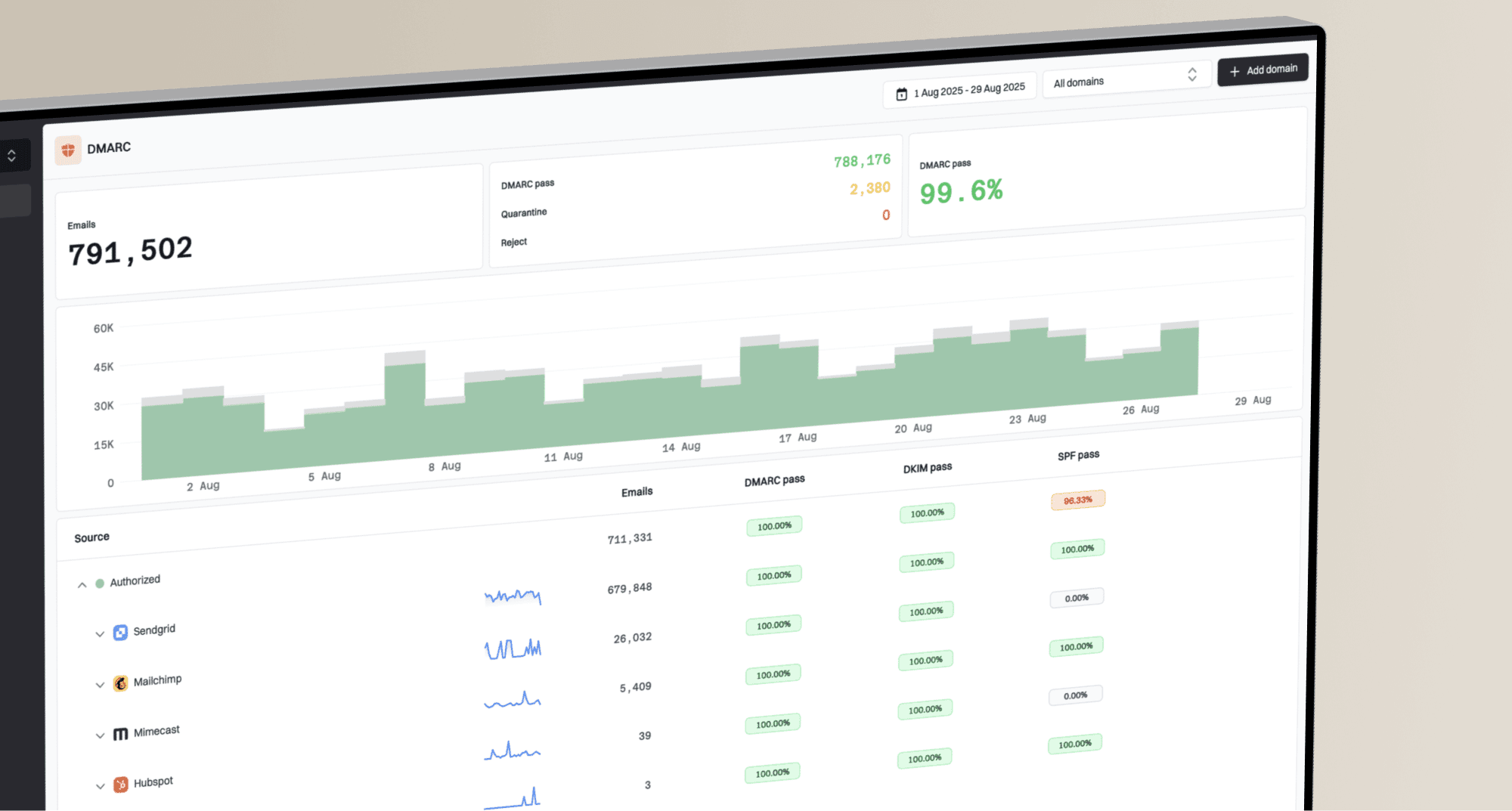
If you use Suped's product for DMARC monitoring, review DMARC, SPF, and DKIM status alongside the IP investigation. Authentication visibility helps separate spoofing symptoms from traffic that actually left the listed IP, but it does not remove a PSBL listing by itself.
What is the impact of being listed on Spamikaze Passive Spam Block List (PSBL)?
The impact of being listed on the Spamikaze Passive Spam Block List (PSBL) is medium. PSBL is active and used by system administrators, but it does not have the same adoption level as the largest industry blocklists. A listing on this blacklist can cause delivery failures or extra spam filtering at receivers that query psbl.surriel.com. Because delisting is self-service, the operational impact often resolves quickly once the sending problem is fixed and the removal request has propagated.