Scientific Spam RHSBL
The Scientific Spam RHSBL is a blocklist (or blacklist) protecting researchers from spam sourced from public academic journals and databases.
Updated on 17 Jun 2026: We updated the Scientific Spam RHSBL guidance with clearer DNS lookup and removal details.
Summarize with
Check if you are listed on Scientific Spam RHSBL
And 143 other blocklists.







How the Scientific Spam RHSBL works
Scientific Spam RHSBL is a niche domain-based DNS blocklist (blacklist), or RHSBL, for spammers in academic and scientific communities. The operators say conventional blacklists often have limited visibility into this targeted spam because the volumes are lower than broad consumer spam. Senders are added for unsolicited bulk email, often sent to addresses harvested from PubMed, journal articles, and similar scientific resources. Mail server operators, especially universities and research institutions, can use the list voluntarily when filtering inbound mail.
The Scientific Spam project also has an IP address list at bl.scientificspam.net, while rhsbl.scientificspam.net is the domain-name list. The operators state that they do not list resources for hacked accounts, botnets, SPF, DKIM, DMARC, DNS, reverse DNS, or general security issues. The focus is unsolicited bulk email in a scientific context, including spam tied to predatory publishers or bogus academic conferences when their campaigns target researchers.
Technical details
Technically, Scientific Spam uses two DNS zones. IP address lookups use bl.scientificspam.net and listed IPs return 127.0.0.2. Domain-name lookups use rhsbl.scientificspam.net and listed domains return 127.0.1.2. TXT queries for a listed IP or domain provide the human-readable reason, often with a tag for the spammer if known, the subject line, the sender address, and the listing date. The RHSBL has one domain return code, meaning the domain is associated with scientific spam.
Checking and removal
The official Scientific Spam site says it has no web lookup form, so direct DNS lookups are the most reliable way to check a listing. For a domain, query the domain followed by rhsbl.scientificspam.net without reversing the labels. If the domain is listed, the A lookup returns 127.0.1.2, and a TXT lookup gives the reason string.
- Check domains with domain.example.rhsbl.scientificspam.net; check IP addresses separately in reversed form under bl.scientificspam.net.
- Do not treat a missing SPF, DKIM, or DMARC record as the removal reason; the operator says authentication gaps do not cause Scientific Spam listings by themselves.
- For removal, send a plain-text email that names the listed IP address or domain and explains how the scientific spam problem was stopped.
- Listings do not expire automatically. The operator says removal starts only when someone contacts them with enough listing and remediation detail.
Example DNS lookupsbash
dig +short domain.example.rhsbl.scientificspam.net
dig +short TXT domain.example.rhsbl.scientificspam.net

# IP listings use the separate IP zone.
dig +short 2.0.0.127.bl.scientificspam.net
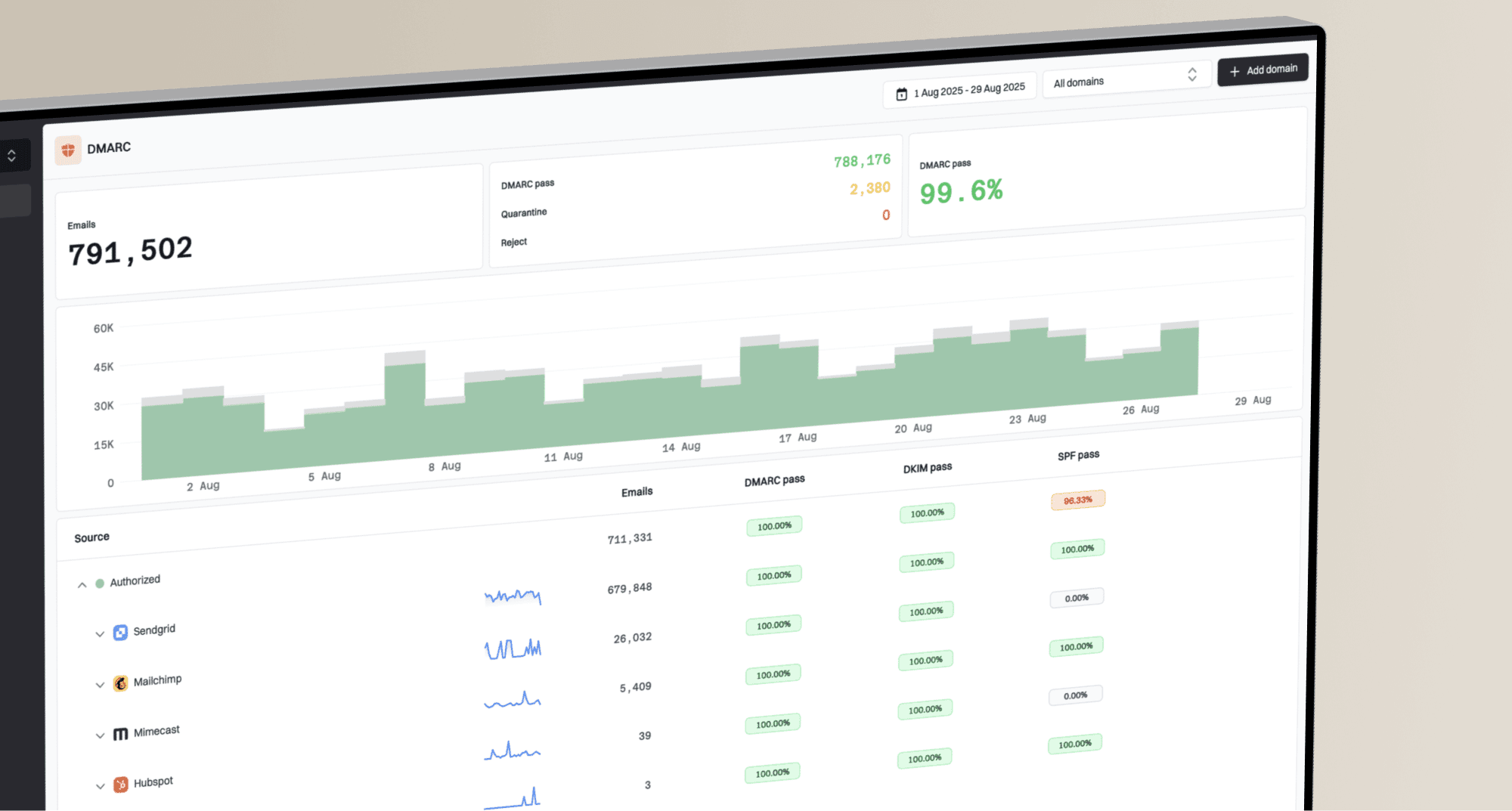
If your domain appears on a blocklist or blacklist while SPF, DKIM, or DMARC results are also failing, handle those as separate workstreams. Suped's DMARC reporting can show which sources are passing or failing authentication, so you can separate domain authentication problems from the behavioral issue behind a Scientific Spam RHSBL listing.