Schulte DNS Based Spam Block List (RBL)
The Schulte DNS based spam blocklist is an IP blacklist with no official delisting process. Use Suped to monitor blocklist and blacklist status.
Updated on 17 Jun 2026: We updated this guide with clearer DNSBL usage, delisting, and monitoring guidance.
Summarize with
Check if you are listed on Schulte DNS Based Spam Block List (RBL)
And 143 other blocklists.







What is the Schulte RBL?
The Schulte DNS Based Spam Block List (RBL) is a publicly available IP-based blocklist created and maintained by Christopher Schulte. It began as a personal project to manage unwanted email across multiple SMTP servers. The operator decided to publish the list of IP addresses he did not want to receive mail from via DNS, making it easy to use across his infrastructure without manual updates.
The listing policy is based on the operator's personal criteria. IP addresses are added when they are identified as sources of spam. The blacklist also includes broader ranges; entire /24 or /16 CIDR blocks are added if they are the source of repeated spam and the operator does not expect legitimate email from them. This is a DNSBL (Domain Name System Blocklist), not an RHSBL, and it can be queried at rbl.schulte.org.
This RBL is one component of a larger email filtering strategy. The full setup includes several methods:
- The Schulte RBL list itself
- Other public RBL lists
- Stricter requirements on remote SMTP RFC compliance
- Sender domain validation
- Realtime sender address verification
- Greylisting
- Keyword rejection on incoming email body and headers
- Local spam scoring and antivirus filtering
- Local delivery rules and MUA filtering
Who runs the Schulte RBL?
The Schulte DNS Based Spam Block List (RBL) is run by Christopher Schulte. He is a technology professional with over 20 years of experience in fields such as networking, digital forensics, cyber security, and incident response. He holds degrees in computer forensics and criminal justice, in addition to industry certifications.
How to check and use the Schulte RBL
The Schulte RBL can be checked through DNS as an IP-based DNSBL. Configure it only where an MTA expects a DNSBL zone. Do not use it as an RHSBL, because it is not designed to check sender domains or hostnames.
DNSBL zonetext
rbl.schulte.org
For Postfix, the operator gives this style of RBL client rejection rule:
Postfix exampletext
reject_rbl_client rbl.schulte.org
Because this blacklist is personal and aggressive by design, use it with care on production mail systems. A recipient mail server that queries it can reject mail before content filtering or DMARC evaluation has a chance to influence delivery.
How do I get removed and delisted from the Schulte RBL?
There is no delisting process for the Schulte DNS Based Spam Block List (RBL). The operator's official policy states that if you are blocked, you have no choice but to resend your email from a different host or IP address that is not on the blacklist. This blocklist is a personal list, and removal requests are not accepted.
For urgent mail, move the message to a clean sending host while investigating the original IP. Check for compromised accounts, unusual volume, poor list hygiene, and any traffic that caused repeated spam from the same IP range.
While there is no way to request delisting, the operator provides an email, postmaster@schulte.org, for general communication about the list.
What's the impact of being listed on the Schulte RBL?
The impact of being listed on the Schulte DNS Based Spam Block List (RBL) is usually narrow. This is not a blacklist commonly used by major mailbox providers. It is a personal list that is public for others to use if they choose.
If your emails are being blocked by this specific blacklist, it is for one of two reasons: you are trying to send an email to a server directly managed by Christopher Schulte, or you are sending to an organization that has voluntarily decided to use this RBL as part of its filtering system. The impact of this blocklist is limited to mail servers that have explicitly configured it.
The practical risk is higher when the listing covers a /24 or /16 instead of a single IP address. In that case, a clean sender can still be affected by other traffic in the same network range.
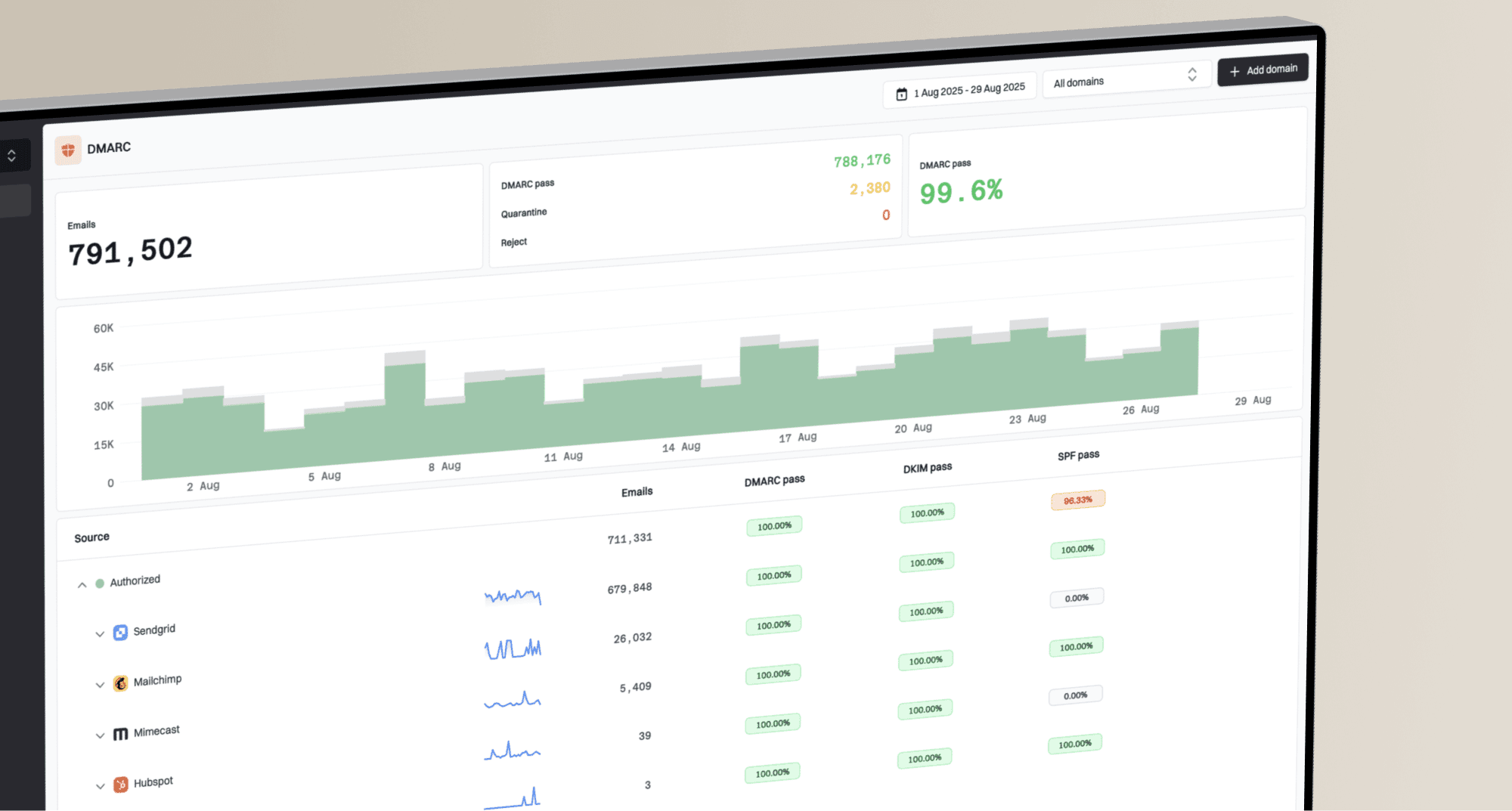
Suped's product can monitor blocklist and blacklist status alongside DMARC reports, so a sender can connect a listing to the sending IP and authentication results in one workflow. Suped is useful here for spotting whether the issue is isolated to one sender, one route, or a wider authentication problem.