Mail Baby Interserver Realtime URI Blacklist (URIBL)

The Mail Baby URIBL is a domain blocklist for spam messages. Removal from this blacklist is an automatic process that occurs over time.
Updated on 17 Jun 2026: We updated this guide with clearer URI blacklist checks, DNS query guidance, and practical cleanup steps for domains found in spam.
Summarize with
Check if you are listed on Mail Baby Interserver Realtime URI Blacklist (URIBL)
And 143 other blocklists.




What is Mail Baby Interserver Realtime URI Blacklist (URIBL)?
The Mail Baby Interserver Realtime URI Blacklist (URIBL), with the DNS zone rbluri.interserver.net, is a domain-based blocklist. Unlike IP-based blacklists that list sending server IP addresses, this URI blacklist focuses on domains or hostnames found inside links in the body of email messages.
According to its policy, this blacklist (or blocklist) adds domains that are found in outgoing spam messages or emails sent to its spam traps. Mail systems use this blacklist as a domain reputation signal to tag, quarantine, or reject email that contains spammy, phishing, or malware-related links. If your domain is on this list, it means the domain has been detected in the content of messages identified as spam.
Who runs Mail Baby Interserver Realtime URI Blacklist (URIBL)?
This blacklist is operated by MailBaby. MailBaby is an email smart host that provides outbound filtering. Customers route outgoing email through MailBaby's systems, where messages are checked for spam-like content. Based on that analysis and a calculated score, emails are either sent through an outbound sending channel or rejected as spam. MailBaby also monitors its own IP reputation, abuse complaints, and feedback loops.
How to check a Mail Baby URIBL listing
Mail Baby Interserver Realtime URI Blacklist (URIBL) works like a DNS-based URI blocklist. To check a domain, query the domain against the rbluri.interserver.net zone. A returned A record indicates a listing, while NXDOMAIN or no returned record normally indicates that the domain is not listed.
DNS query exampleBASH
dig +short example.com.rbluri.interserver.net A
Check the exact domain that appeared in the email body, not only the organizational domain. If spam used a tracking host, redirect host, URL shortener, or compromised subdomain, the listing can point to that linked host instead of the sender's mail server. DNS caching can also make a recent removal look active for a short time.
How do I get removed and delisted from Mail Baby Interserver Realtime URI Blacklist (URIBL)?
The Mail Baby Interserver Realtime URI Blacklist (URIBL) does not provide a manual delisting or removal request process. Removal from this blocklist is automatic.
Your domain is automatically removed after enough time has passed since spam containing your domain was last detected. Before you wait for automatic delisting, resolve the issue that caused the domain to appear in spam:
- Identify the cause: Investigate why your domain was included in spam emails. Common causes include a compromised website, hacked user account, abused form, malicious newsletter sign-up, exposed redirect, or old campaign link reused by a spammer.
- Secure linked assets: Remove malware, close open redirects, update website software, rotate credentials, and disable any landing page or tracking URL that is being used in spam.
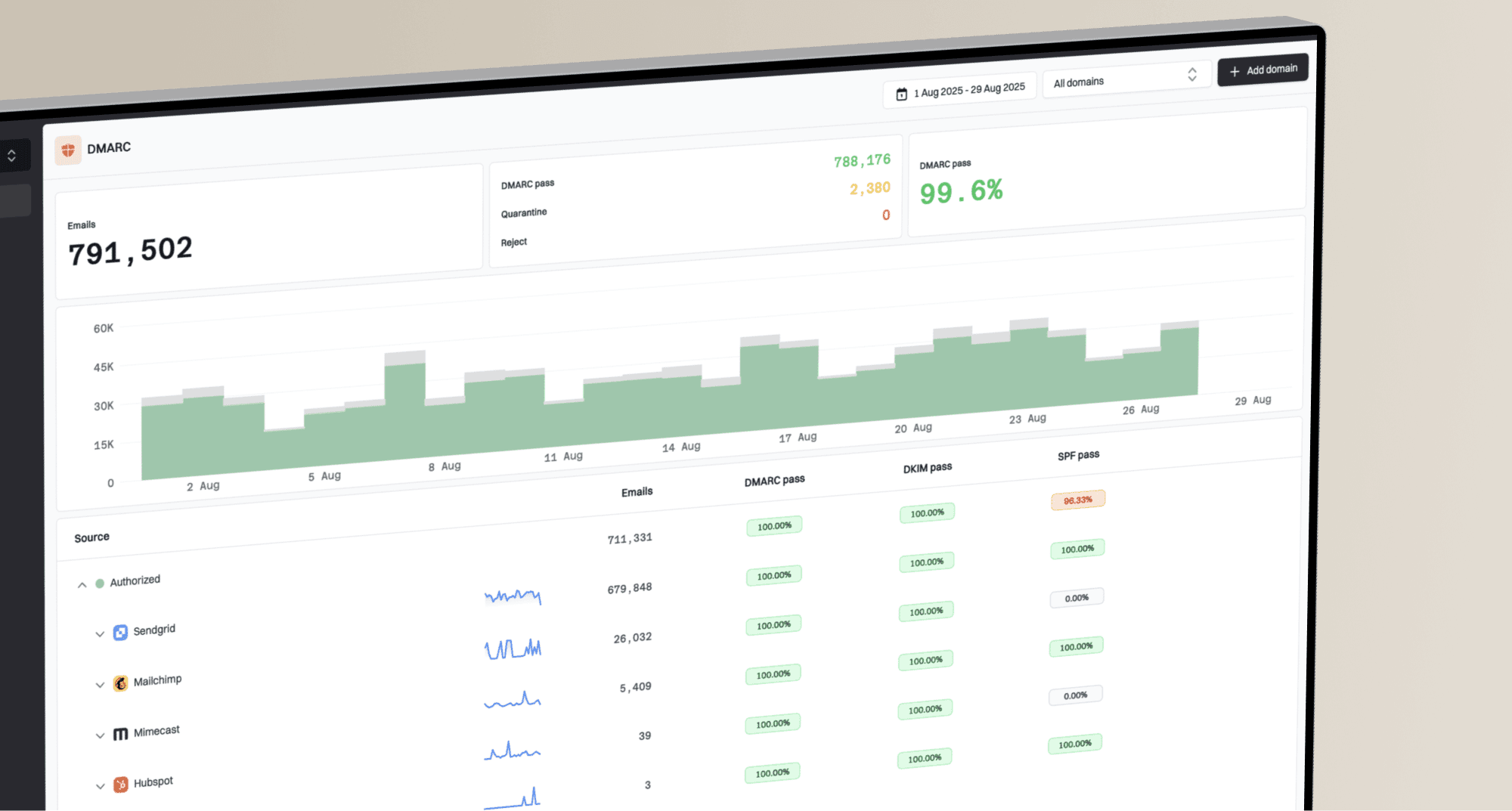
- Review authenticated sending: Use Suped's DMARC reports to see which services are sending as your domain, then compare those sources with the timing of spam complaints or suspicious campaigns.
- Monitor your sending: Keep a close eye on outgoing mail and linked domains to confirm that no further spam is being sent. Once the spam stops and the blocklist data expires, automatic delisting can take effect.
What's the impact of being listed on Mail Baby Interserver Realtime URI Blacklist (URIBL)?
The impact of being on the Mail Baby Interserver Realtime URI Blacklist (URIBL) is generally low. Large mailbox providers such as Gmail and Microsoft rely heavily on their own reputation systems, so this listing alone is unlikely to cause a broad delivery outage.
The listing still matters. Some system administrators and smaller email providers use URI blocklists as part of their spam scoring, which can cause messages containing the listed domain to be filtered, quarantined, or blocked. Treat the blacklist as a warning that your domain, subdomain, redirect, or campaign URL has appeared in spam content.