JustSpam Blacklist
JustSpam is an IP blocklist identifying severe spam offenders already on other lists. It is a safe option for outright blocking.
Updated on 17 Jun 2026: We updated this guide with clearer JustSpam delisting guidance and practical steps for stale blacklist checks.
Summarize with
Check if you are listed on JustSpam Blacklist
And 143 other blocklists.







What is the JustSpam blacklist?
The JustSpam blacklist is a DNS-based blocklist (DNSBL) for IP addresses believed to be sources of spam. Its DNS zone is dnsbl.justspam.org. It is an IP blacklist, so it lists sending IPs rather than sender domains, URLs, or message content.
JustSpam is designed to list the clearest spam sources, which it calls the "worst offenders". It aims to provide a high-confidence signal for filtering email, rather than a broad reputation score.
An IP address is added when two conditions are met: JustSpam observes spam from an IP that has not sent legitimate email to its systems, and the same IP is already listed on at least one other well-known, independent blacklist. That second check is central to its false-positive control.
Because the list is meant for high-confidence spam sources, the maintainers recommend outright blocking instead of scoring. Administrators should still review how any blocklist or blacklist fits into their own mail flow, especially for business-critical mail.
Who runs the JustSpam blacklist?
The JustSpam blacklist is operated by the JustSpam organization. The project started with the premise that spam filtering needs a high-confidence IP blacklist with lower false-positive risk than broader lists.
The service is free for commercial and non-commercial use. Removal requests are also free. The JustSpam blacklist has been publicly available since late 2011.
How do I get removed from the JustSpam blacklist?
Removal from the JustSpam blacklist is a self-service process, but it works only after fixing the cause. Before requesting delisting, confirm that the IP is no longer sending spam and has been removed from other major blocklists.
Follow these steps to request removal:
- Identify and stop the spam source on the mail server, application, account, relay, or network host that triggered the listing.
- Harden the sender before delisting. Review authentication, compromised accounts, relay settings, outbound rate spikes, and logs so the IP does not get relisted.
- Clear other blacklist or blocklist listings first. JustSpam's removal workflow is designed to fail when it still sees the IP on another recognized blacklist.
- Request removal through the JustSpam IP lookup and delisting flow once the IP is clean elsewhere and under your control.
If an IP address is removed and then gets listed again, it is blocked from using the self-service removal tool for the next 30 days. Do not request removal until the source of spam is fixed.
What to do when delisting is blocked
A common failure case is a JustSpam removal request that says the IP is still listed elsewhere, even when the other blacklist appears clean in its own lookup. Treat this as a dependency issue before assuming the JustSpam record itself is wrong.
- Recheck the exact IP address, including IPv4 versus IPv6. A clean result for one address does not clear a neighboring address or a different sending IP.
- Wait for DNS cache and data refresh windows after the upstream blacklist delists the IP. Recipient filters and blacklist mirrors do not always update at the same time.
- Confirm your outbound mail is not leaving through a different NAT gateway, smart host, or application server than the one you checked.
- If recipient mail is still rejected, ask the recipient mail administrator for the exact reject message and blocklist zone they queried. That evidence tells you whether JustSpam is part of the rejection path or only appears in a public lookup.
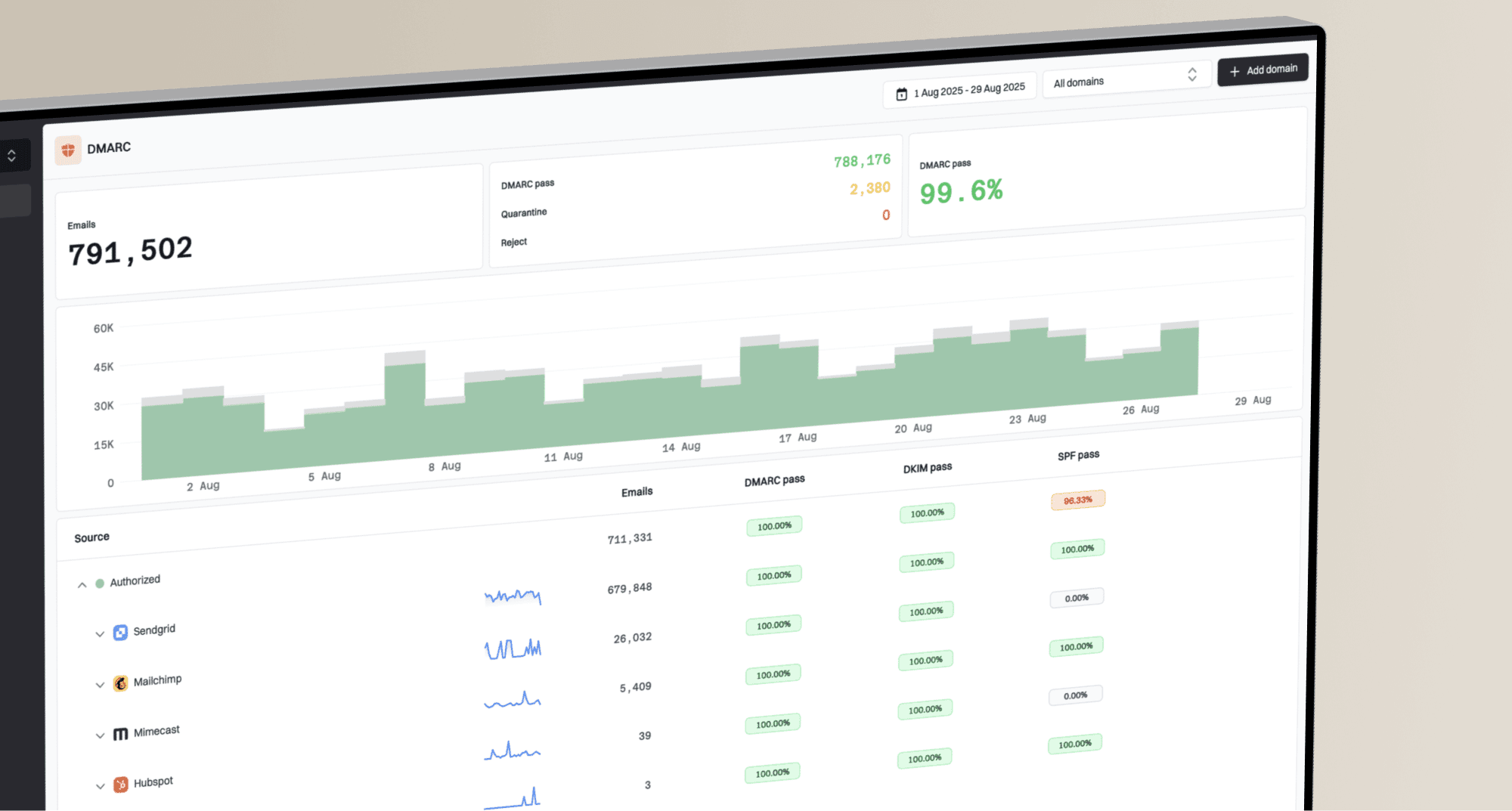
Suped's product helps with the domain-authentication side of this cleanup by showing DMARC aggregate sources and SPF/DKIM results. It does not remove an IP from JustSpam, but it helps identify unauthorized senders before you retry delisting.
What is the impact of a JustSpam listing?
The impact of a listing on the JustSpam blacklist is usually secondary, not primary. Since an IP must already be on another major blacklist to be added, the first deliverability damage usually comes from the other listing.
That does not make the JustSpam listing harmless. If a recipient mail server uses dnsbl.justspam.org for outright blocking, your mail can be rejected at SMTP time or returned as an NDR.
Your priority is to identify every blacklist and blocklist listing connected to the sending IP, fix the source of abuse, and remove the upstream listings first. That work addresses the main reputation problem and is required before JustSpam delisting works.