Cisco SpamCop Blocking List (SCBL)

The Cisco SpamCop Blocking List is a dynamic IP-based blocklist. It uses user reports to manage listings and offers automatic delisting when reports stop.
Updated on 17 Jun 2026: We updated this guide with clearer SCBL listing rules and practical steps for investigating a SpamCop IP listing.
Summarize with
Check if you are listed on Cisco SpamCop Blocking List (SCBL)
And 143 other blocklists.







How the SCBL works
The Cisco SpamCop Blocking List (SCBL) is an IP-based DNS blocklist (blacklist) that contains IP addresses known to have sent email reported as spam by SpamCop users. Internet service providers, businesses, and individual users use the SCBL to filter unwanted email. It is a fast, automated blacklist that lists sending IP addresses based on report sources such as SpamCop user submissions and automated reports, with spamtraps carrying extra weight.
The SCBL is time based. IP addresses are listed for a limited duration and are automatically removed when reports stop, often within 24 hours after the last report. SpamCop weighs report volume against reputation points, so a high-volume sender with reported and non-reported mail is assessed differently from an IP with only reported mail. Because the SCBL is aggressive, SpamCop recommends an actively maintained allowlist of wanted senders and, in many mail systems, a 'tag and divert' or 'tag only' approach instead of outright rejection.
- Recent reports carry more weight than older reports. SpamCop counts the freshest reports at a higher ratio, scales the weight down after that, and ignores reports for mail received more than one week ago.
- Spamtrap reports increase the score more sharply than ordinary user reports, so mail to a SpamCop spamtrap can lead to a listing faster.
- The SCBL lists sending IP addresses, not domains, websites, reply addresses, or URLs found in the message body unless that same IP also sent the reported mail.
- An IP address is not listed from a single report. With only two reports, the maximum listing duration is 12 hours after the most recent reported message.
- Listings expire automatically when no new reports arrive. If there are no reports against the IP within 24 hours, SpamCop removes it from the blocklist.
How to respond to a listing
A Cisco SpamCop listing does not prove that the current IP user is sending spam intentionally. It means the IP met SpamCop's report threshold at that time. Start with the report link or the IP lookup record, then match the report timing against outbound mail logs before requesting review.
- Check for compromised accounts, malware, vulnerable web forms, and abused scripts that send mail through the listed IP.
- Fix misdirected bounces and autoresponders. Backscatter to forged senders or SpamCop spamtraps can create enough reports for a listing.
- Review SMTP AUTH controls, relay rules, proxy exposure, and submission logs so unauthorized users cannot send through the host.
- Pause or throttle bulk traffic from the affected IP until the report source is fixed, because new reports reset the delisting window.
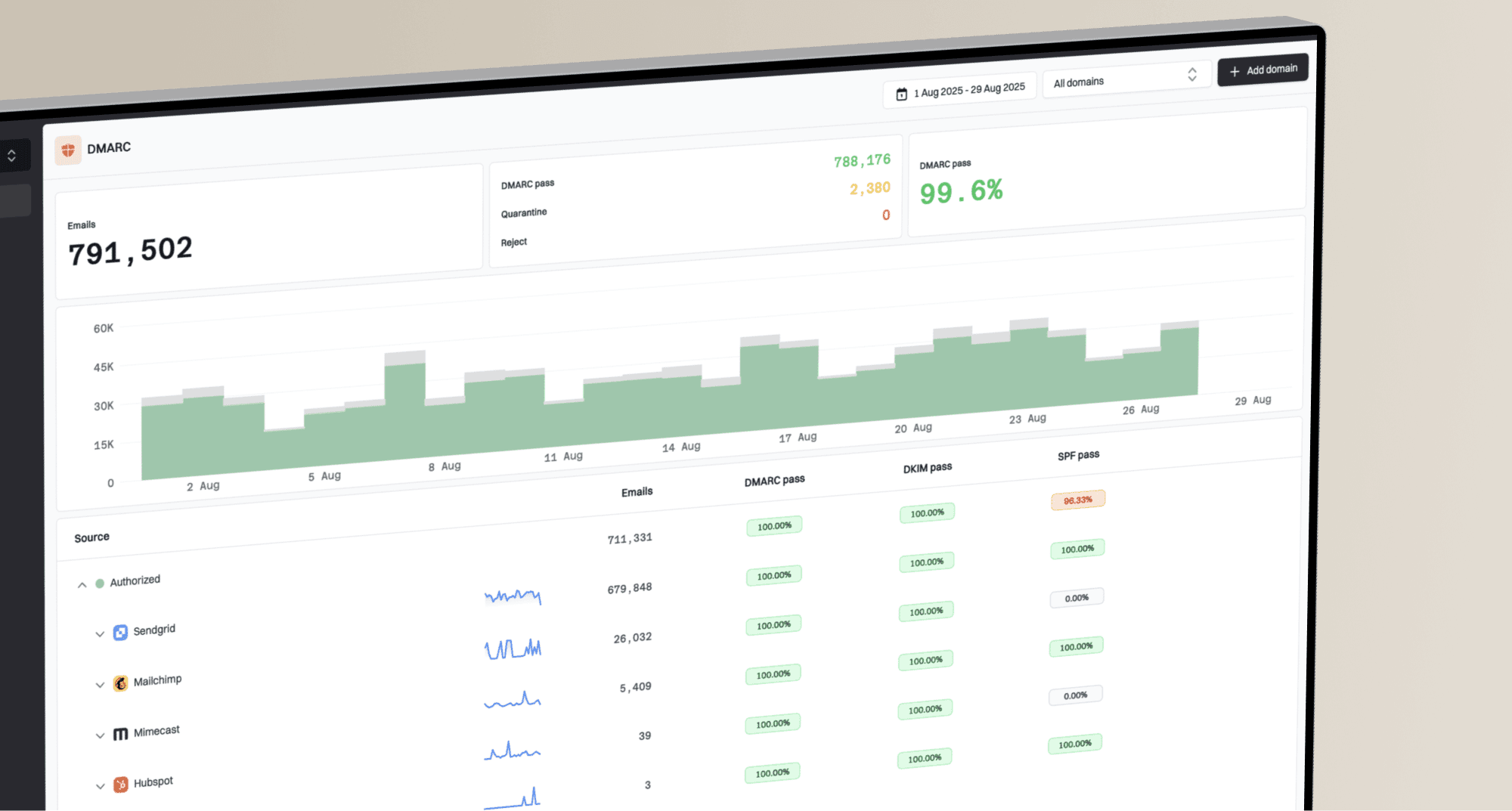
- Suped's DMARC reporting product can help audit which services send mail for your domain, whether DMARC passes, and whether the underlying SPF and DKIM checks are working. That does not delist the IP, but it helps separate authentication issues from the sending-system problem that triggered the SCBL listing.
- If reports have stopped and the underlying issue is fixed, wait for automatic expiry or use SpamCop's dispute path for the listed IP.