Calivent Networks DNSBL Peru Blacklist
The Calivent Networks DNSBL Peru blacklist (or blocklist) tracks IPs with poor reputation. Their team manually verifies every listed IP address.
Updated on 18 Jun 2026: We updated this guide with clearer DNSBL lookup guidance and a tighter delisting workflow for Calivent DNSBL Peru.
Summarize with
Check if you are listed on Calivent Networks DNSBL Peru Blacklist
And 143 other blocklists.







What is the Calivent Networks DNSBL Peru blacklist?
The Calivent Networks DNSBL Peru blacklist is a real-time DNS-based blocklist of IP addresses with poor email reputation because of spam or abusive mail patterns. It operates under the zone name dnsbl.calivent.com.pe. Calivent says every listed IP address is manually verified before it appears on the blocklist.
The public Calivent page describes DNSBL Peru as a free business service for restricting spam traffic in real time. The reputation system keeps a history of IP addresses associated with spam and senders with good mail practices, then uses that data to help decide whether a message should be accepted, logged, or rejected by a configured mail server. Calivent also describes public lookup, API, and subscription options for administrators.
Who runs Calivent Networks DNSBL Peru blacklist?
The Calivent Networks DNSBL Peru blacklist is operated by Calivent Networks, a Peruvian company that provides anti-spam services for businesses. Its DNSBL page is aimed at administrators who want to add a regional RBL or blacklist check to mail servers that handle unwanted email traffic in real time.
How Calivent DNSBL Peru lookups work
Like other DNSBLs, Calivent DNSBL Peru is queried by reversing the IP address octets and appending the zone name. A positive DNS response means the IP address is listed. No DNS response usually means the IP is not listed through that lookup path.
DNSBL lookup examplebash
# Check 203.0.113.45 by reversing the octets
dig +short 45.113.0.203.dnsbl.calivent.com.pe
Administrators should test the blacklist in log-only mode before using it to reject mail. This is especially important when the server receives mail for customers outside Peru, where a regional blocklist can create false positives if it is applied without local context.
How to get removed from Calivent Networks DNSBL Peru blacklist
To get delisted from this blacklist, first resolve the issue that caused the listing. Removal requests are weakest when the IP is still sending spam, has an open relay, or belongs to a compromised account.
- Stop the abusive traffic at the source. Check outbound queues, server logs, mailbox forwarding rules, and authentication events so the same traffic does not restart after delisting.
- Repair sending configuration. Confirm SPF, DKIM, DMARC, PTR, and HELO/EHLO values are correct for the sending host.
- Document the fix before requesting removal. Keep the affected IP address, timestamps, sample bounce text, and a short description of the remediation work.
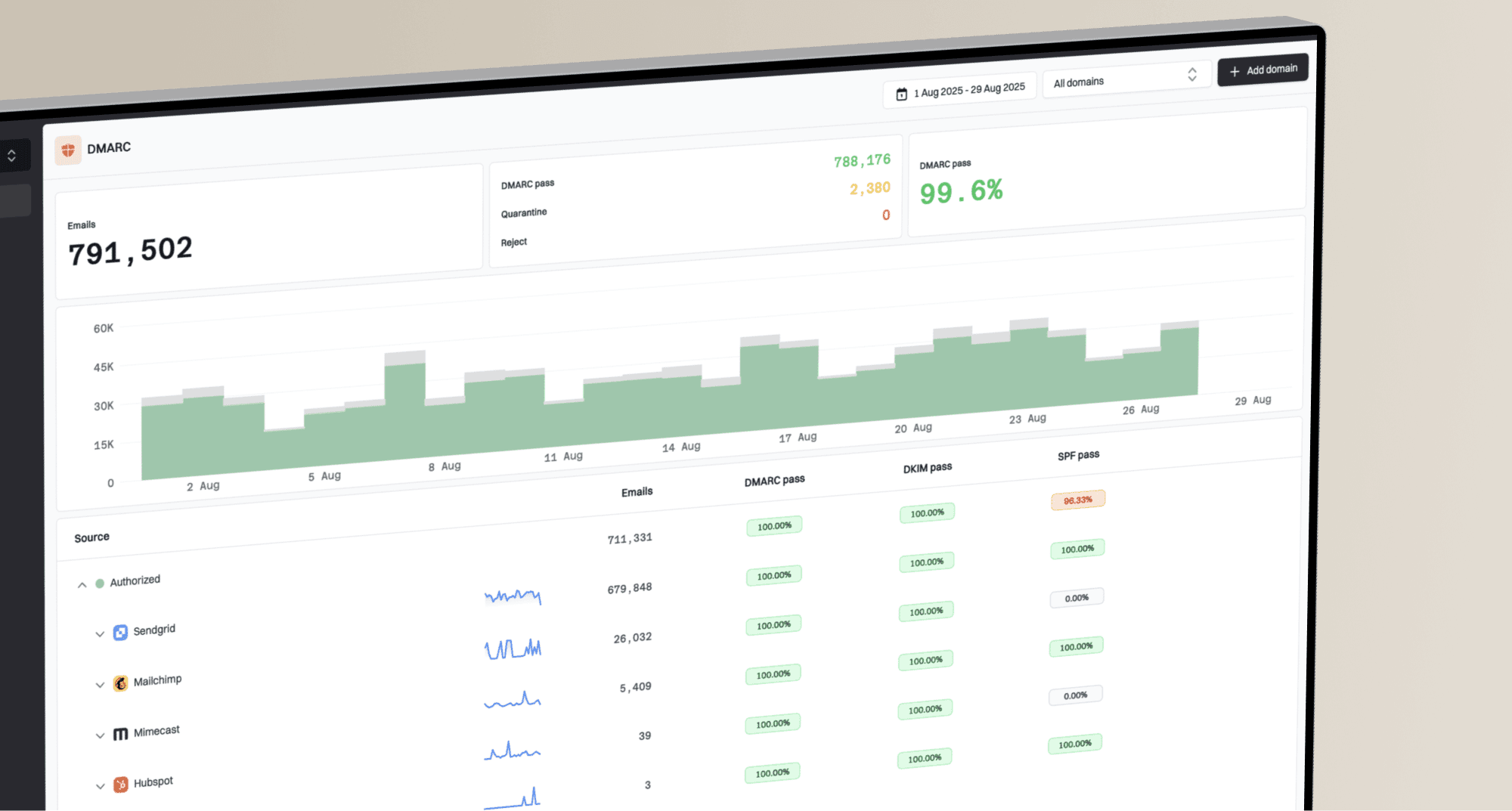
Once the issue is fixed, use the Calivent Networks website to check the IP address and submit the removal request. If you manage multiple sending domains, Suped's DMARC reporting product can help confirm which domains and sources are still failing authentication before you ask Calivent to delist the IP.
What's the impact of being listed on Calivent Networks DNSBL Peru blacklist?
The impact of being listed on the Calivent Networks DNSBL Peru blacklist depends on whether the recipient's mail server queries dnsbl.calivent.com.pe. It is a regional blacklist (or blocklist), so the highest risk is mail sent to Peruvian organizations, local service providers, or businesses that configured this RBL manually. A listing can cause SMTP rejects, delayed delivery, extra spam-folder placement, or support tickets from customers who stop receiving expected mail.
Treat a listing as an IP reputation warning even when only a small number of recipients are affected. Fix the sending issue first, then use DMARC reports, bounce logs, and mail server logs to confirm whether the problem is isolated to Calivent or part of a broader deliverability issue.