Barracuda Networks Barracuda Reputation Block List (BRBL)

The Barracuda Reputation Block List (BRBL) is a database of IP addresses with poor reputations, acting as a blacklist (or blocklist) for email senders.
Updated on 17 Jun 2026: We updated this guide with clearer BRBL listing causes, delisting steps, and relisting prevention advice.
Summarize with
Check if you are listed on Barracuda Networks Barracuda Reputation Block List (BRBL)
And 143 other blocklists.







What is the Barracuda Reputation Block List (BRBL)?
The Barracuda Networks Barracuda Reputation Block List (BRBL) is a real-time IP-based blacklist of known spam sources. It is maintained by Barracuda Central, the security research division of Barracuda Networks. This blocklist is part of the Barracuda Reputation System, which assesses sending IP addresses to decide whether to accept, block, or score email. The system assigns a "poor" reputation to IP addresses tied to spam, viruses, open proxies, or botnet activity, and it maintains positive reputation history for senders with clean email practices.
The primary users of this blacklist are customers of the Barracuda Spam & Virus Firewall, which uses the list to block messages from low-reputation IPs at the gateway. The BRBL is also available for public DNSBL queries through b.barracudacentral.org, and Barracuda Central provides an IP and domain reputation lookup for manual checks. Barracuda states that the BRBL is generated by automated systems, while Barracuda Central maintains and manually verifies IP addresses marked as "poor" in the reputation system. BRBL entries are IP-based, so a domain problem usually traces back to the mail server, relay, or third-party sender using that IP. In addition to IP reputation, the system also analyzes URLs within messages to identify and block threats.
Who runs BRBL?
The Barracuda Reputation Block List (BRBL) is operated by Barracuda Networks, Inc., a company that sells email, network, application, and data protection products. Founded in 2003, Barracuda launched the BRBL as a free and public service in December 2008 to help reduce spam. After being acquired by Thoma Bravo in 2017, Barracuda Networks was later purchased by the global investment firm KKR in 2022 for approximately $4 billion.
How do I get delisted from BRBL?
If your IP address has been placed on this blocklist, you can request removal through an online form. Before submitting a request, confirm that the listed IP is the outbound SMTP IP and fix the cause, such as a compromised machine, open proxy, unauthorized bulk mail, or spam sent through a shared NAT. Barracuda states that its listings are generated by automated systems and that delisting requests are typically investigated and processed within 12 hours if a valid explanation is provided.
To request delisting, you must:
- Visit the official removal page.
- Enter the outbound email server IP address that appears in BRBL.
- Provide your email address, phone number, and Barracuda customer details if they apply.
- Use the reason field to explain the spam source, compromise, or configuration issue you fixed.
Important: Requests without valid contact information will be ignored. Submitting multiple requests for the same IP address will also result in your requests being ignored, so submit once and wait for the review process to complete.
Why IP addresses get listed on BRBL
BRBL listings usually come from behavior tied to the sending IP, not the visible From domain. Common triggers include spam or virus messages hitting Barracuda detectors, honeypots or spam traps, open proxies, compromised hosts, and spam-generating botnet activity. A shared server, NAT gateway, or mail relay can put several domains at risk because the blacklist decision applies to the IP address.
- Restrict outbound port 25 so only approved mail servers can send directly to the internet.
- Audit logs for unexpected SMTP traffic, new forwarding rules, compromised accounts, and unauthorized scripts.
- Make sure each legitimate sender uses authenticated mail, stable reverse DNS, SPF, DKIM, and DMARC that match your domain policy.
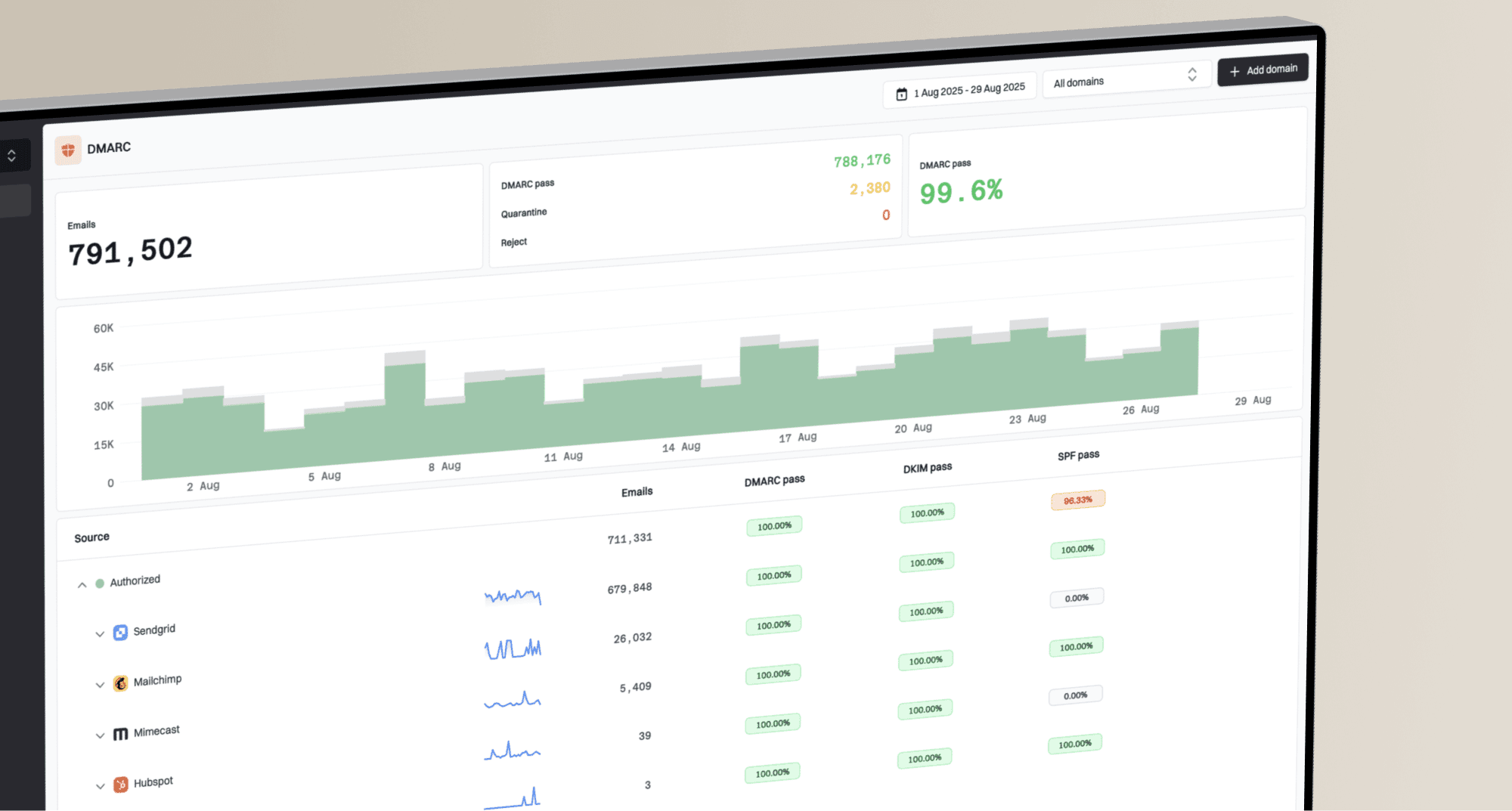
- Check DMARC aggregate reports to identify senders using your domain before you request delisting or ask a provider to clean up a shared IP.
- Keep abuse contacts and role addresses working so receivers can reach you quickly.
What's the impact of a BRBL listing?
The impact of being listed on the Barracuda Reputation Block List (BRBL) is usually medium. It is not as universally adopted as some other industry blacklists, but it is used by organizations that rely on Barracuda's security appliances and services. A listing on this blacklist (or blocklist) can cause email delivery failures or SMTP blocking at any recipient organization that uses the Barracuda Spam & Virus Firewall. Since the list is public, other system administrators also use it in their own anti-spam defenses.
The practical impact depends on how much of your audience sits behind Barracuda filtering, whether the affected IP is dedicated or shared, and whether your mail retries through a clean route. Shared infrastructure needs extra care because one compromised customer or script can affect unrelated senders on the same IP.