8086 Consultancy MSRBL Images Realtime Blacklist (RBL)

The 8086 Consultancy MSRBL is an IP-based blacklist (or blocklist) identifying mail servers that send spam images.
Updated on 17 Jun 2026: We refreshed the guidance on MSRBL image-spam listings, lookup checks, and delisting steps.
Summarize with
Check if you are listed on 8086 Consultancy MSRBL Images Realtime Blacklist (RBL)
And 143 other blocklists.







What is the MSRBL Images RBL?
The 8086 Consultancy MSRBL Images Realtime Blacklist (RBL) is an IP-based DNS blocklist (blacklist) that lists hosts found sending email containing spam images. It is one of the MSRBL (Mail Server Real-time Blacklists) zones operated for specific abuse categories, alongside virus, phishing, spam, and combined lists.
Administrators can query the zone images.rbl.msrbl.net to identify listed IP addresses and decide how their mail server handles those messages. MSRBL says it does not block mail itself; it provides DNSBL data that receiving systems can use to reject, quarantine, score, or inspect mail further.
Because this list is focused on image spam, a listing usually points to a compromised account, a bulk campaign with poor consent controls, or a server sending mail that resembles image-heavy spam.
Who runs the MSRBL Images RBL?
The Images RBL is operated by Chris Burton of 8086 Consultancy, an IT consultancy in the United Kingdom. 8086 Consultancy manages the MSRBL suite, including the Images, Virus, Phishing, Spam, and Combined RBL zones.
How to check whether an IP is listed
Use a DNSBL lookup pattern: reverse the sending IP address and append the MSRBL Images zone. For example, to check 1.2.3.4, query 4.3.2.1.images.rbl.msrbl.net.
DNSBL lookup examplebash
dig +short 4.3.2.1.images.rbl.msrbl.net
# Replace 1.2.3.4 with your sending IP, reversed as 4.3.2.1.
A returned DNS answer indicates that the IP has a listing. No answer indicates that the IP is not currently listed in that zone. MSRBL's public FAQ does not publish detailed response-code meanings for the Images RBL, so treat the result as a listing signal rather than a full abuse reason.
How to get delisted from the MSRBL Images RBL
MSRBL's published listing policy says IPs are listed for 3 days from the last virus, phishing, spam, image-spam, or related notification. For this Images RBL, that means the effective removal clock starts after the last relevant image-spam report, not after the first time you noticed the listing.
There is no reason to submit repeated removal requests before the sending problem is fixed. If new reports continue, the automatic expiry window resets and the IP stays on the blocklist (blacklist).
Use these steps before waiting for expiry:
- Review outbound mail logs for the listed IP and isolate image-heavy campaigns, compromised accounts, web forms, or applications that sent unexpected mail.
- Run malware and antivirus scans on servers and workstations that can send through the affected mail system, since MSRBL recommends scanning infected hosts before removal.
- Close open relays, disable abused credentials, rotate exposed SMTP passwords, and verify that only approved systems can send through the IP.
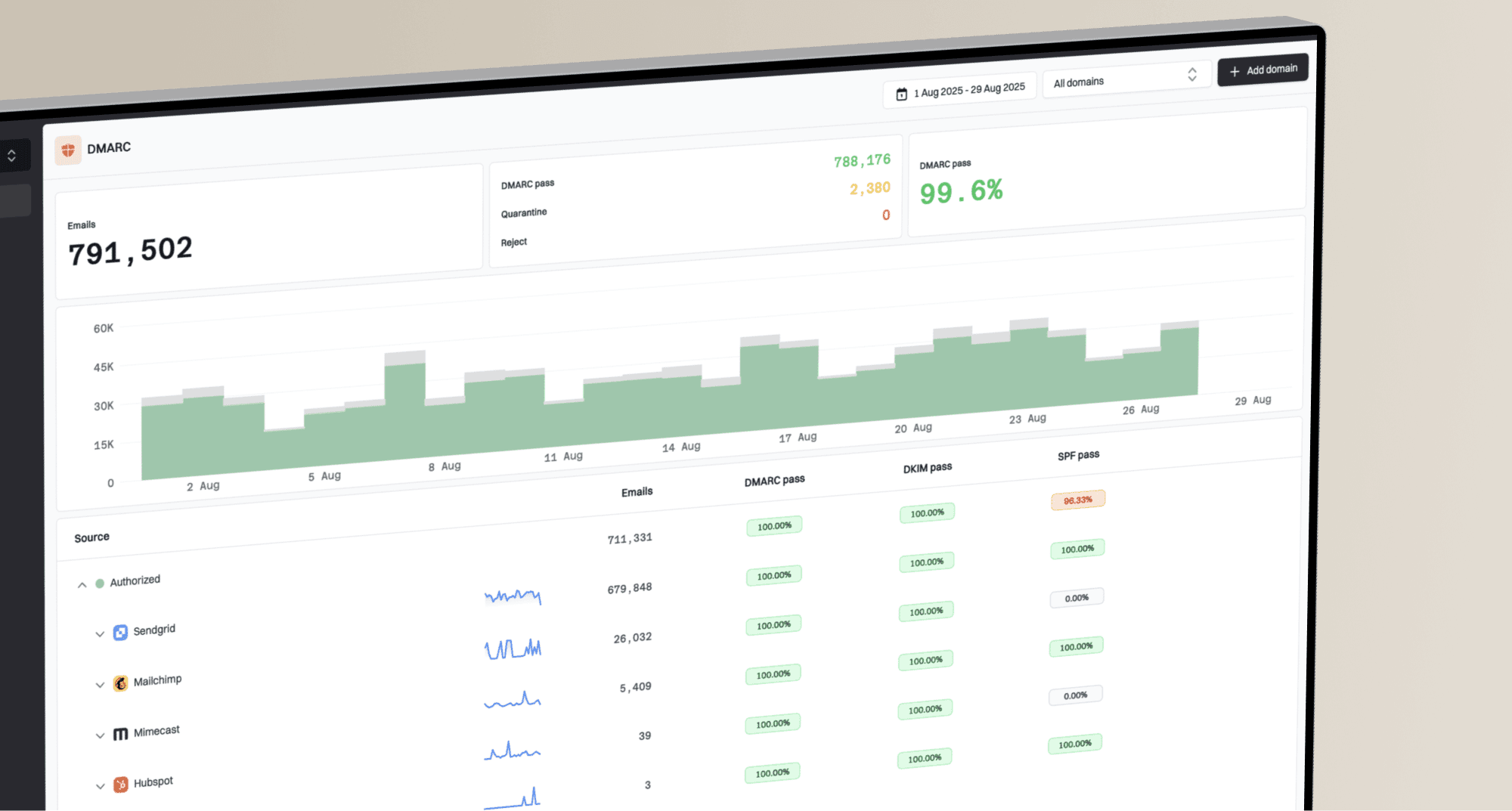
- Check SPF, DKIM, and DMARC results for the domain so authentication failures are not hiding a separate sending problem. Suped's DMARC reporting can help identify which services are sending mail for the domain while the IP issue is being cleaned up.
- If the IP belongs to an ISP relay or shared outbound gateway, contact the network owner. MSRBL notes that ISP mail server IPs can be requested not to be listed, which has to be handled by the operator of that relay.
- After the source of the spam images has stopped, wait for the 3-day expiry from the last report and then run the DNSBL query again.
What is the deliverability impact?
The deliverability impact is usually narrow because use of this specific RBL depends on each receiving mail server's filtering policy. A listing matters most when a recipient's rejection message, SMTP transcript, or mail log names MSRBL or images.rbl.msrbl.net.
MSRBL also advises against using its blocklists as a direct block-only decision. In practice, administrators use RBL results as one signal in spam scoring, quarantine rules, or rejection policies.
Treat the listing as evidence that the sending IP has a reputation problem, even when only a small number of recipients reject mail. Fixing the cause protects the IP from repeated listings on this blacklist and reduces the chance that other blocklists flag the same traffic.
Other 8086 Consultancy MSRBL blocklists
8086 Consultancy MSRBL Combined Realtime Blacklist (RBL)
Organization
8086 Consultancy
Zone
combined.rbl.msrbl.net
Type
IP
Impact
Low
Delisting
Automatic
8086 Consultancy MSRBL Phishing Realtime Blacklist (RBL)
Organization
8086 Consultancy
Zone
phishing.rbl.msrbl.net
Type
IP
Impact
Low
Delisting
Automatic
8086 Consultancy MSRBL Spam Realtime Blacklist (RBL)
Organization
8086 Consultancy
Zone
spam.rbl.msrbl.net
Type
IP
Impact
Low
Delisting
Automatic
8086 Consultancy MSRBL Virus Realtime Blacklist (RBL)
Organization
8086 Consultancy
Zone
virus.rbl.msrbl.net
Type
IP
Impact
Low
Delisting
Automatic