Which domain registration (WHOIS) fields are recommended to not be private?
Matthew Whittaker
Co-founder & CTO, Suped
Published 18 Dec 2025
Updated 18 Dec 2025
8 min read
When registering a domain, one of the choices we face is how much of our personal or organizational information to make public through the WHOIS database. The internet's original intention was transparency, making domain ownership easily traceable. However, with the rise of spam, data harvesting, and malicious activities, the concept of WHOIS privacy has become increasingly important.
For many years, the default was often public exposure of registrant data, which led to significant challenges for domain owners. Today, regulations like GDPR have dramatically shifted the landscape, often making privacy the default. The question then becomes, are there any fields that should consciously be kept public, and what are the implications for email deliverability and security if everything remains private?
Striking the right balance is crucial. While privacy protection shields you from unwanted solicitations, it can also present hurdles for legitimate entities trying to contact you about technical or abuse issues related to your domain. This guide will explore which WHOIS fields are recommended to remain public, considering different scenarios and the evolving landscape of domain registration data.
Understanding WHOIS data and privacy
The WHOIS database is essentially a public directory listing registered domain names and details about their owners. Historically, this included the registrant's name, organization, physical address, email address, and phone number. This information was vital for network administrators and law enforcement to resolve technical issues, investigate abuse, or identify domain ownership. However, this transparency also created opportunities for spammers and scammers to harvest contact details.
Domain privacy protection services emerged to address these concerns. These services replace your personal information with the registrar's or a proxy service's contact details, effectively shielding your identity from public view. While this is a welcome feature for many, it's important to understand that not all fields or TLDs allow for complete privacy. Some top-level domains, like .us domains, have specific requirements that mandate public display of certain registrant information. You can read more about these rules on Squarespace's WHOIS privacy policy.
Before GDPR (Pre-2018)
Default Visibility: Most registrant data (name, address, email, phone) was publicly accessible via WHOIS.
Privacy Option: Domain privacy services were often an optional, paid add-on offered by registrars.
Abuse Reporting: Direct contact with registrants for abuse notifications was common due to public data.
After GDPR (Post-2018)
Default Redaction: Personal registrant data is largely redacted by default for EU residents and often globally.
Privacy Option: Privacy services are often included for free or are the standard, as explicit opt-in for publication is needed.
Abuse Reporting: Abuse reports are typically routed through the registrar, making direct contact with the registrant less common.
While GDPR has led to increased privacy, certain TLDs or specific circumstances may still require some data to be public. For instance, some country-code Top-Level Domains (ccTLDs) have local regulations that override general privacy defaults. It's crucial to check the policies of your specific registrar and TLD to understand what information, if any, you are legally obligated to disclose.
The evolving landscape of WHOIS privacy
The evolving landscape of domain registration data has made WHOIS less of a direct data source for abuse reporting than it once was. Instead, mechanisms like RDAP (Registration Data Access Protocol) are becoming the standard for accessing registration data, especially for legitimate purposes. This shift means that while your data might be redacted from public WHOIS queries, it can still be accessed under specific conditions by authorized parties.
The primary recommendation now is to keep all WHOIS fields private unless there's a specific legal or operational reason to make them public. Most registrars, like Hostinger, offer free domain privacy protection, making it a standard practice. This helps protect you from spam, phishing attempts, and unauthorized data harvesting.
ICANN's registration data policy outlines the requirements for processing registration data by registrars. Section 9.2.2.1, in particular, addresses data redaction. It essentially dictates that personal data of natural persons should be redacted from public access unless specific conditions are met. This supports the general recommendation to keep your information private.
The impact on email deliverability when WHOIS data is private is generally positive for individuals and small businesses. It reduces the chance of your email address being scraped and added to spam lists, which can indirectly help maintain a good sender reputation. However, for high-volume senders, the equation can be a bit different. Some mailbox providers may view completely private WHOIS data with suspicion if it hinders their ability to contact a domain owner regarding abuse reports.
When specific WHOIS fields may need to be public
Despite the general push for privacy, there are limited scenarios where making certain WHOIS fields public might be considered. For example, large corporations or email service providers (ESPs) might choose to make their administrative contact information public. This can facilitate legitimate contact from security researchers, law enforcement, or other internet infrastructure entities for time-sensitive issues like phishing attacks originating from their domains, or to quickly resolve a domain blocklist incident.
Another consideration is if you are operating a domain where transparency is a key component of your brand or business model. For example, a certification authority or a financial institution might want to ensure their organizational identity is easily verifiable. In these cases, making the organizational name and a generic abuse contact email (monitored by a team) public could build trust and facilitate necessary communication.
Entity type
Registrant name
Registrant email
Registrant address
Admin contact email
Individual/SMB
Private
Private
Private
Private
Large enterprise
Public (company name)
Public (generic abuse inbox)
Private
Public (generic admin inbox)
Email service provider
Public (company name)
Public (abuse@domain.com)
Private
Public (admin@domain.com)
For most senders, particularly those managing their own email infrastructure, the benefits of privacy outweigh the reasons for public disclosure. However, ensure that the administrative and technical contacts listed with your registrar (even if private) are up-to-date and monitored. This is crucial for receiving important notices about your domain, including security alerts or renewal notifications.
Balancing privacy and operational needs
Ultimately, the decision of which WHOIS fields to keep private or public depends on your specific needs, the type of domain, and your risk tolerance. For individuals and most businesses, keeping personal details private is the recommended default. This protects against unwanted solicitations and reduces exposure to potential threats. However, it's essential to understand that privacy doesn't mean anonymity, and legitimate parties may still access your data through official channels.
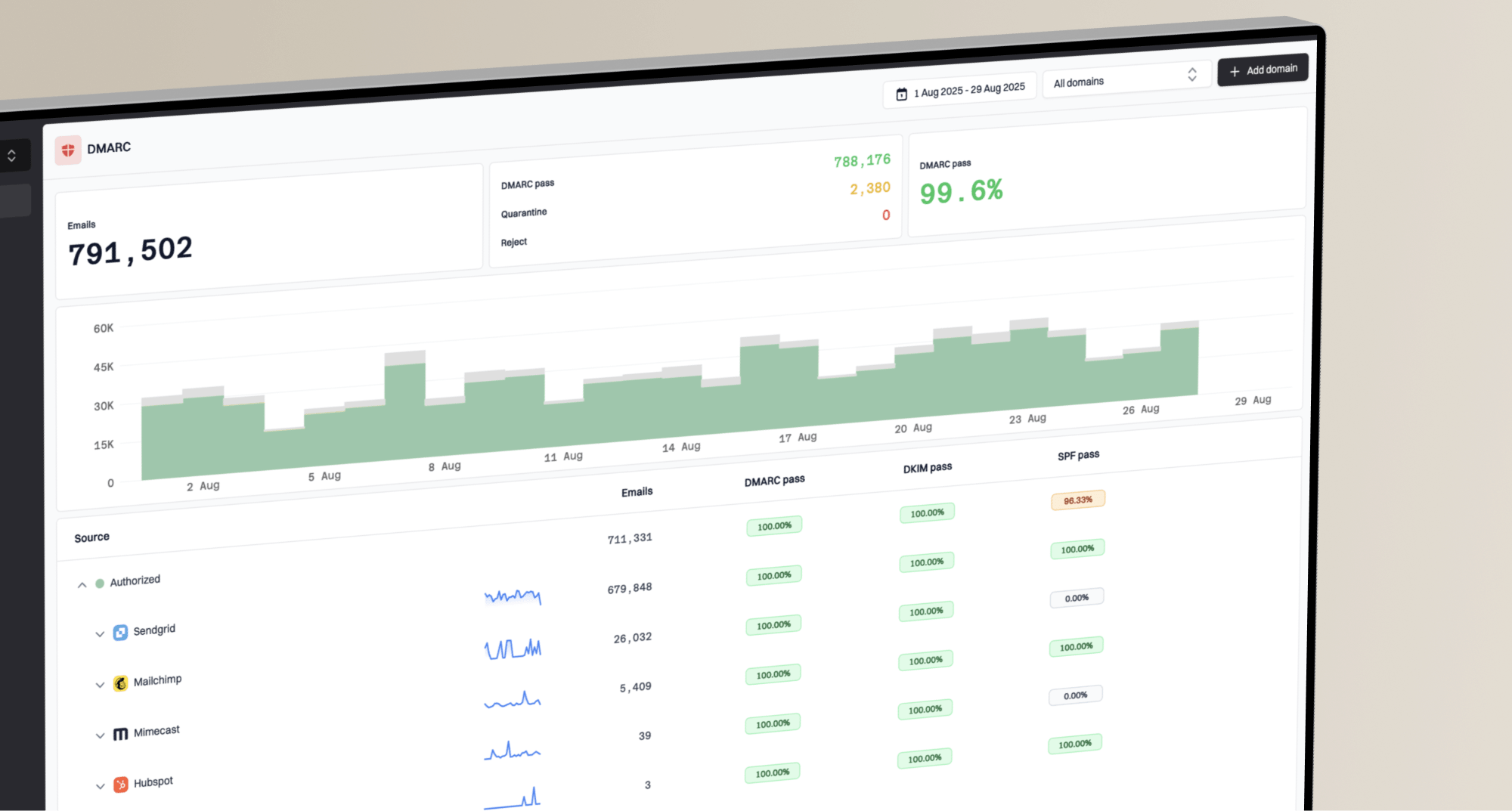
For those operating large-scale email sending operations or managing multiple domains, a more nuanced approach might be necessary. Ensuring that your domain is properly configured with DMARC monitoring is paramount, as this provides a direct feedback loop for email authentication and abuse reports, often negating the need for public WHOIS data to be the primary contact method for such issues. Suped offers robust DMARC monitoring and reporting tools, including SPF flattening and a multi-tenancy dashboard for MSPs, to help you stay on top of your email security and deliverability, regardless of your WHOIS privacy settings.
Ultimately, the best approach is to leverage the privacy options available to you while maintaining active monitoring of your domain's health and email performance. Tools that provide real-time alerts for DMARC failures or blocklist listings can help you quickly address any issues that arise, irrespective of your WHOIS publication settings.
Views from the trenches
Best practices
Always use domain privacy protection when available and allowed by your TLD, especially for personal domains to prevent data harvesting and spam.
Ensure that the contact information within your registrar's portal, even if private, is accurate and regularly updated for critical notifications.
Utilize DMARC reporting and monitoring tools to get direct feedback on email authentication and abuse, reducing reliance on public WHOIS for these issues.
For organizational domains, consider a generic abuse@ or security@ email in your registrar's internal records, ensuring it's actively monitored.
Common pitfalls
Assuming all WHOIS data can be private for all TLDs, ignoring specific country-code domain regulations that might require public information.
Paying for WHOIS privacy when your registrar or TLD already provides it for free as a default due to regulations like GDPR.
Neglecting to update internal registrant contact details, leading to missed renewal notices or critical security alerts about your domain.
Relying solely on WHOIS data for abuse reporting, especially when DMARC and other email authentication mechanisms offer more direct channels.
Expert tips
Leverage RDAP as the modern alternative to WHOIS for legitimate data access, moving away from outdated WHOIS data scraping methods.
For specific TLDs like .us, understand that privacy protection is not allowed, and contact information must remain public by regulation.
Implement robust email authentication (SPF, DKIM, DMARC) to bolster sender reputation, which is often more critical than public WHOIS data.
Regularly check your domain's health and email deliverability metrics to proactively identify and resolve any issues.
Expert view
Expert from Email Geeks says that M3AAWG documents and blog posts on WHOIS data are available publicly.
2025-05-15 - Email Geeks
Expert view
Expert from Email Geeks says that many sources recommend certain WHOIS fields not be private, and some registrars prevent public data.
2025-05-15 - Email Geeks
Making informed privacy decisions
The evolution of WHOIS privacy reflects a broader trend towards protecting personal data online. For most domain owners, maintaining privacy for all WHOIS fields is the best course of action. This default position helps shield you from unsolicited contact and potential threats. However, for certain organizational structures or specific TLDs, a limited public presence for administrative or abuse contact information might still be beneficial or legally required. The key is to be informed about your registrar's policies and the regulations governing your chosen TLD.
Regardless of your WHOIS privacy settings, actively managing your domain's email health is critical. Implementing and monitoring email authentication protocols like SPF, DKIM, and DMARC provides the most effective defense against impersonation and ensures legitimate emails reach their destination. Suped is designed to make this process straightforward, offering AI-powered recommendations to improve your email deliverability and security, giving you peace of mind whether your WHOIS data is public or private.