BCS

How BCS uses Suped for hands-on DMARC reviews, source discovery, and client email security work.
BCS is a Newcastle based IT business located in Lake Macquarie. Established in 2005, BCS supports business customers across Newcastle, Lake Macquarie, and surrounding areas with a strong focus on cybersecurity and customer support.
Led by Sally Wilson, BCS helps clients keep core technology running smoothly. Email security is part of that work, including DMARC monitoring, SPF and DKIM configuration, and guidance on how each client should move toward stronger domain protection.
Because BCS is often called when a client has an email issue that needs to be understood and fixed, Suped is most useful as a practical workspace: a place to confirm sending sources, work through DNS details, and turn DMARC findings into client or vendor actions.
Suped helps us work through DMARC with clients instead of just looking at raw reports. We can see the sources, check what needs attention, and explain the next step.

Sally Wilson, Owner, BCS
The opportunity: practical DMARC support across client domains
BCS works with clients whose email setups span Microsoft 365, website platforms, accounting tools, marketing services, and security gateways. For each domain, Sally needs to understand which services are sending mail, which records need attention, and when a client is ready to move from monitoring to stronger DMARC policy.
The goal is not just to read reports. It is to turn DMARC data into a plan that fits real support work: identify the application behind a sending source, decide whether the fix belongs with BCS, the client, or a vendor, and know when a move to quarantine or reject makes sense.
That matters because the useful answer is rarely just a pass or fail. Sally needs enough context to explain why a source is expected, why a forwarded message looks different, or why a third-party platform needs to adjust its own sending configuration.
Multi-client visibility
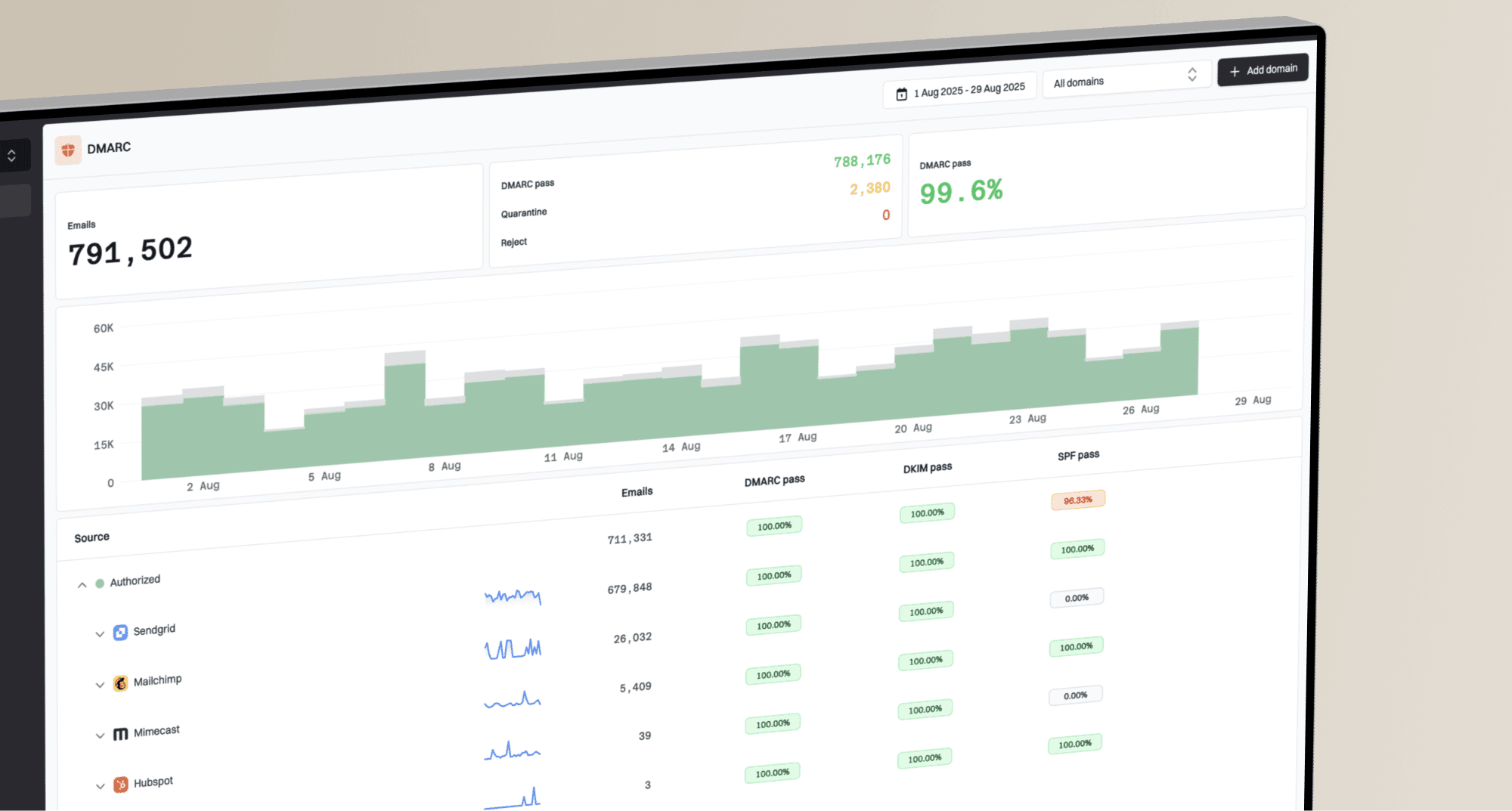
Weekly DMARC summaries and a shared dashboard help BCS keep track of active client domains without manually stitching together report files.
Practical source discovery
Source details and CSV exports give Sally a faster path from unfamiliar traffic to a likely application, vendor, or client question.
Support for stronger policies
Suped helps BCS decide whether a client is ready to keep monitoring, move to quarantine, or prepare for reject.
The solution: hands-on investigation with clearer next steps
Suped gives BCS an MSP friendly way to manage DMARC across client domains. Sally can review sending sources, inspect partially authorized mail, export data for investigation, and use reporting to support client and vendor conversations.
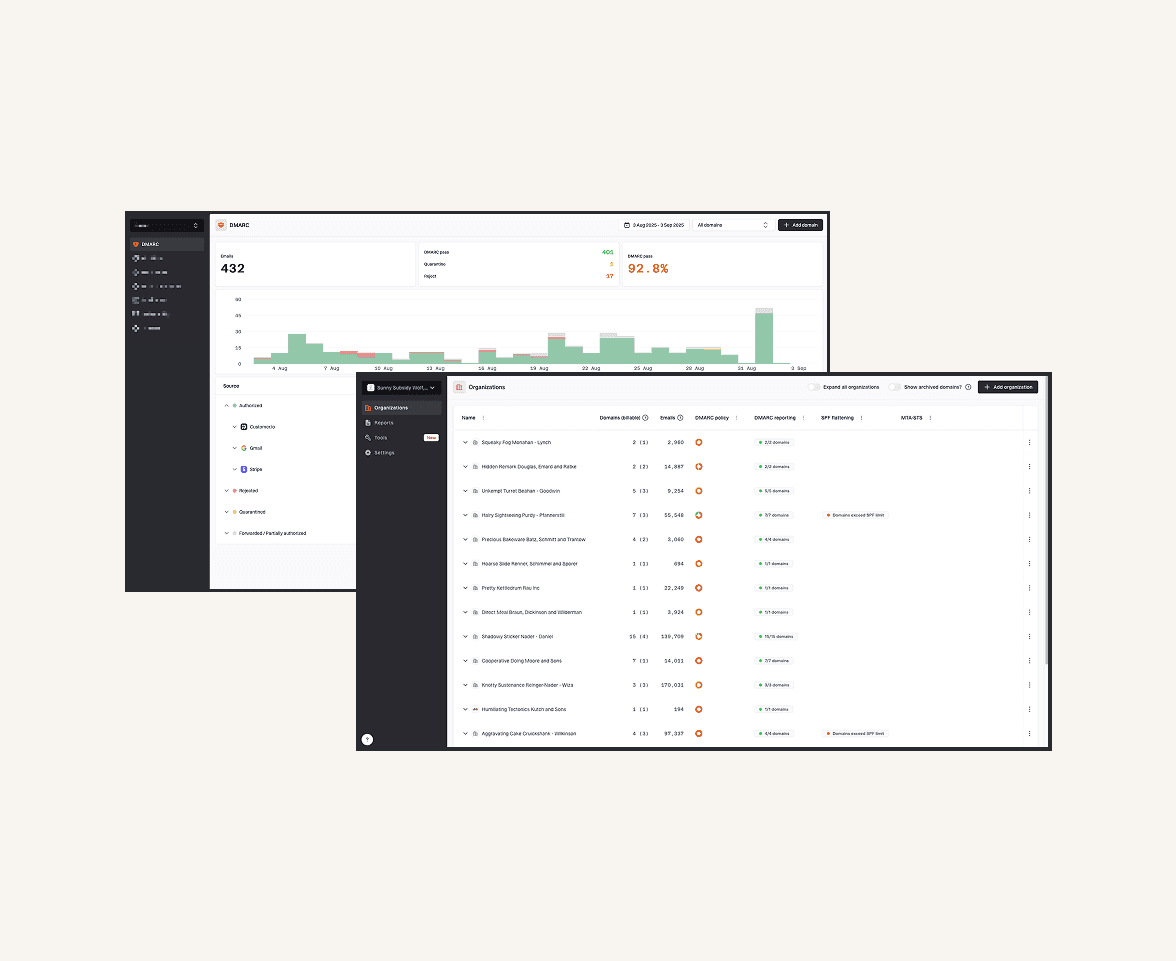
During a DMARC check in, Sally and Suped worked through live client examples together. One client used a job management app that sent mail through Amazon SES. The DNS records were already in place, and Suped helped narrow the remaining work to a return path setting controlled by the vendor.
In another review, Sally worked through Cloudflare DNS settings and Microsoft DKIM selectors during the call. She updated the selectors to the current Microsoft values, then left with a focused list of sender records to collect for the next stage of the client work.
That kind of context saves time. Instead of guessing which DNS record or source to chase next, we can separate what we can fix, what the client needs to confirm, and what a vendor needs to change.
Sally Wilson, Owner, BCS
Suped also gives BCS a place to coordinate the routine but important work around SPF and DKIM records. For clients using tools such as SendGrid, Mailchimp, Amazon SES, MYOB, or website forms, BCS can identify what needs to be configured before policy enforcement is raised and use the verified source workflow to keep the review focused on legitimate senders.
The results: less investigation time and stronger client handoffs
With Suped, BCS has a repeatable hands-on workflow for client email authentication: add the domains, review the reports, identify the real sending services, request the right records, then raise policy when the data supports it.
Once the SPF, DKIM, and sending source details are clear, we can move clients toward stronger DMARC policies with confidence.
Sally Wilson, Owner, BCS
A workflow that turns investigation into action
Weekly summaries, source exports, and domain reports help BCS move from raw authentication data to the next concrete action, whether that is a DNS update, a vendor request, a client question, or a policy change.
Practical outcomes include:
Less time spent identifying sources
Source detail, CSV exports, and verified source workflow give Sally a faster path from unknown traffic to a likely app, vendor, or action.
Faster client and vendor handoffs
BCS can turn DNS detail into a concise request when a client needs to confirm a tool or a vendor needs to update return path, DKIM, or sender settings.
More confident policy progression
BCS can decide when to wait, monitor, quarantine, or prepare for reject based on evidence rather than guesswork.
For a hands-on IT provider like BCS, Suped acts as a practical layer between complex DMARC data and the support work that moves client security forward.