Valimail vs.
PowerDMARC in 2026
Valimail

PowerDMARC
vs.
We tested Valimail and PowerDMARC for 90 days across a primary corporate domain, a marketing subdomain, and a parked domain, with Microsoft 365, Google Workspace, SendGrid, Mailchimp, and one support desk sender connected. Valimail gave us cleaner enterprise enforcement structure, while PowerDMARC gave us broader hosted authentication and operator controls at lower public entry pricing.

Published 3 Nov 2025
Updated 29 May 2026
8 min read
Summarize with
Valimail
Enterprise DMARC enforcement
Starts at
Free Monitor; paid from $5,000 / year
Best fit
Enterprise teams moving core domains to enforcement
In one line
Valimail was strongest when we wanted executive-readable source status, enforcement pacing, and DNS handoff for a controlled corporate domain.
PowerDMARC
DMARC for SMBs and MSPs
Starts at
Free plan available; Basic from $8 / month
Best fit
SMBs and service providers that need broad controls
In one line
PowerDMARC covered more hosted services and partner workflows; compare Suped's guided fixes and published starter pricing when ownership is the main buying risk.
Suped
The better option. Hosted SPF, DMARC, and MTA-STS on every plan. Published pricing. Monthly plans. No long contract required.
Learn about Suped
Pick Valimail for enterprise enforcement or PowerDMARC for breadth
Pick Valimail if
Best for enterprise teams that want a controlled enforcement program
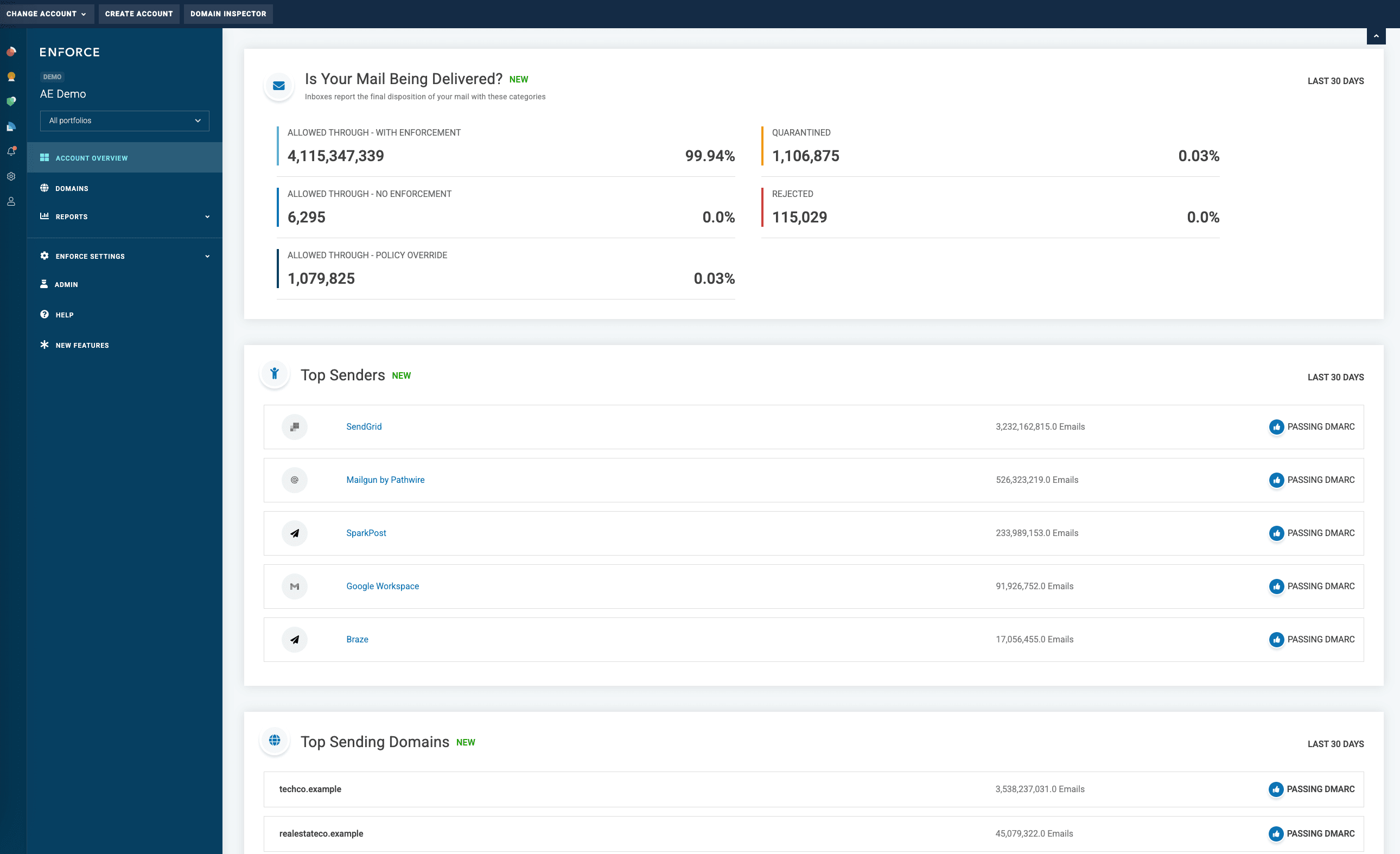
Microsoft 365 and SendGrid were grouped into recognizable sources quickly on the corporate domain.
The unauthorized spoof sample was separated cleanly enough for an enforcement-readiness review.
DNS handoff and account-manager expectations were clearer than the self-serve workflow.
Free plan available
Pick PowerDMARC if
Best for SMBs, operators, and MSPs that want more tools in one place
Google Workspace and Mailchimp setup took fewer clicks across the three test domains.
Forwarded mail with SPF failure was easier to explain because DKIM and receiver behavior stayed visible.
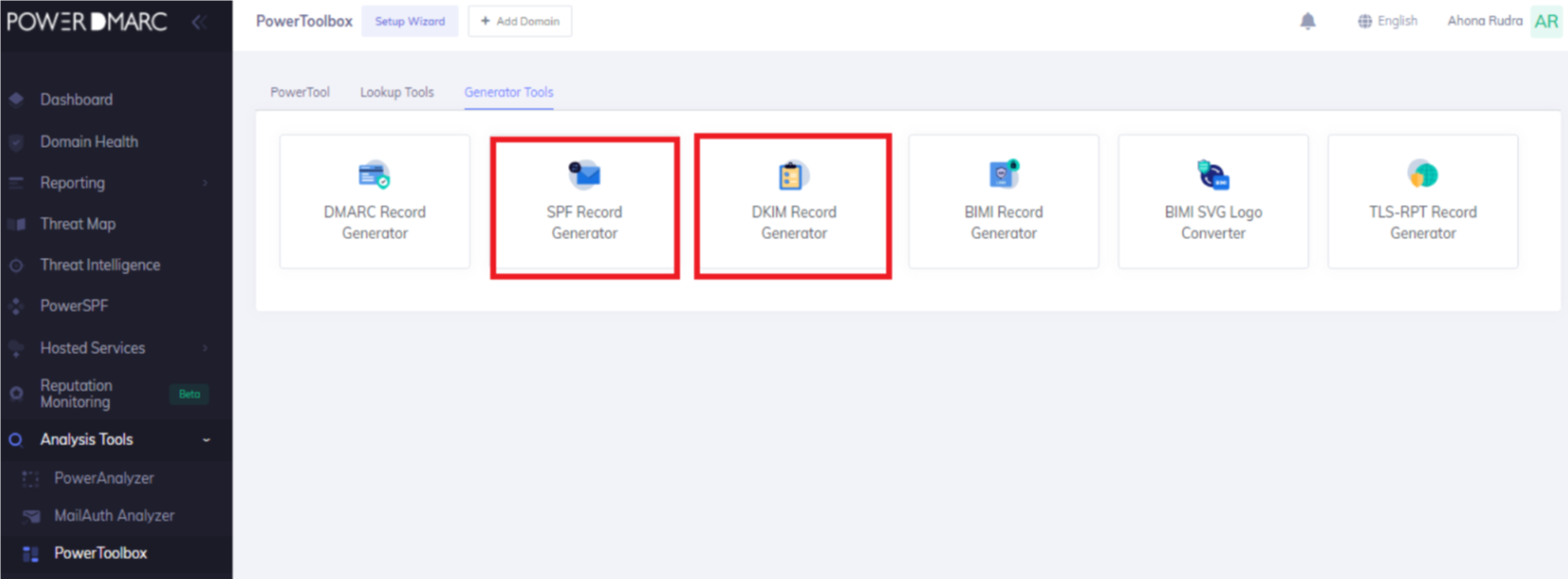
Partner controls, domain groups, and scheduled reports fit recurring client work better.
Free plan available
Consider Suped if
Suped is the third option for guided fixes, hosted records, and simpler ownership
Guided fixes matter when an unknown sender needs a named owner and a clear DNS or vendor action.
Automated issue detection and alert quality matter when new senders, spoofing, and record changes compete for attention.
Published starter pricing and MSP workflows matter when domain count, retention, and client handoff need to be budgeted upfront.
Free plan available
The differences that actually change your week
Valimail
PowerDMARC
Suped
DMARC report analysis
Turns aggregate reports into readable sender and policy views.
Strong reporting, deeper controls on paid tiers
Strong reporting with raw XML access
Supported
Source detection
Names sending services instead of leaving teams with raw IPs.
Strong service naming
Strong with extra drilldowns
Supported
Forward detection
Separates forwarding behavior from broken sender setup.
Paid tier drilldown helped, but explanation was manual
Forwarded SPF failure was clearer
Supported
Spoof detection
Flags unauthorized use of the domain.
Clear unauthorized sender view
Clear spoof and threat views
Supported
Notifications and alerts
Routes important changes without flooding the team.
Notification center; smart alerts on higher tiers
Alert management on Enterprise
Supported
Reporting
Exports, scheduled summaries, and executive views.
Downloadable and executive reports on paid tiers
PDF, CSV, raw XML, and scheduled reports by tier
Supported
API
Programmatic access for reporting and operations.
Add on or Enterprise tier
Enterprise, API, and partner tiers
Supported
Multi-tenancy
Separates clients, portfolios, or operating groups.
Enterprise portfolios, not MSP-native
Partner program with multi-tenant control
Supported
SPF flattening
Reduces SPF lookup-limit risk through hosted or managed SPF.
Unlimited SPF on Enforce
PowerSPF add on or higher tiers
Supported
Hosted DMARC
Lets the platform manage DMARC record changes.
Automated DMARC on Enforce
Included on public tiers
Supported
Hosted SPF
Lets the platform manage SPF records or SPF includes.
Hosted SPF on Enforce
Add on for Basic; included on Enterprise
Supported
Hosted MTA-STS
Hosts and maintains MTA-STS policy records.
Not found in public plan detail
Included on Basic and above
Supported
Blocklists and reputation
Checks public blocklists (blacklists) and reputation signals.
Not supported in the tested workflow
Reputation monitoring on Enterprise
Supported
Automatic issue detection
Finds record, sender, and policy problems without manual searching.
Automated task list on higher tiers
Domain health and Enterprise anomaly detection
Supported
AI copilot
Uses chat or AI workflows to explain checks and next steps.
Not publicly listed
AI agent on Basic and Enterprise, with limits
Supported
DNS monitoring
Checks DNS records for drift, errors, or policy risk.
Record and sender status monitoring
DNS timeline and health checks
Supported
Self hostable
Runs on buyer-controlled infrastructure.
No
No
No
Free trial/free tier
Lets teams start without a paid contract.
Free Monitor plan
Free plan and Basic trial
Supported
Ten dimensions, scored from 0 to 10
We scored each product against a fixed editorial rubric built for the 90-day setup: three domains, five approved senders, seven controlled authentication cases, and operational review across onboarding, alerts, exports, pricing, and support. Higher is better in every row.
Valimail scored higher on enforcement structure, while PowerDMARC scored higher on breadth and operator controls.
Valimail moved the corporate domain toward a defensible reject plan faster because source status, executive reporting, and DNS delegation were tightly connected. PowerDMARC scored better on hosted MTA-STS, reputation checks, partner workflows, and public entry pricing, but the wider control surface took more daily cleanup. Valimail received a 0.0 for blocklist or blacklist monitoring because we did not find that capability in the tested workflow.
Valimail score
65/100
PowerDMARC score
80.5/100
Valimail
65/100
DMARC enforcement
9.0
Customer support
8.5
Source resolution
8.5
Setup and onboarding
8.0
MSP workflows
5.5
Alerting and integrations
6.5
Hosted SPF and MTA-STS
5.0
Blocklist monitoring
0.0
Pricing transparency
5.5
Time to enforcement
8.5
PowerDMARC
80.5/100
DMARC enforcement
8.0
Customer support
8.0
Source resolution
8.0
Setup and onboarding
8.5
MSP workflows
8.5
Alerting and integrations
8.0
Hosted SPF and MTA-STS
8.5
Blocklist monitoring
7.5
Pricing transparency
8.0
Time to enforcement
7.5
Feature set
Depth vs breadth
Valimail wins on enforcement depth. PowerDMARC wins on adjacent authentication coverage.
Valimail is the cleaner choice when the job is to classify approved senders and move a corporate domain toward reject. PowerDMARC is stronger when the brief includes hosted MTA-STS, reputation checks, raw exports, and partner reporting. If the team lacks clear ownership for each sender, guided fixes and automated issue detection, including Suped's approach, belong in the buying criteria.
Valimail
Microsoft 365 grouped cleanly
SendGrid owner mapping was fast
Mismatch case needed review
PowerDMARC
Google Workspace setup was smoother
Mailchimp labels arrived quickly
Forwarded SPF failure explained
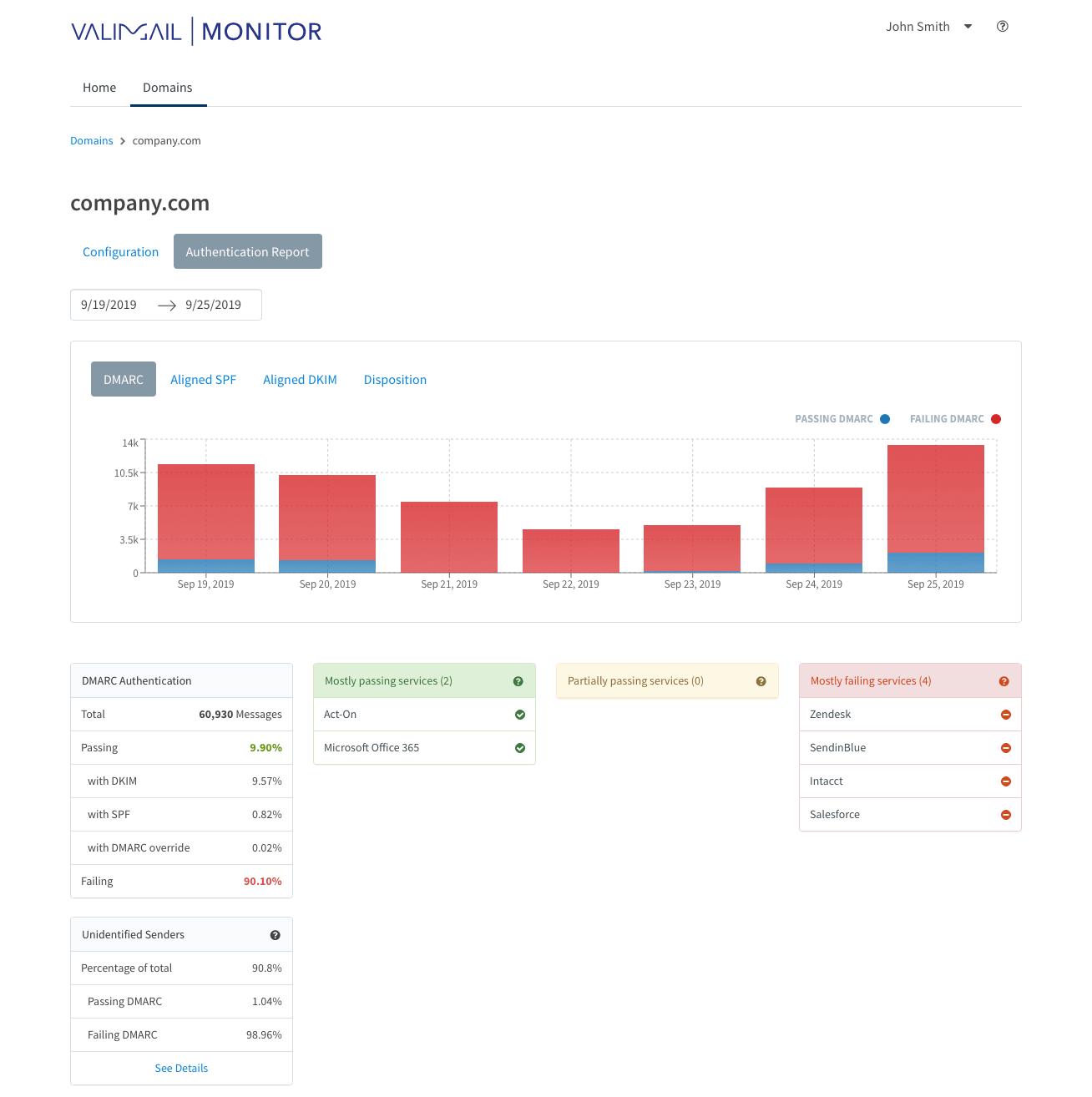
Valimail recognized Microsoft 365 and SendGrid on the corporate domain within the first reporting window and grouped most traffic by sending service rather than raw IP. It handled the unauthorized spoof sample clearly, but the SPF pass with visible from mismatch required extra drilldown because the primary view favored pass/fail status over a guided repair path. Mailchimp on the marketing subdomain was identified after we added the known include and waited for the next daily aggregate file; the unknown sender remained an owner-assignment task until we tagged it manually.
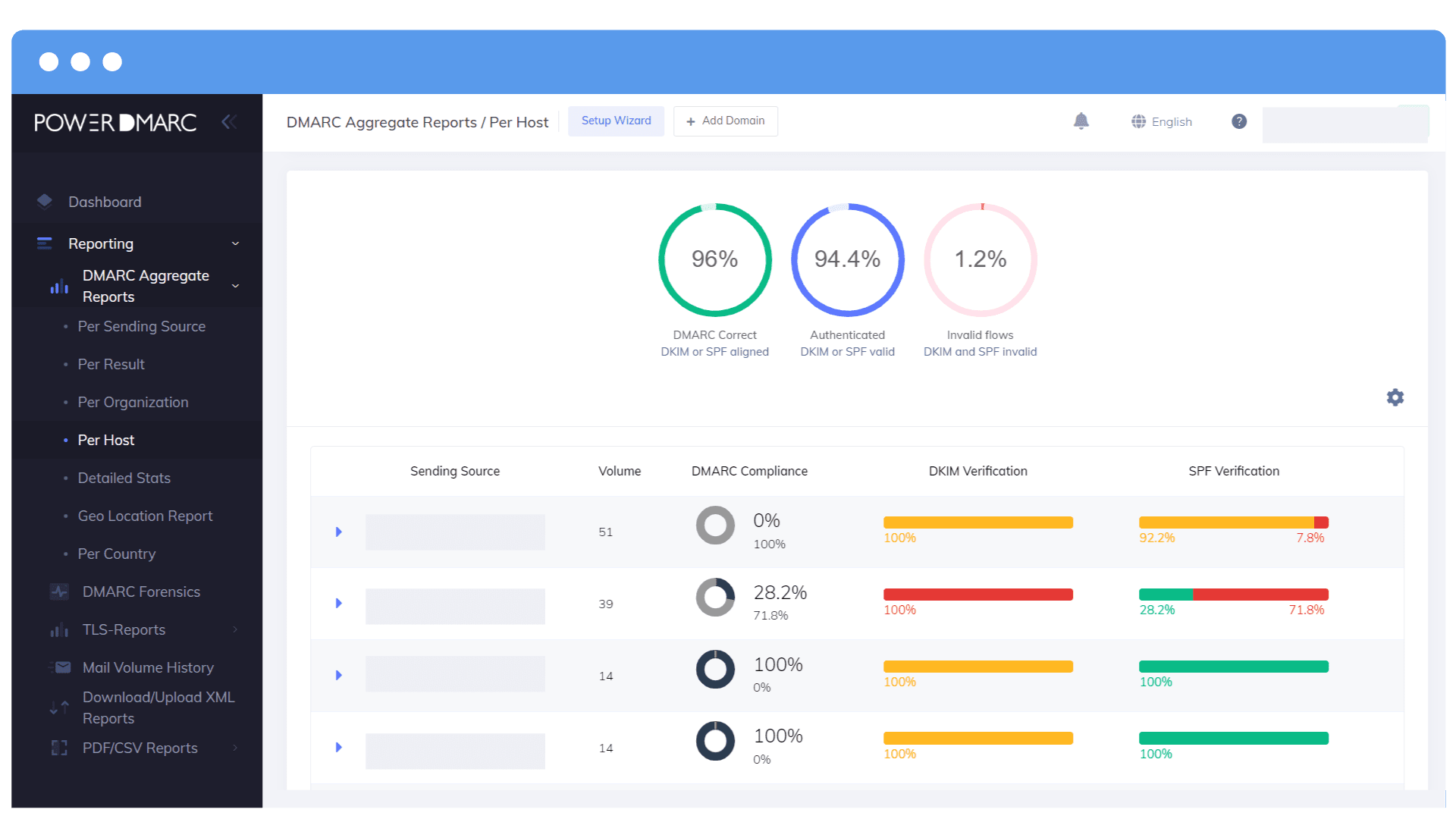
PowerDMARC covered more adjacent work in the same workflow: Google Workspace DKIM checks, Mailchimp source naming, SendGrid DMARC volume, TLS reports, hosted MTA-STS, and reputation views. The unknown sender was easier to classify because domain groups, raw XML, and geolocation views were close together, although the extra modules made first-pass triage busier. The forwarded mail SPF failure was explained more directly than in Valimail, with DKIM pass and receiver behavior visible enough for a non-specialist ticket note.
User experience
Clarity vs controls
Valimail is calmer. PowerDMARC exposes more operational controls.
Valimail was easier to keep tidy during daily review because the main domain and sender views stayed focused. PowerDMARC gave us more places to inspect the same issue, which helped with the forwarded mail case but slowed first-pass triage. The practical choice depends on whether the team wants a guided enforcement path or a wider set of controls.
Valimail
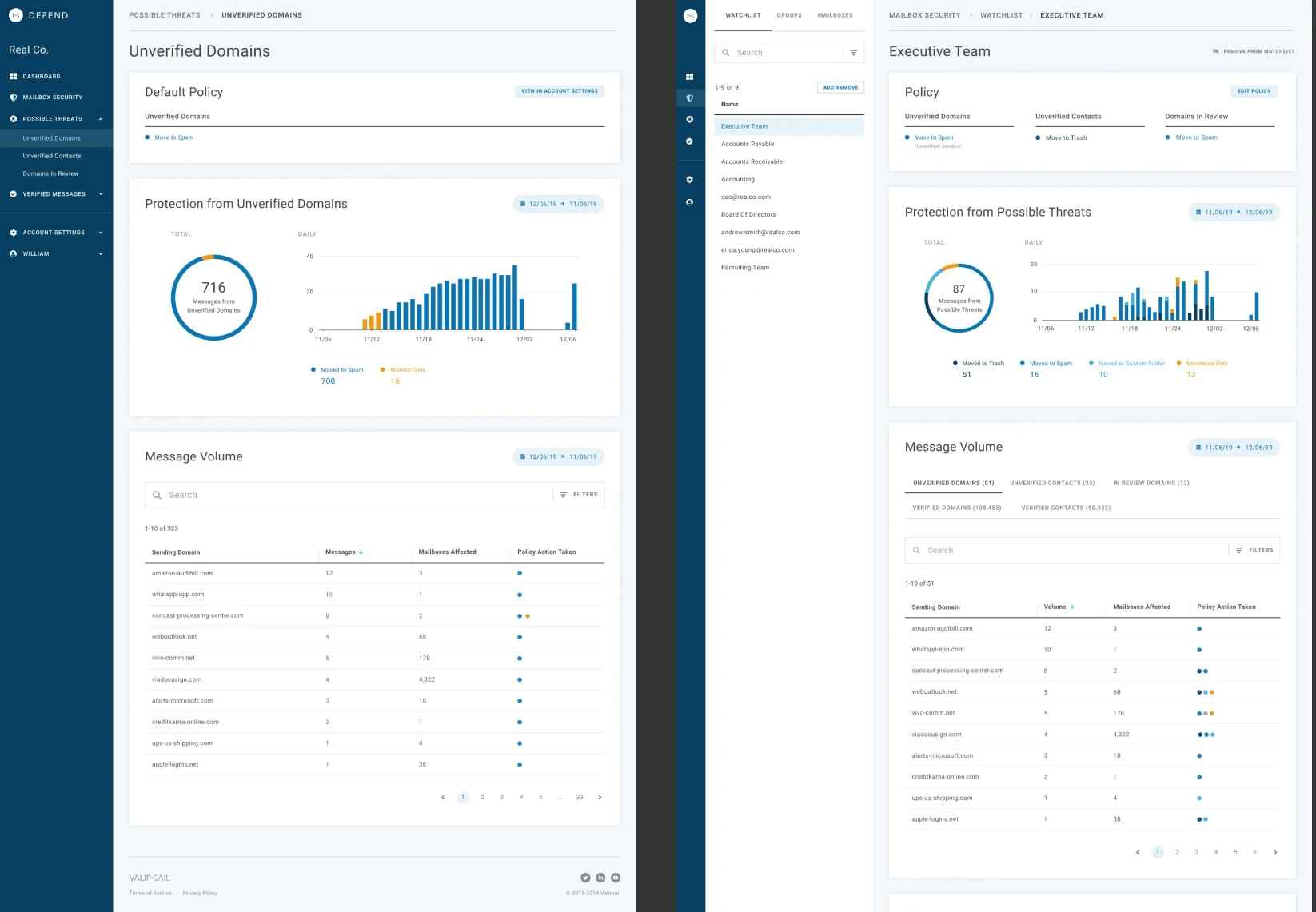
Three-domain setup stayed orderly
Unknown sender took drilldown
Forwarding explanation was thinner
PowerDMARC
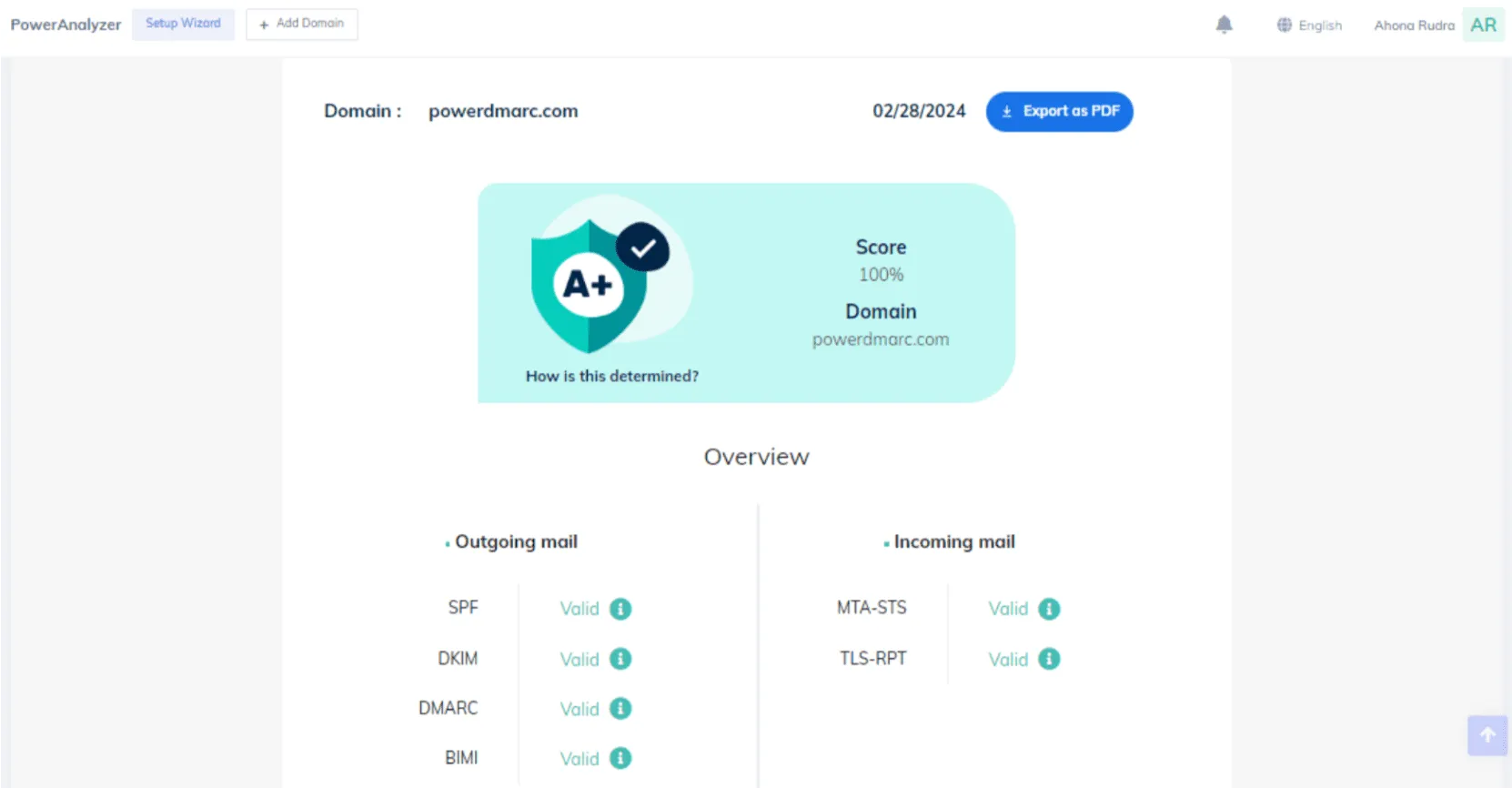
Bulk domain work was faster
Unknown sender surfaced quickly
Forwarding note was clearer
Valimail onboarding for the primary domain, marketing subdomain, and parked domain was orderly: the DMARC DNS change was obvious, and the approved sender list felt purpose-built for enforcement planning. Finding the unknown sender took more work because the useful clues were split across sender detail, receiver data, and status views. The forwarded mail SPF failure was visible, but we still had to write the explanation ourselves for the support ticket.
PowerDMARC made the three-domain setup faster when we used bulk add, domain groups, and one-click DNS publishing prompts. The unknown sender was easier to find because raw XML, geolocation, and source naming were close together. The forwarded mail SPF failure was also easier to explain because the interface kept SPF failure, DKIM pass, and receiver behavior in the same investigation path.
Support
Enterprise handoff vs practical help
Valimail set clearer enterprise expectations. PowerDMARC was more responsive in day-to-day setup questions.
Valimail's support model fit a buyer that wants onboarding assistance, a defined account path, and a formal DNS handoff. PowerDMARC felt more practical for teams that want quick answers during setup, but some higher-value support and managed-service terms still needed confirmation. Neither path removes the need for an internal owner who can approve DNS changes.
Valimail
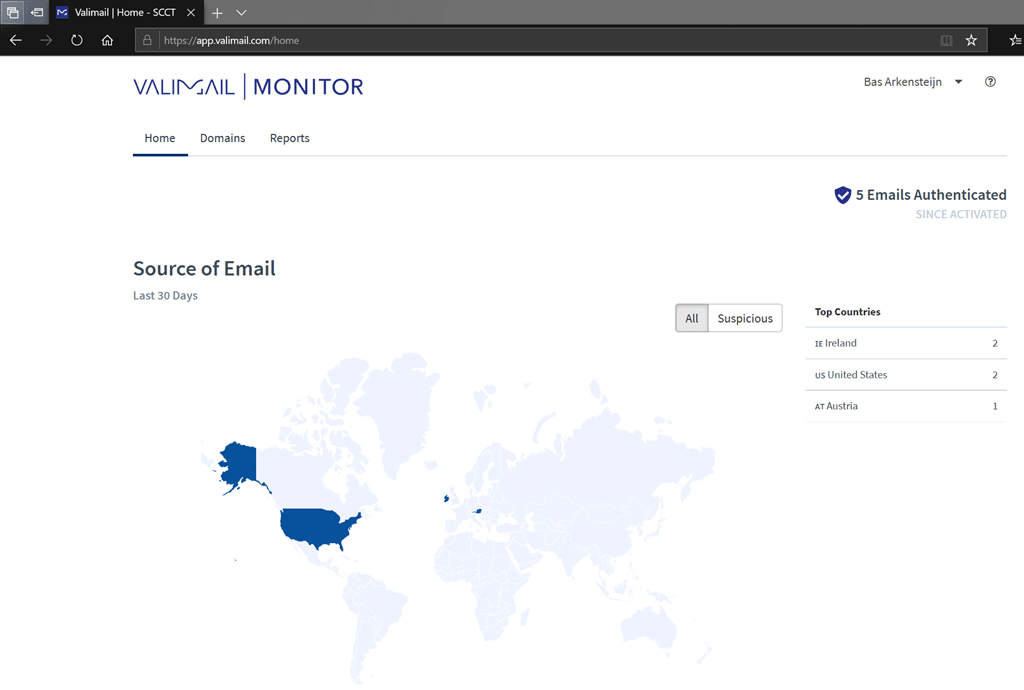
Enterprise handoff felt structured
DNS delegation was explicit
Escalation path was clearer
PowerDMARC

Fast ticket replies
Setup help was practical
Add-ons needed confirmation
With Valimail, the support expectation was clearest around enterprise onboarding: who owned DNS delegation, what the paid tier added, and when an account manager entered the workflow. The DNS handoff for hosted SPF and DMARC automation was explicit enough for a change-control ticket. Escalation felt stronger for a corporate security team than for a small operator trying to answer one DKIM question quickly.
With PowerDMARC, setup questions around Google Workspace DKIM, Mailchimp, and hosted MTA-STS received practical guidance quickly in the tested flow. The support path worked well for troubleshooting, but paid add-ons such as setup sessions, managed services, and phone support needed more contract review. For enterprise onboarding, we would confirm the named support roles, SLA, custom contract terms, and escalation path before rollout.
Suitability
Enterprise fit vs operator fit
Valimail fits enterprise enforcement. PowerDMARC fits operators and MSPs better.
Valimail was the better fit for a security team that wants portfolios, controlled policy movement, and executive reporting around core domains. PowerDMARC was the better fit for SMBs and MSPs that need domain grouping, scheduled reports, and client-facing handoff. For buyers with mixed MSP and internal operations, alert quality and client handoff notes deserve the same weight as DMARC pass rates; Suped's MSP workflows are relevant criteria there.
Valimail
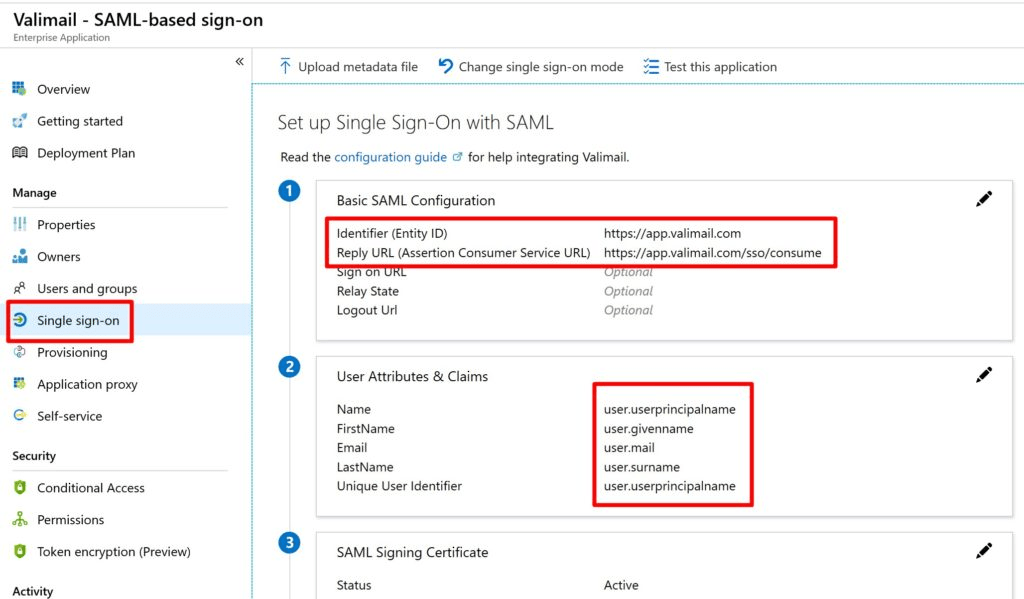
Enterprise portfolios mattered most
Client reporting felt secondary
Recurring exports needed setup
PowerDMARC
Partner workflows fit MSPs
Domain groups were useful
Client handoff was easier
Valimail made the most sense for an enterprise team managing a primary corporate domain with known business senders and a formal route to enforcement. Account separation through portfolios helped, but the MSP use case felt secondary because recurring client reports and handoff notes took more manual shaping. For a small business, the free Monitor plan gave useful visibility, while the paid jump required a clear enforcement mandate.
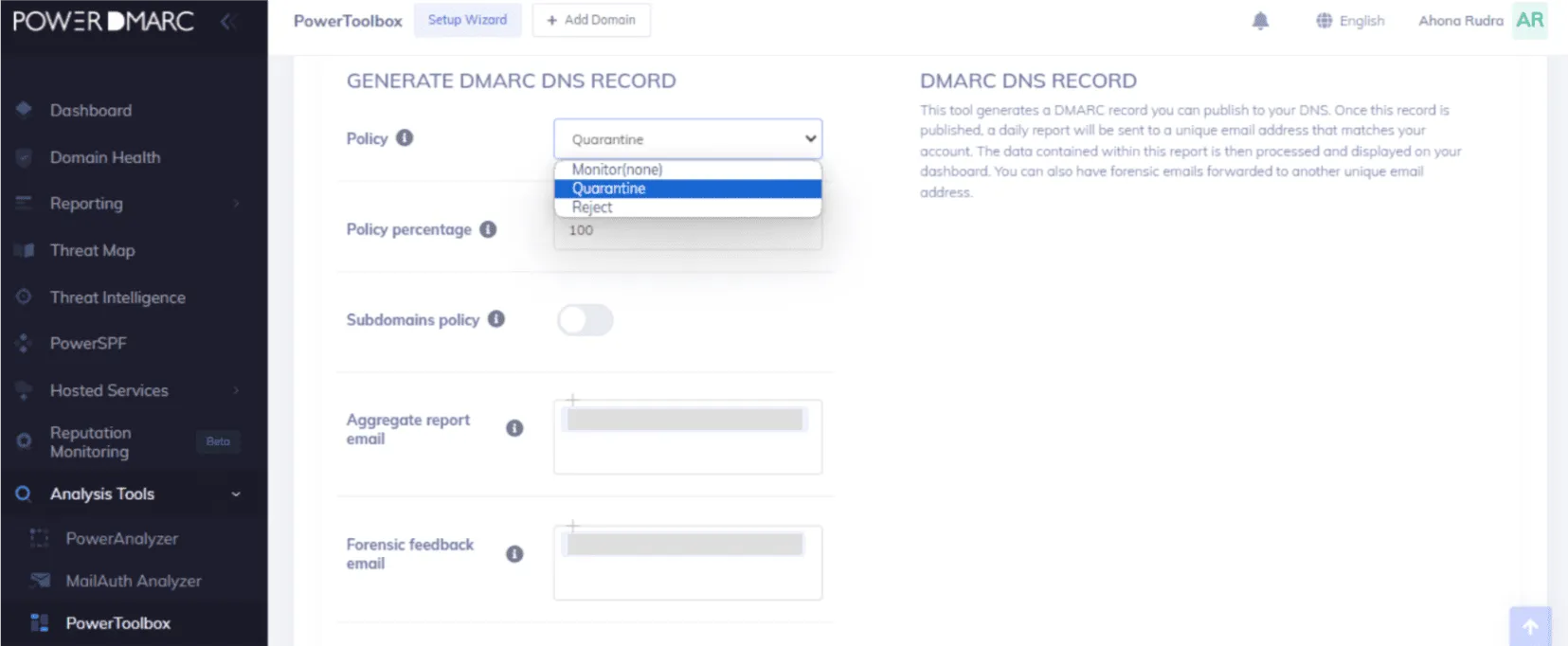
PowerDMARC fit the operator profile better because domain groups, partner controls, scheduled PDFs, tenant-level API options, and white-label capabilities mapped directly to recurring MSP work. Client handoff for the marketing subdomain and parked domain was easier because we could package source status, DNS tasks, and reporting views by domain group. For enterprise buyers, we would still validate support terms, SSO, retention, and audit needs before choosing the custom tier.
What Valimail felt like after 90 days of real use
Valimail
After 90 days, Valimail felt like a product built around reducing risk before policy enforcement. Microsoft 365, SendGrid, and the support desk sender were easy to keep under review on the corporate domain, and the unauthorized spoof sample gave us a clear signal for enforcement planning.
The tradeoff was flexibility. The parked domain was simple, but the marketing subdomain needed more manual notes when Mailchimp and the mismatch case were reviewed. The unknown sender was not hard to find, but turning it into an owner-specific task took more effort than we wanted.
Where it wins
Clean source naming for major senders
Strong path to quarantine and reject
Structured DNS handoff
Clearer enterprise onboarding expectations
Where it lags
Paid tiers gate important detail
MSP workflows felt secondary
No tested blocklist monitoring
Unknown sender ownership stayed manual
Pricing
Free Monitor; paid from $5,000 / year
Free tier
Yes
Onboarding
Fast with DNS handoff
G2 rating
4.6 / 5
What PowerDMARC felt like after 90 days of real use
PowerDMARC
After 90 days, PowerDMARC felt like a wider operations console. Google Workspace, Mailchimp, SendGrid, and the support desk sender were all visible with enough drilldown to explain most status changes without leaving the domain workflow.
The wider scope helped with the forwarded mail SPF failure, hosted MTA-STS checks, and recurring reports. It also created more surfaces to tune, especially alerts, add-ons, and client account separation. For MSP-style work, the extra controls were worth the cleanup.
Where it wins
Broad hosted authentication coverage
Useful domain grouping
Clearer forwarding investigation
Public Basic pricing
Where it lags
Interface was busier
Some add-ons needed sales confirmation
Partner AI availability was unclear
Large-domain pricing needed a quote
Pricing
Free; Basic from $8 / month
Free tier
Yes
Onboarding
Fast but busier
G2 rating
4.9 / 5
Pricing
Valimail
PowerDMARC
Suped
Small
1 domain, up to 1k emails / month.
$0
Monitor covers visibility, 5 users, 10 SPF lookups, and no enforcement automation.
$0
Free covers 1 active personal domain, 10,000 compliant emails, and 10 days of data.
$0 / month
Free plan covers 1 domain and 1,000 monthly emails.
Medium
2 domains, up to 100k emails / month.
From $5,000 / year
Public Starter pricing begins here, but included domain count and volume need confirmation.
$15 / month
Basic at 100,000 compliant emails includes 5 active domains and 1 year of data.
Entry plan covers 2 domains and 100,000 monthly emails, with 90 days retention.
Large
10 domains, up to 1 million emails / month.
Not publicly listed as of May 15, 2026
Premium or Enterprise terms are needed for this domain and volume mix.
Not publicly listed as of May 15, 2026
Basic publishes the volume band, but 10 active domains require confirmation.
10 domains and 1,000,000 monthly emails, with 365 days retention.
Enterprise
Over 20 domains and 1 million emails / month.
Not publicly listed as of May 15, 2026
Enterprise pricing depends on volume, domains, senders, support, and add-ons.
Not publicly listed as of May 15, 2026
Enterprise, API, and Partner Program pricing are custom for this segment.
20 domains and 2,500,000 monthly emails, with 365 days retention. Unlimited domains/emails negotiable.
PowerDMARC Small and Medium use public Free and Basic list prices; Valimail Small uses public Monitor pricing and Medium uses the public Enforce Starter entry price. Large and Enterprise cells are not estimated because public pages do not publish the needed domain, volume, and support combinations. Pricing was checked as of May 15, 2026.
If you cannot decide between the two, maybe the answer is Suped
Suped
Get started
Guided fix ownership
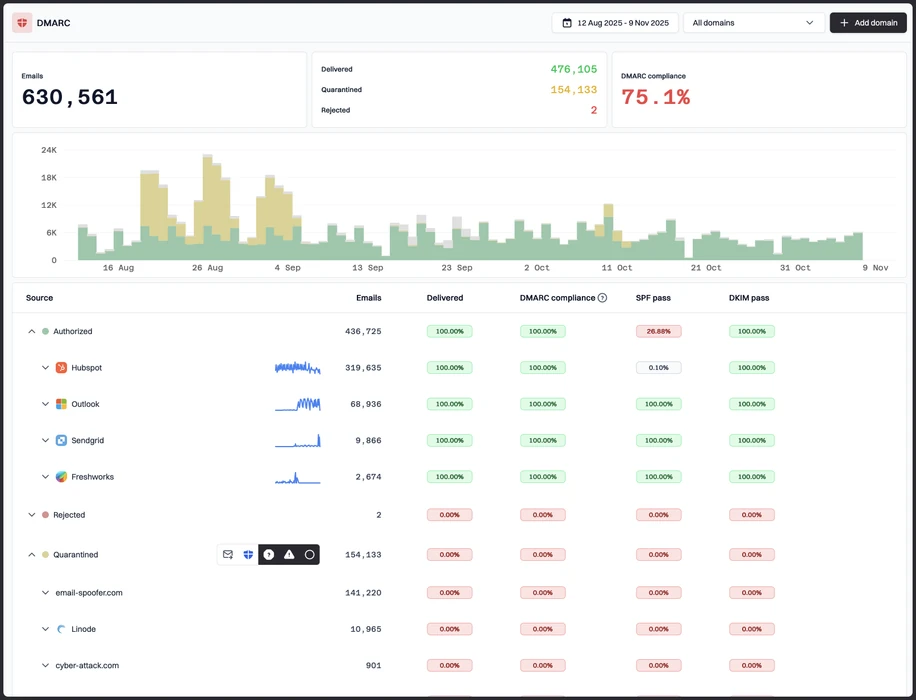
In our Valimail test, the unknown sender and SPF mismatch still needed manual ownership notes. Suped links each issue to a sender, owner candidate, and concrete DNS or vendor next step.
Cleaner operator alerts
PowerDMARC surfaced more modules and alert routes, but the daily queue needed tuning to avoid noise. Suped focuses alerts on new senders, policy risk, spoofing, and record breakage so teams act on fewer messages.
MSP handoff without extra sorting
Valimail was enterprise-oriented and PowerDMARC was stronger for partners, yet client-ready handoff still took manual cleanup. Suped's MSP workflow keeps client domains, recurring reports, and per-domain pricing easier to explain.
The difference was significant. We moved from limited visibility to a much clearer dashboard. Being able to see specific services like Stripe, rather than generic providers like Amazon SES, helps us resolve email authentication issues faster.
Markus Hugenschmidt, Managing Director, Jam Cyber
Migrating from Valimail or PowerDMARC?
We have done the migration enough times to know the shape.
Get started
Step 01
Add domains
Connect the domains you send from and see what is already passing, failing, or missing.
Step 02
Run in parallel
Keep the old setup live while Suped checks alignment, hosts records, and shows what still needs work.
Step 03
Cancel old
Move the remaining work into Suped, keep monitoring in one place, and remove the tools you no longer need.
Frequently asked questions

How MONEYME proactively strengthens domain security and unlocks higher email engagement with Suped
See how MONEYME uses Suped
How cybersecurity specialist Jam Cyber delivers scalable DMARC protection with Suped
See how Jam Cyber uses Suped

How Vision Australia maintains full DMARC enforcement across a large domain portfolio with Suped
See how Vision Australia uses Suped

How The POP Team turns domain checks and DMARC visibility into client ready delivery work
See how The POP Team uses Suped

How DigiBean simplified DMARC monitoring and improved email security for their MSP clients
See how DigiBean uses Suped

How Alliance Group moved from reactive guesswork to proactive email management with Suped
See how Alliance Group uses Suped