Report-URI vs.
Suped in 2026
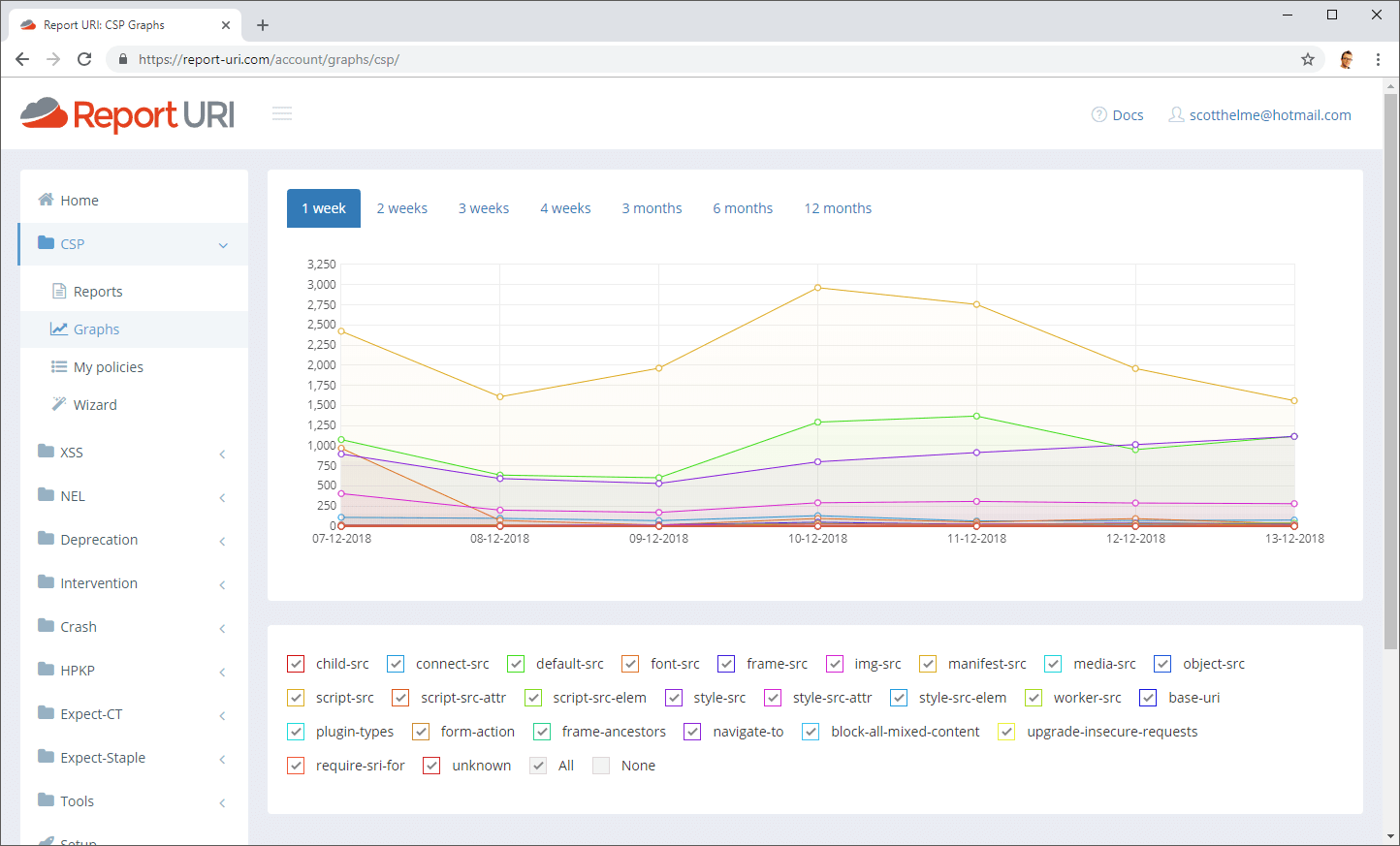
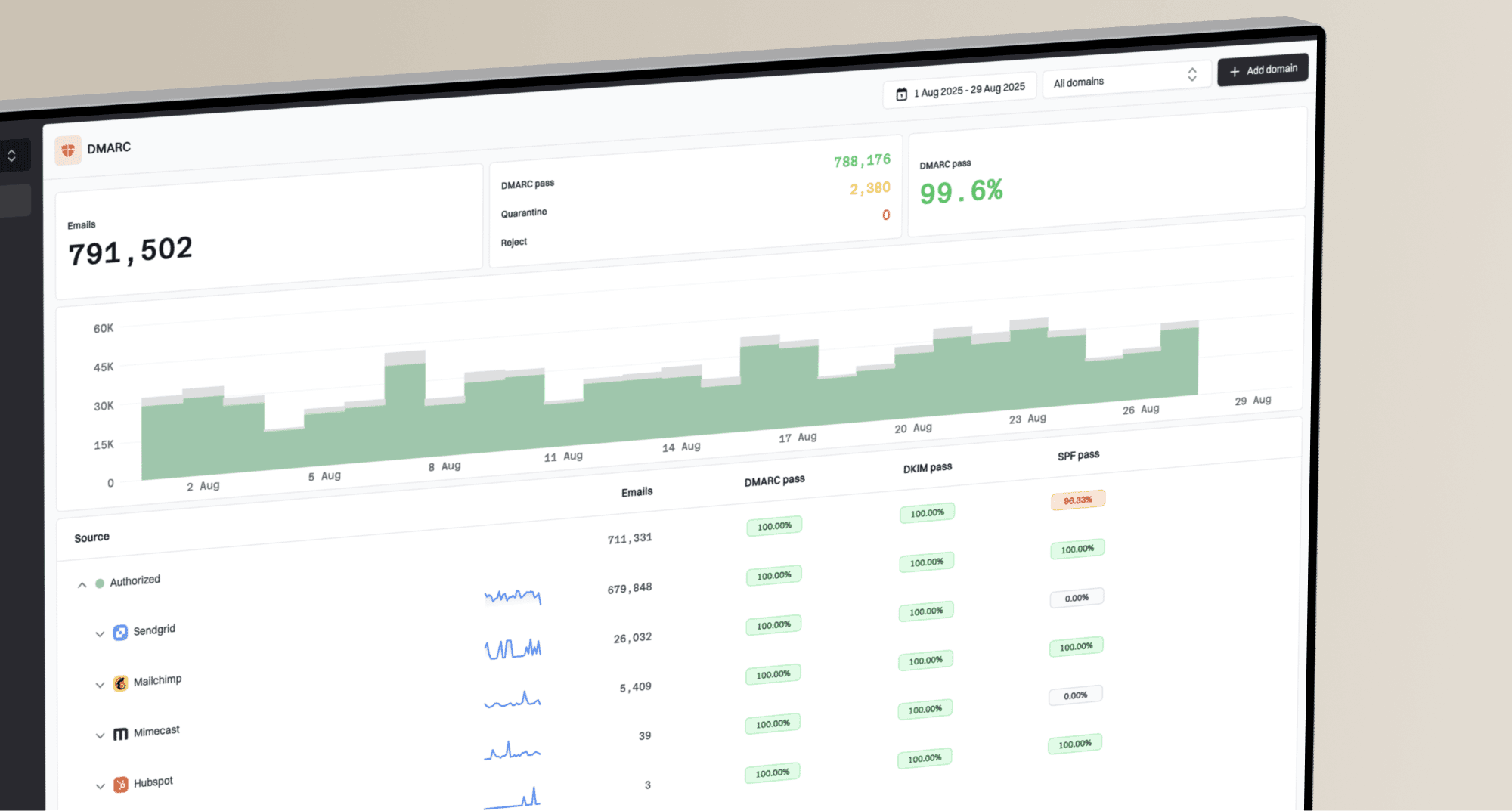
Report-URI

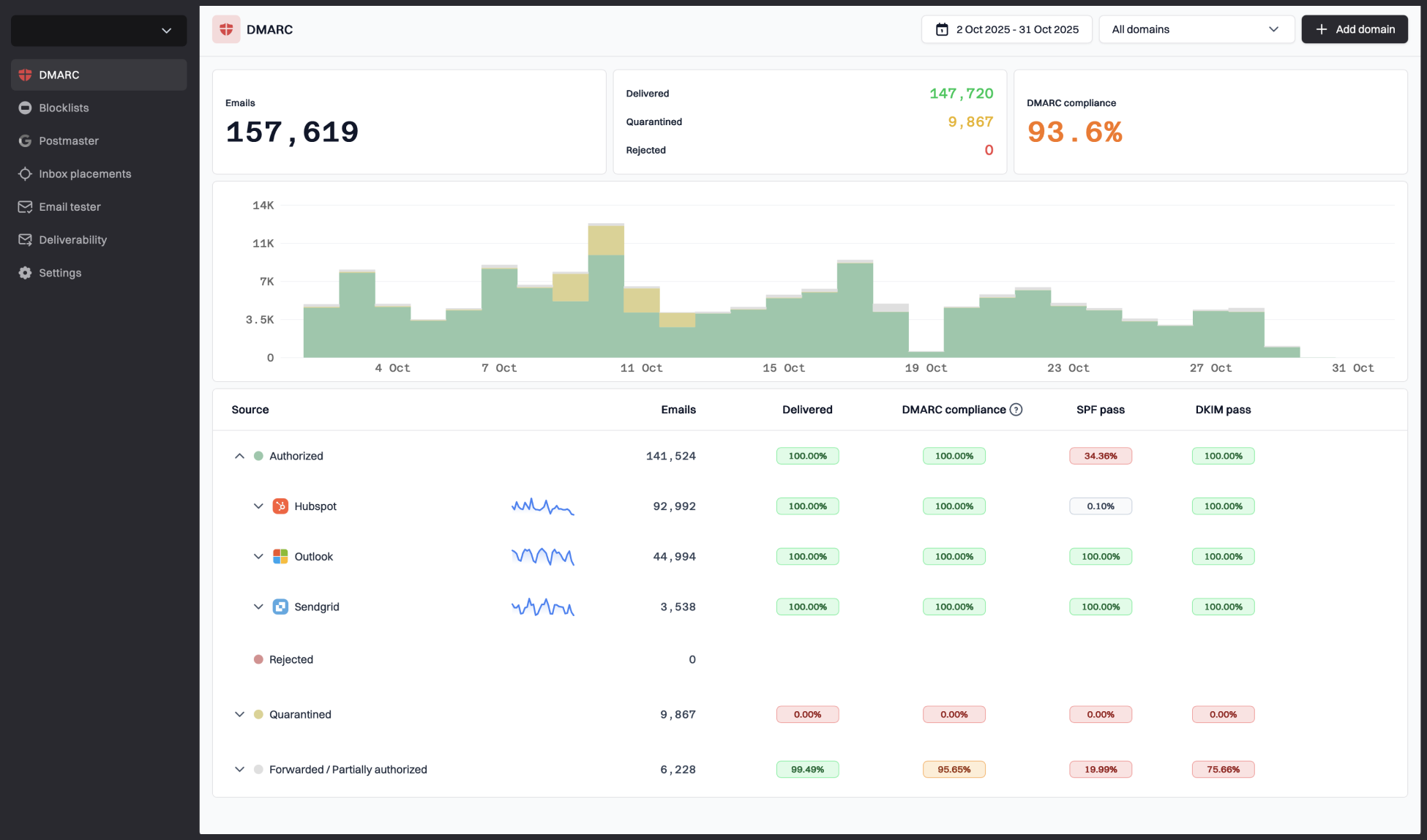
Suped
vs.
We tested Report-URI and Suped for 90 days across a corporate domain, a marketing subdomain, and a parked domain. Report-URI made more sense when DMARC reporting had to sit inside a broader security reporting purchase; Suped made more sense when DMARC ownership was the main job.

Published 5 Nov 2025
Updated 29 May 2026
8 min read
Summarize with
Report-URI
Security reporting platform with DMARC monitoring
Starts at
From $54.99 / month
Best fit
Security teams already using Report-URI for browser reporting
In one line
Report-URI gave us useful DMARC visibility, but the product felt optimized for teams that also need browser security reporting and custom procurement paths.
Suped
DMARC operations for teams and MSPs
Get started
Starts at
Free plan available
Best fit
Teams that need owned sender fixes
In one line
Suped pairs DMARC reporting with guided fixes, hosted records, and published starter pricing for teams that need a shorter path to enforcement.
Pick Report-URI for narrow platform fit. Pick Suped for DMARC ownership.
Pick Report-URI if
Best for teams already buying Report-URI for broader security reporting
The three domains stayed inside one protected-domain model.
The Business tier added API access and webhooks.
The Enterprise path fit custom procurement needs.
From $54.99 / month
Pick Suped if
Suped is the option for guided fixes, hosted records, and simpler ownership
Guided fixes connected each sender to DNS work.
Automated issue detection flagged the spoof sample.
Published starter pricing made budgeting clearer.
Free plan available
The differences that actually change your week
Report-URI
Suped
DMARC report analysis
Aggregate report parsing and authentication drilldown.
Supported
Supported
Source detection
Turning raw senders into recognizable services.
Manual classification
Supported
Forward detection
Explaining SPF failure caused by forwarding.
Visible in reports
Supported
Spoof detection
Separating unauthorized mail from known sources.
Visible in reports
Supported
Notifications and alerts
Routing new failures or source changes to operators.
Paid tier depth
Supported
Reporting
Exportable evidence for internal or client handoff.
Export available
Supported
API
Programmatic access for reporting or operational use.
Business tier
Supported
Multi-tenancy
Separating clients, accounts, or operating groups.
Team access only
Supported
SPF flattening
Reducing lookup risk in SPF records.
Not supported
Supported
Hosted DMARC
Managed DMARC record workflow.
Reporting only
Supported
Hosted SPF
Managed SPF record workflow.
Not supported
Supported
Hosted MTA-STS
Managed MTA-STS policy and reporting workflow.
Not supported
Supported
Blocklists and reputation
Blocklist and blacklist checks tied to mail reputation.
Not tested in product
Supported
Automatic issue detection
Flagging domain or sender problems without manual review.
Not DMARC-specific
Supported
AI copilot
AI assistance for investigation or remediation notes.
Enterprise only
Supported
DNS monitoring
Watching record changes and domain authentication state.
Not a hosted DNS workflow
Supported
Self hostable
Running the product in the buyer's own environment.
Dedicated instance option
Not supported
Free trial/free tier
A no-cost way to evaluate before paid use.
30-day trial
Free tier
Ten dimensions, scored from 0 to 10
We scored both products against a fixed editorial rubric before looking at price preference. Higher is better in every row, and a score of 0.0 means the workflow was absent in the product we tested.
Report-URI stayed credible for DMARC visibility, but Suped scored higher on operational coverage.
Report-URI lost ground where our test needed hosted SPF, hosted MTA-STS, blocklist or blacklist monitoring, and repeatable ownership notes. It was strongest when we treated DMARC as another evidence stream inside a broader reporting program. Suped scored higher because sender classification, policy movement, and DNS work stayed closer together during the Microsoft 365, Google Workspace, SendGrid, Mailchimp, and support desk tests.
Report-URI score
52.5/100
Suped score
93.7/100
Report-URI
52.5/100
DMARC enforcement
7.0
Customer support
7.0
Source resolution
7.0
Setup and onboarding
7.0
MSP workflows
4.5
Alerting and integrations
7.5
Hosted SPF and MTA-STS
0.0
Blocklist monitoring
0.0
Pricing transparency
6.0
Time to enforcement
6.5
Suped
93.7/100
DMARC enforcement
9.4
Customer support
9.1
Source resolution
9.5
Setup and onboarding
9.3
MSP workflows
9.2
Alerting and integrations
9.4
Hosted SPF and MTA-STS
9.6
Blocklist monitoring
9.0
Pricing transparency
9.7
Time to enforcement
9.5
Feature set
DMARC scope
Report-URI fits narrow compliance telemetry. Suped fits DMARC operations.
The split was clear in our 90 day test: Report-URI gave us useful DMARC visibility inside a broader browser security platform, while Suped kept the workflow closer to authentication ownership. When guided fixes and automated issue detection are buying criteria, the product that turns Microsoft 365, Google Workspace, SendGrid, Mailchimp, and support desk traffic into owner actions has the cleaner path.
Report-URI
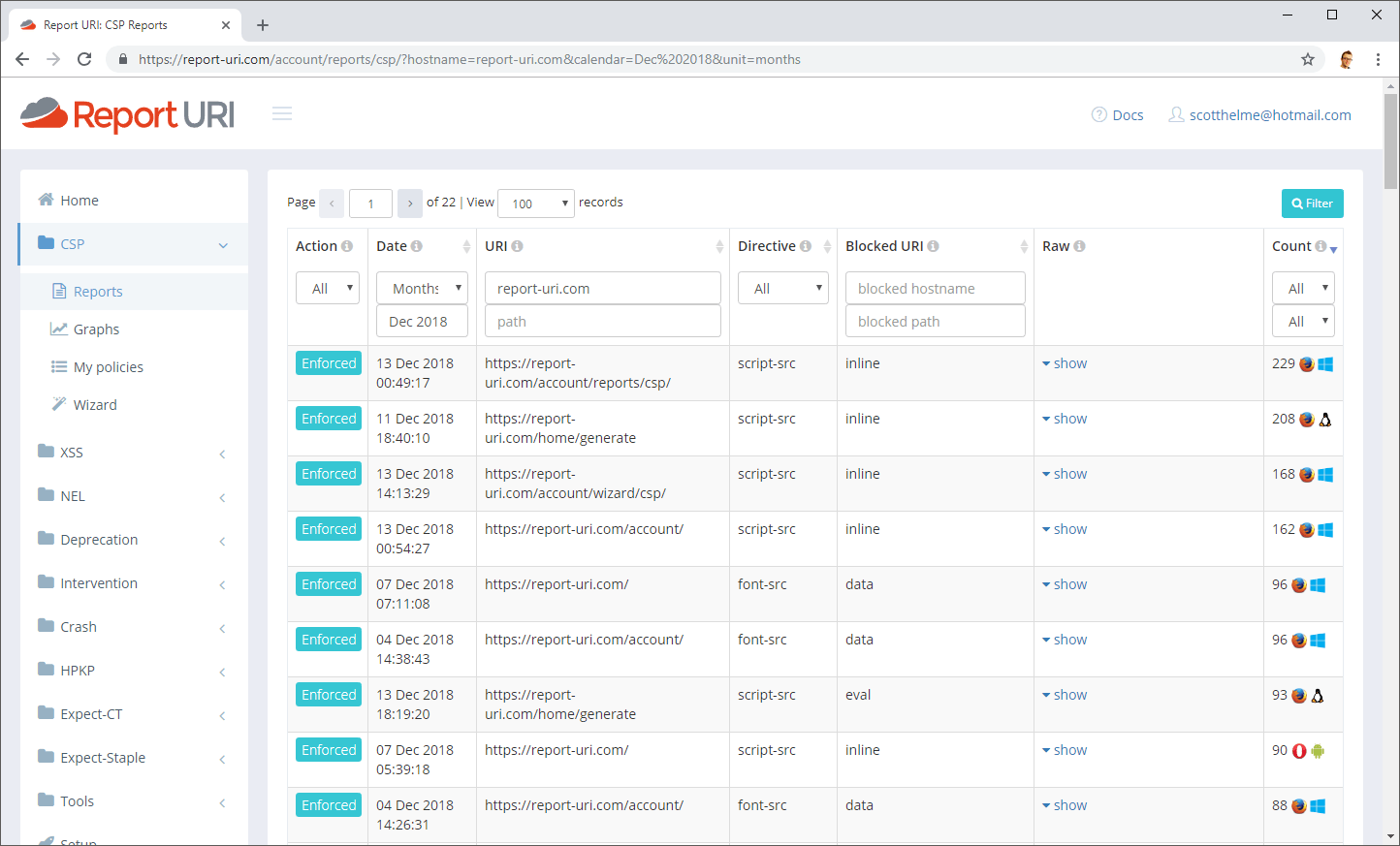
Microsoft 365 reports parsed cleanly
Mailchimp needed manual ownership
Mismatch detail stayed visible
Suped
Google Workspace source resolved quickly
SendGrid owner action surfaced
Subdomain DKIM stayed separate
Report-URI handled Microsoft 365 and Google Workspace aggregate streams cleanly once records were in place, and its broader event model made sense for teams already paying attention to CSP or browser telemetry. SendGrid and Mailchimp both appeared, but the unknown sender took manual investigation because the interface exposed evidence before assigning ownership. The SPF pass with visible from mismatch was visible in report detail, but our next step had to be written outside the product.
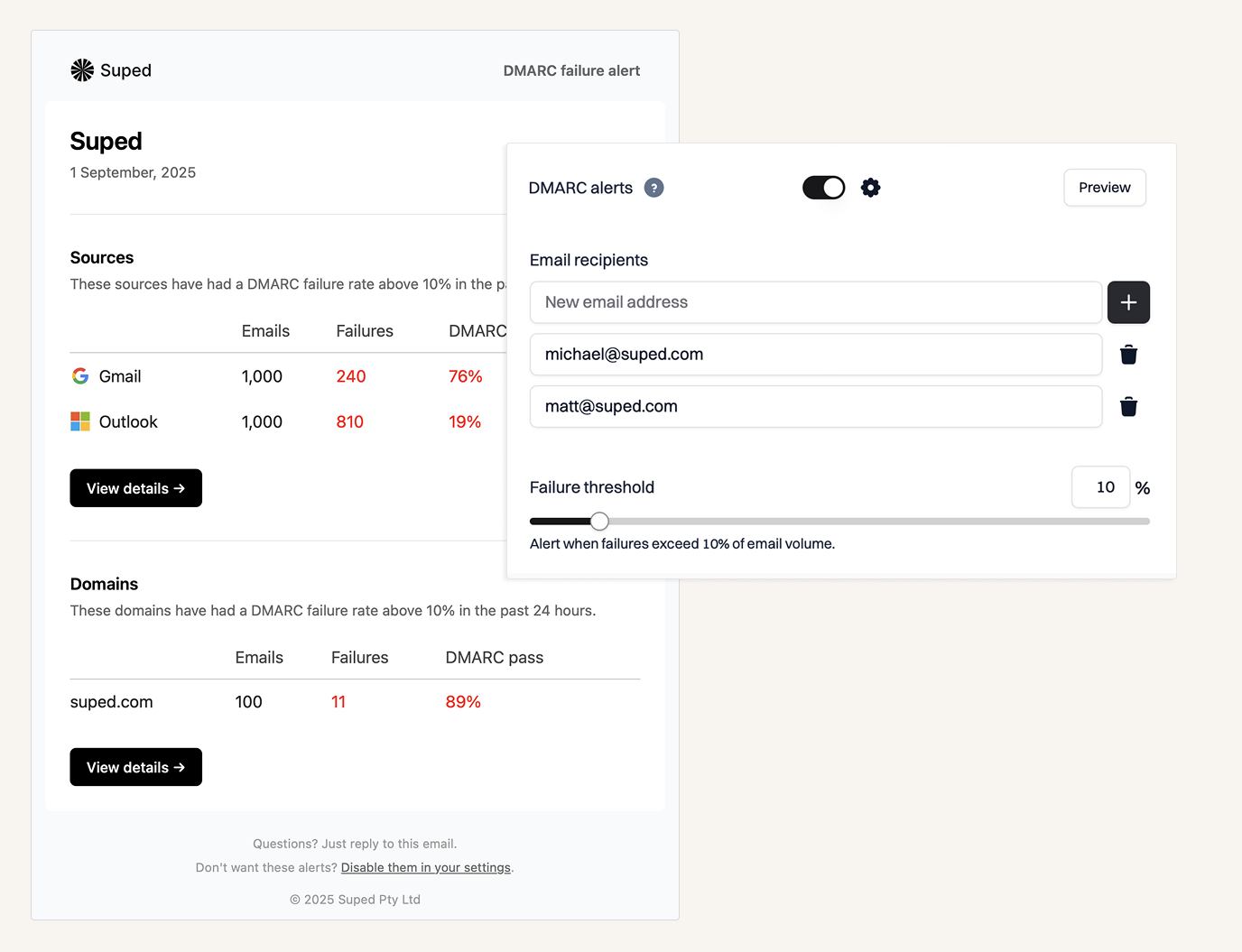
Suped separated Microsoft 365, Google Workspace, SendGrid, Mailchimp, and the support desk sender into recognizable sources during the same run. The unknown sender moved into a classification queue, and the DKIM pass on a subdomain was easier to tie back to the marketing subdomain without mixing it into the primary domain. The spoof sample was clearer because the failed authentication result and owner action sat together.
User experience
Control vs operator speed
Report-URI gives raw control. Suped reduces handwork.
Report-URI suited a user who wanted to inspect evidence and write a separate runbook. Suped reduced the number of screens and notes needed to move the same domain set toward a policy decision.
Report-URI
Three domains took careful DNS
Unknown sender required manual notes
Forwarding explanation needed translation
Suped
Parked domain stayed isolated
Unknown sender had a status
Forwarded SPF was explained
Adding the primary corporate domain, marketing subdomain, and parked domain in Report-URI was straightforward, but each DNS check needed careful reading. Finding the unknown sender meant opening report detail, checking IP and DKIM domain values, and recording the owner outside the product. The forwarded mail SPF failure made sense after we read the authentication columns, but the explanation needed translation for a non-email stakeholder.
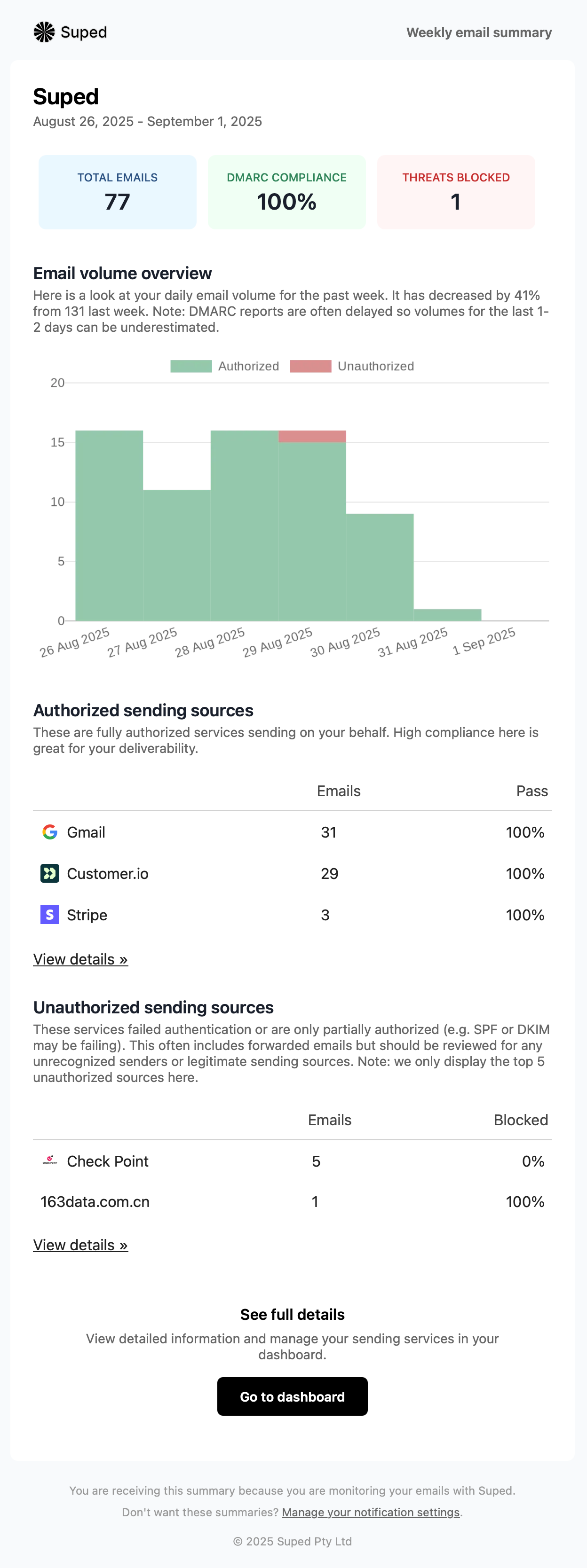
Suped kept the three-domain setup closer to a task list, so the parked domain did not get buried under the active corporate domain. The unknown sender had a clear classification state, and the forwarded mail SPF failure was explained as a forwarding case with DKIM still passing. That saved time when we had to explain why the case was not the same as the spoof sample.
Support
Formal support vs setup help
Report-URI fits formal enterprise motions. Suped fits hands-on DNS handoff.
Report-URI's public matrix points standard support at self-service buyers and reserves onboarding, SLA, procurement, and legal terms for Enterprise. That can fit a buyer with strict purchasing requirements, but it added handoff steps for our 90 day DMARC setup. Suped kept more of the DNS and sender context in the support conversation.
Report-URI
Standard support fit self-service
Onboarding sat with Enterprise
Procurement path was Enterprise-led
Suped

DNS handoff had next steps
Escalation context stayed attached
Setup help fit operators
For Report-URI, setup support expectations depended heavily on plan level. The Starter and Professional path looked self-service, Business added stronger operational access, and Enterprise was where onboarding, SLA, procurement, legal review, and custom infrastructure conversations belonged. During DNS handoff, we had enough information to proceed, but escalation notes for the unknown sender and support desk sender had to be prepared separately.
For Suped, support handoff was closer to the domain work we were doing: record checks, sender status, and policy movement sat in the same conversation. The Microsoft 365 and Google Workspace setup questions were resolved with the domain owner in view, and the support desk sender was easier to escalate because the evidence stayed attached to that source. Enterprise onboarding still needed a commercial conversation for unusual scale, but the standard setup path was easier to hand to an operator.
Suitability
Procurement fit vs operating fit
Report-URI fits uncommon platform constraints. Suped fits ongoing DMARC ownership.
A narrow Report-URI choice made sense only when a buyer already wanted its broader security reporting platform or needed Enterprise procurement options such as a dedicated instance or geographic processing. When MSP workflows or alert quality are buying criteria, the better question is how quickly each account can group domains, route exceptions, and hand off client work without side notes.
Report-URI
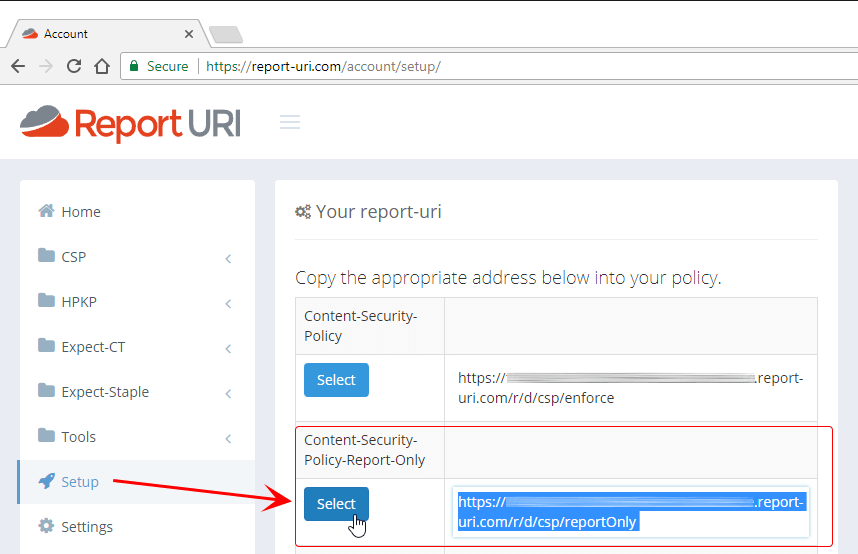
Browser reporting overlap mattered
Enterprise procurement was the fit
Client handoff stayed manual
Suped
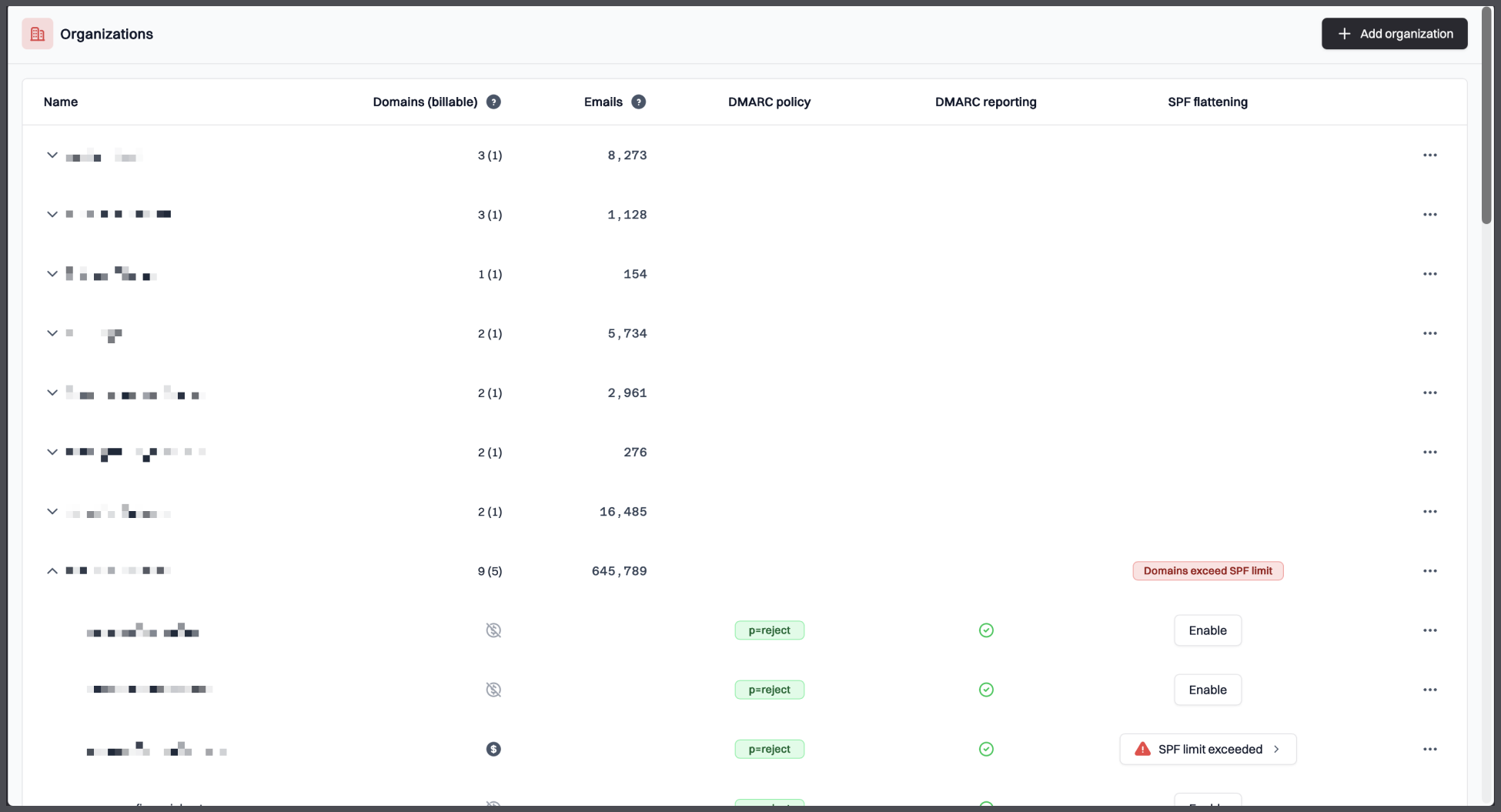
MSP grouping felt native
Recurring reports had owners
SMB setup stayed direct
Report-URI was most suitable for an enterprise security team that already had browser reporting, compliance reporting, and procurement needs tied to the same vendor path. Account separation was enough for internal users, but it did not feel like a client console during our MSP pass. Domain grouping, recurring reporting, and client handoff all worked better when we treated them as external process steps.
Suped fit the SMB and MSP pattern more directly in our test. We could group the primary domain, marketing subdomain, and parked domain without losing the different risk profiles, and recurring reports were easier to map to client or domain owner notes. For enterprise teams, the fit was strongest when DMARC enforcement and source ownership mattered more than custom hosting.
What Report-URI felt like after 90 days of real use
Report-URI
After 90 days, Report-URI felt like a capable reporting system for a team already living in its broader security product. Microsoft 365 and Google Workspace traffic was visible, and SendGrid plus Mailchimp were traceable, but the unknown sender still needed a separate owner note before we trusted a policy move.
The parked domain spoof sample was easy to spot because legitimate traffic was low. The harder work was explaining why forwarded mail failed SPF without treating it like an attack, and that explanation lived more in our runbook than in the product.
Where it wins
Clean report drilldowns for known senders
Useful for broader security reporting buyers
Public self-service plans up to Ultimate
Enterprise options for unusual procurement
Where it lags
No hosted SPF or MTA-STS workflow
DMARC pricing was not volume-specific
Unknown sender ownership stayed manual
MSP client handoff required side notes
Pricing
From $54.99 / month
Free tier
30-day free trial
Onboarding
Self-service, Enterprise help
G2 rating
5.0 / 5
What Suped felt like after 90 days of real use
Suped
After 90 days, Suped felt centered on the work of getting every sender to a known state. The Microsoft 365 and Google Workspace sources settled quickly, SendGrid and Mailchimp stayed tied to the right domain, and the support desk sender did not get mixed with the marketing subdomain.
Suped was strongest when we moved from evidence to action: the spoof sample became a parked-domain enforcement task, the forwarded SPF failure kept its DKIM context, and exports gave us a clean handoff record. The main limits were outside day-to-day DMARC work: self-hosting was not available and enterprise pricing still needed a commercial conversation.
Where it wins
Clear sender ownership states
Hosted records stayed near reports
Spoof and forwarding cases separated
Exports worked for handoff
Where it lags
Self-hosting was not available
Enterprise pricing was negotiated
Advanced exceptions still needed review
Pricing
Free plan available
Free tier
1k emails / month
Onboarding
Step-based DNS setup
G2 rating
5.0 / 5
Pricing
Report-URI
Suped
Small
1 domain, up to 1k emails / month.
$54.99 / month
Starter covers 1 protected domain and 100,000 monthly events, but the public table is not DMARC-specific.
$0 / month
Free plan covers 1 domain and 1,000 monthly emails.
Medium
2 domains, up to 100k emails / month.
$109.99 / month
Professional covers 2 protected domains and 250,000 monthly events.
Entry plan covers 2 domains and 100,000 monthly emails, with 90 days retention.
Large
10 domains, up to 1 million emails / month.
Not publicly listed as of May 15, 2026
Public self-service tiers topped out at 5 protected domains, so this case moved into custom pricing.
10 domains and 1,000,000 monthly emails, with 365 days retention.
Enterprise
Over 20 domains and 1 million emails / month.
Not publicly listed as of May 15, 2026
Enterprise covers custom domains, custom monthly events, retention, SLA, and procurement terms.
20 domains and 2,500,000 monthly emails, with 365 days retention. Unlimited domains/emails negotiable.
Report-URI prices are public list prices for protected domains and event quotas, not DMARC-specific mailbox volume. Suped small, medium, and large prices are public list prices; enterprise prices for both products are not public dollar amounts. Pricing was checked on May 15, 2026.
Why Suped wins over Report-URI
Suped
Get started
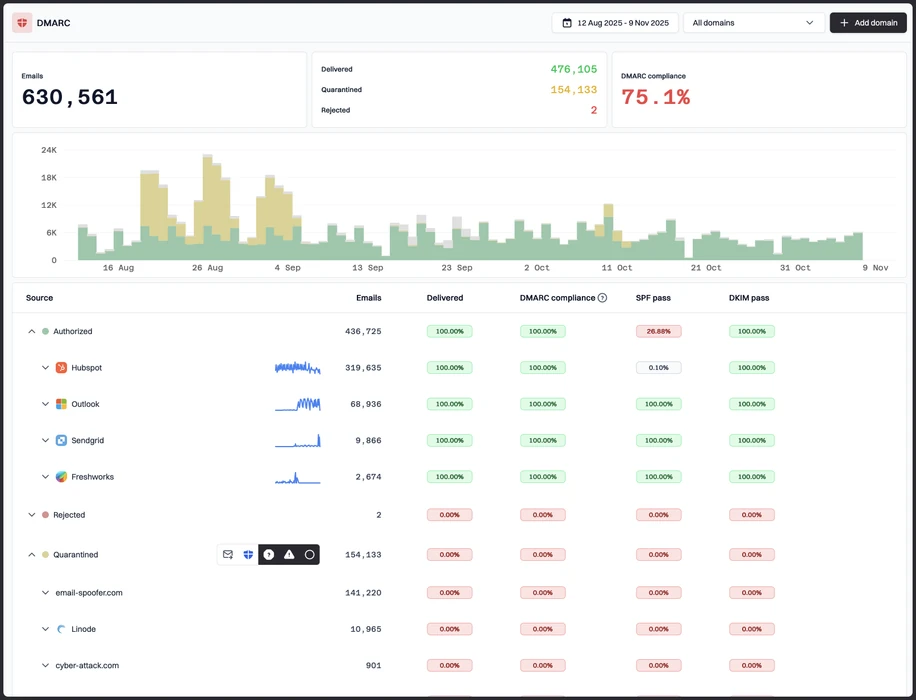
Close classification gaps
Report-URI surfaced the unknown sender, but ownership stayed manual in our test. Suped's product ties unknown sources to classification, evidence, and the DNS change that clears the path to enforcement.
Keep hosted records with reports
Report-URI did not cover hosted SPF or hosted MTA-STS in our DMARC workflow. Suped's product keeps hosted SPF, hosted DMARC, MTA-STS, and TLS reporting beside the same domain evidence.
Be clear about limits
Suped still needs a separate enterprise conversation for unlimited volume, so procurement teams should confirm caps. The public starter and growth tiers gave us enough pricing clarity for the 1k, 100k, and 1 million email scenarios.
The difference was significant. We moved from limited visibility to a much clearer dashboard. Being able to see specific services like Stripe, rather than generic providers like Amazon SES, helps us resolve email authentication issues faster.
Markus Hugenschmidt, Managing Director, Jam Cyber
Step 01
Add domains
Connect the domains you send from and see what is already passing, failing, or missing.
Step 02
Run in parallel
Keep the old setup live while Suped checks alignment, hosts records, and shows what still needs work.
Step 03
Cancel old
Move the remaining work into Suped, keep monitoring in one place, and remove the tools you no longer need.
Frequently asked questions

How MONEYME proactively strengthens domain security and unlocks higher email engagement with Suped
See how MONEYME uses Suped
How cybersecurity specialist Jam Cyber delivers scalable DMARC protection with Suped
See how Jam Cyber uses Suped

How Vision Australia maintains full DMARC enforcement across a large domain portfolio with Suped
See how Vision Australia uses Suped

How The POP Team turns domain checks and DMARC visibility into client ready delivery work
See how The POP Team uses Suped

How DigiBean simplified DMARC monitoring and improved email security for their MSP clients
See how DigiBean uses Suped

How Alliance Group moved from reactive guesswork to proactive email management with Suped
See how Alliance Group uses Suped