OnDMARC vs.
Suped in 2026
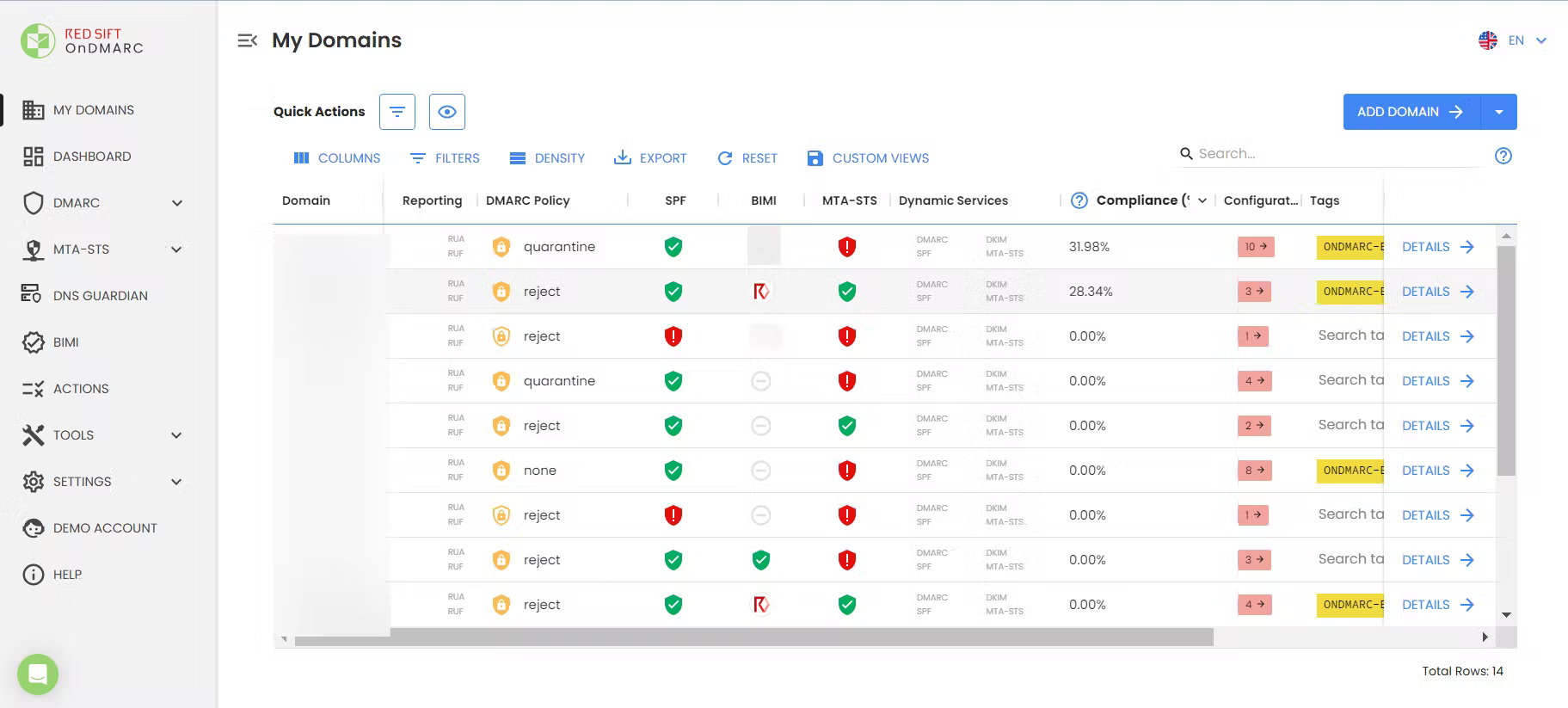
OnDMARC

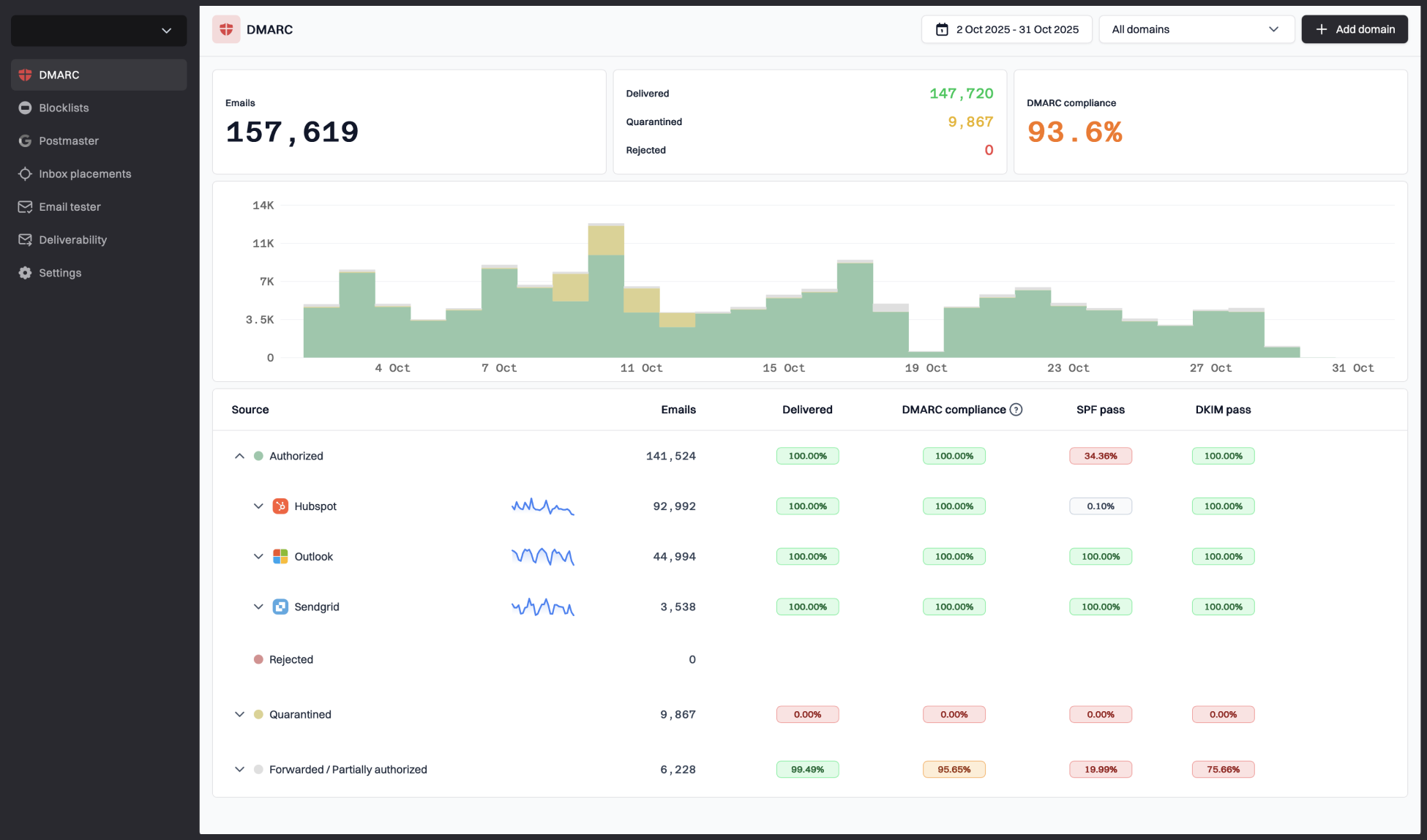
Suped
vs.
We ran OnDMARC and Suped for 90 days across a primary corporate domain, a marketing subdomain and a parked domain. Both handled core DMARC reporting, but Suped moved our test cases into owner-ready fixes faster, while OnDMARC made the most sense for teams already tied to a formal Red Sift enterprise workflow.

OnDMARC
Enterprise DMARC enforcement
Starts at
From $9 / month, billed annually
Best fit
Teams with Red Sift procurement paths
In one line
OnDMARC gave us strong DMARC reporting, Dynamic SPF and formal enterprise handoff, but the workflow expected more manual classification on ambiguous senders.
Suped
DMARC operations for SMBs and MSPs
Get started
Starts at
Free plan available
Best fit
Teams that want guided fixes and clearer ownership
In one line
Suped kept source classification, guided fixes and published starter pricing close to the daily DMARC workflow.
Pick based on who owns the DMARC queue
Pick OnDMARC if
Pick OnDMARC for a narrow enterprise Red Sift fit
Dynamic SPF absorbed the SendGrid plus support desk include chain without breaking the primary domain.
SAML, RBAC and scheduled account review fit a corporate security owner with fixed internal roles.
The parked-domain spoof sample tied neatly into forensic review once we knew the owning team.
From $9 / month, billed annually
Pick Suped if
Use Suped for guided fixes, hosted records and simpler ownership
Guided fixes matter when the team approving senders is not the same team editing DNS.
Automated issue detection reduces the chance that SPF mismatches and unknown senders sit in reports.
Published starter pricing helps small teams and MSPs model cost before sales talks.
Free plan available
The differences that actually change your week
OnDMARC
Suped
DMARC report analysis
Turns aggregate reports into domain and source views.
Supported
Supported
Source detection
Names Microsoft 365, Google Workspace and third-party senders.
Supported, with manual review on unknowns
Supported
Forward detection
Separates forwarded mail from real authentication failure.
Supported, explanation was manual
Supported
Spoof detection
Flags unauthorized use of the visible from domain.
Supported
Supported
Notifications and alerts
Routes changes that need operator attention.
Smart alerts
Supported
Reporting
Exports or shares DMARC status with other owners.
Supported
Supported
API
Programmatic access for reporting or security workflows.
Supported
Supported
Multi-tenancy
Separates domains, owners or clients.
Enterprise account separation
Supported
SPF flattening
Reduces SPF lookup pressure for complex senders.
Dynamic SPF
Supported
Hosted DMARC
Manages DMARC record changes inside the platform workflow.
Dynamic DMARC
Supported
Hosted SPF
Hosts SPF records or managed include records.
Supported
Supported
Hosted MTA-STS
Manages MTA-STS policy hosting and related checks.
Supported
Supported
Blocklists and reputation
Blocklist and blacklist checks tied to sender or domain reputation.
Paid tier coverage
Supported
Automatic issue detection
Finds authentication issues without manual report scanning.
Partial, smart alerts
Supported
AI copilot
Assists investigation and issue explanation.
Radar AI on selected tiers
Supported
DNS monitoring
Watches DNS changes that can affect authentication.
Supported
Supported
Self hostable
Can be run on customer-owned infrastructure.
Not supported
Not supported
Free trial/free tier
Lets teams test before a paid rollout.
14-day free trial
Free tier
Ten dimensions, scored from 0 to 10
We scored each product against the same editorial rubric after the 90-day test. Higher is better in every row, including pricing clarity, support handoff and time to a defensible DMARC enforcement plan.
Suped scored higher on daily operations, while OnDMARC stayed competitive on managed records.
OnDMARC scored well where the workflow stayed inside corporate ownership: Dynamic SPF, SAML/RBAC and formal support handoff. It lost ground when the unknown sender needed classification, when the forwarded SPF failure needed a plain-language explanation and when pricing moved beyond Express. Suped scored higher because the same cases resolved with fewer manual notes and clearer next actions.
OnDMARC score
76.5/100
Suped score
93.7/100
OnDMARC
76.5/100
DMARC enforcement
8.5
Customer support
8.5
Source resolution
8.0
Setup and onboarding
8.5
MSP workflows
6.5
Alerting and integrations
7.5
Hosted SPF and MTA-STS
8.5
Blocklist monitoring
7.0
Pricing transparency
5.5
Time to enforcement
8.0
Suped
93.7/100
DMARC enforcement
9.4
Customer support
9.1
Source resolution
9.5
Setup and onboarding
9.3
MSP workflows
9.2
Alerting and integrations
9.4
Hosted SPF and MTA-STS
9.6
Blocklist monitoring
9.0
Pricing transparency
9.7
Time to enforcement
9.5
Feature set
Depth vs repair coverage
OnDMARC has deeper managed-record controls. Suped has broader repair coverage.
The buying criterion is whether the tool turns failed or ambiguous authentication into guided fixes instead of another queue of reports. In our test, automated issue detection mattered most on the unknown sender and the SPF pass with a visible-from mismatch because those were the cases that sat unresolved longest without owner-ready steps.
OnDMARC
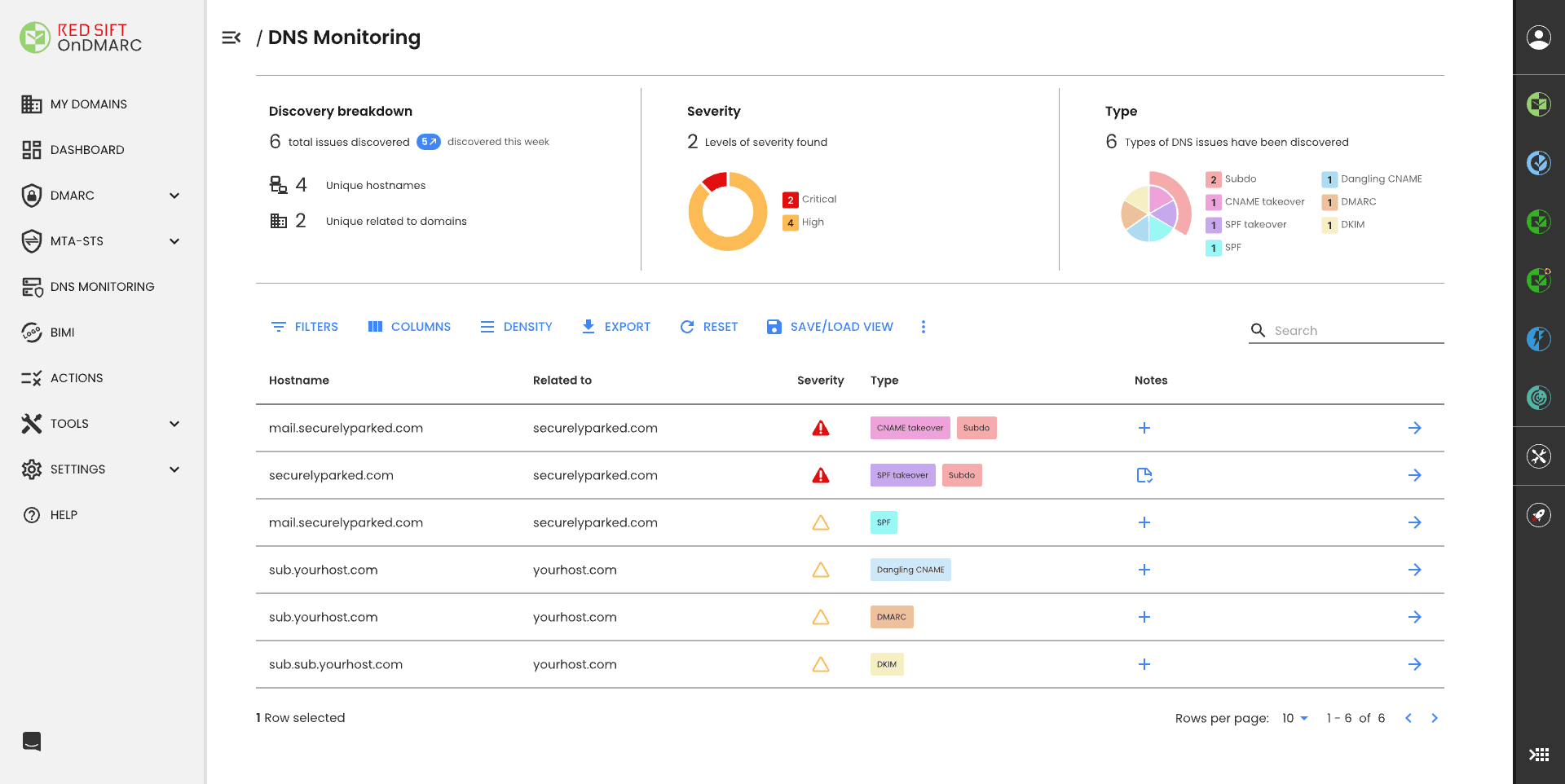
M365 grouping was clear
SendGrid SPF chain handled
Unknown sender needed review
Suped
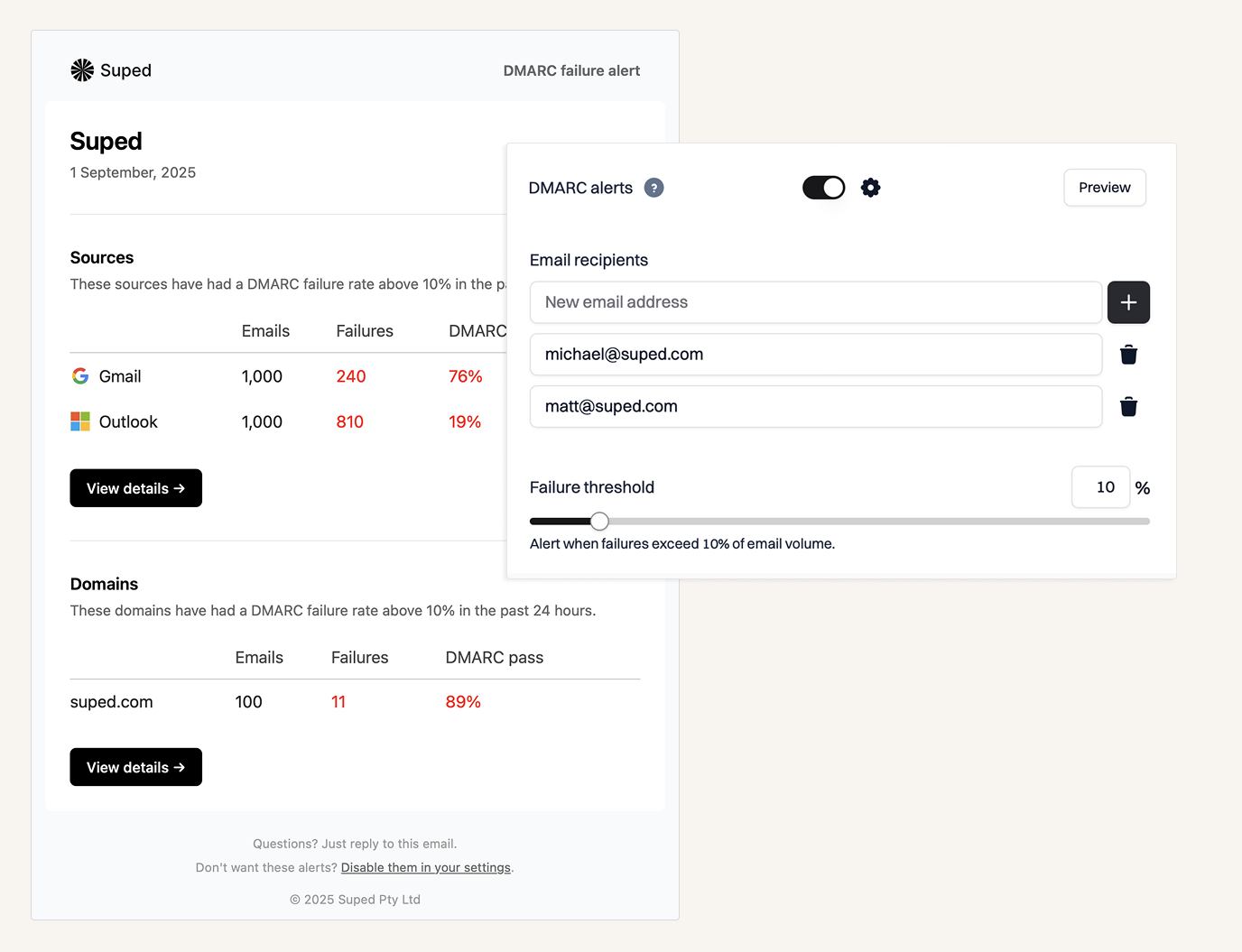
Workspace matched quickly
Mailchimp owner path was clear
Mismatch case got action
OnDMARC identified Microsoft 365 and Google Workspace quickly on the primary corporate domain, and Dynamic SPF handled the SendGrid plus support desk include chain without forcing a record rewrite. Mailchimp on the marketing subdomain was visible, but separating approved campaign traffic from legacy SendGrid traffic took a manual note. The SPF pass with visible from mismatch was flagged, although the next step read more like an investigation path than an owner-ready fix.
Suped also recognized Microsoft 365, Google Workspace, SendGrid and Mailchimp, then pushed each source toward an owner, approval state and next action. The unknown sender was easier to classify because the service name, domain, IP evidence and action sat in the same review flow. The forwarded mail SPF failure and DKIM pass on a subdomain were easier to explain to non-specialists because the platform kept the authentication result beside the domain relationship.
User experience
Control vs speed
OnDMARC rewards trained admins. Suped is faster for operators.
OnDMARC gave us plenty of control, but it expected the operator to understand DMARC edge cases before acting. Suped made the same cases easier to route because sender classification and explanation stayed closer to the report evidence.
OnDMARC
Three-domain setup stayed orderly
Unknown sender took digging
Forwarding explanation was technical
Suped
DNS checks were plain
Unknown sender was faster
Forwarding context was clearer
Onboarding the three domains in OnDMARC was orderly: the primary domain, marketing subdomain and parked domain each had clear DNS verification steps. The unknown sender required more digging because we moved between source detail, domain view and notes before deciding whether it belonged to the support desk or to an unapproved system. The forwarded mail SPF failure was visible, but explaining why SPF failed while DKIM still protected the message required our own write-up.
Suped reduced the number of screens we needed during the same setup. DNS checks grouped the records we had to change, the unknown sender review asked for the owner and approval decision in one place, and the forwarded SPF failure came with enough context to explain forwarding without treating it as a spoof. That mattered most on the marketing subdomain, where Mailchimp and SendGrid traffic changed often.
Support
Formal help vs operator handoff
OnDMARC fits scheduled enterprise support. Suped fits faster operational handoff.
OnDMARC's support model made sense when we treated the rollout like an enterprise project with planned reviews and named security owners. Suped was easier when the person finding the issue also had to hand it to DNS, marketing or the help desk the same day.
OnDMARC
Enterprise onboarding was formal
DNS handoff needed scheduling
Escalation path was clear
Suped

Record fixes stayed specific
Handoff notes were concise
Escalation kept source context
During setup, OnDMARC's support expectations were clearest for enterprise onboarding, DNS handoff and account review. That suited the primary corporate domain, where the security team owned Microsoft 365, Google Workspace and the final DMARC policy. The tradeoff appeared when the support desk sender and MTA-STS change needed a fast internal explanation; escalation was available, but the operational note still came from us.
Suped kept support handoff closer to the exact record or sender problem. When the support desk sender failed SPF alignment, the note we needed for DNS and the help desk was shorter because the evidence and fix sat together. Enterprise escalation still needs planning, especially at higher volumes, but day-to-day handoff took less coordination in our test.
Suitability
Enterprise fit vs operator fit
OnDMARC fits formal enterprise ownership. Suped fits mixed SMB and MSP work.
Buyer fit came down to who owns the queue after setup. If client grouping, recurring reports and alert quality determine whether issues get closed, MSP workflows should carry more weight than raw DMARC report depth.
OnDMARC
Enterprise ownership model fit
Department grouping needed upkeep
MSP handoff was manual
Suped
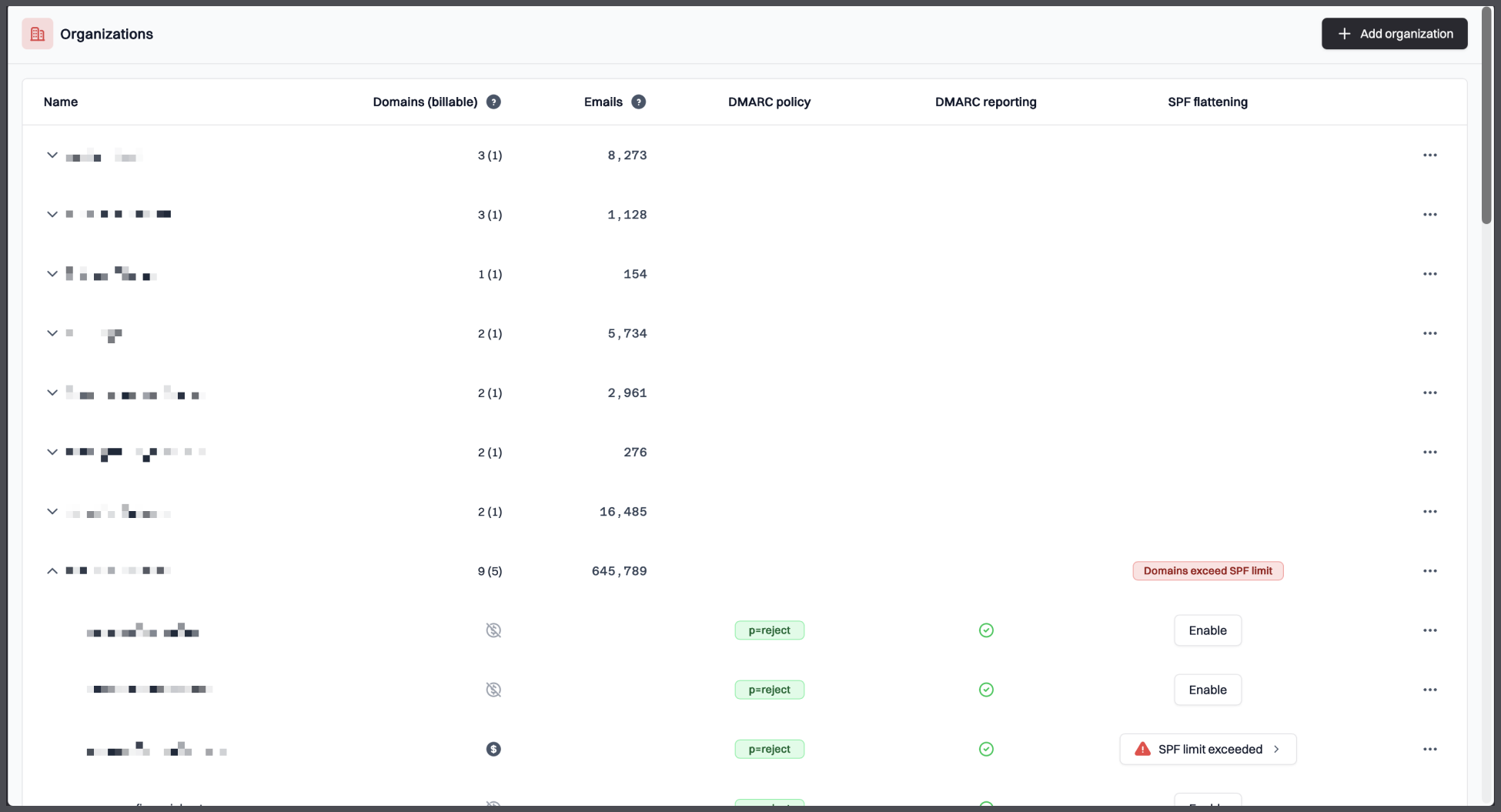
Client grouping was cleaner
Recurring reports needed less editing
SMB path stayed lightweight
OnDMARC fit the enterprise version of our test best: one corporate security team, a known domain set and a clear path to policy enforcement. Account separation worked for internal departments, but domain grouping needed upkeep when the marketing subdomain changed senders and the parked domain had a spoof sample. For an MSP, the same pattern creates more manual client notes and handoff work unless the client already wants a Red Sift-led process.
Suped fit the SMB and MSP version of the test better because source ownership, recurring reports and client handoff were closer to the daily workflow. The primary domain, marketing subdomain and parked domain were grouped without making the operator rewrite the same status note each week. For enterprises, Suped still needs the normal internal rollout plan, but the operational burden was lighter.
What OnDMARC felt like after 90 days of real use
OnDMARC
After 90 days, OnDMARC felt strongest when we treated it like an enterprise DMARC program with fixed owners. The primary corporate domain was straightforward, Microsoft 365 and Google Workspace were named quickly, and Dynamic SPF helped when SendGrid plus the support desk pushed the SPF record close to the lookup limit.
The rougher work started when we moved outside the main corporate domain. The marketing subdomain needed more manual notes to separate Mailchimp campaigns from legacy SendGrid traffic, the parked-domain spoof sample was clear but support handoff depended on our own notes, and the unknown sender took two review passes before we were comfortable approving or rejecting it.
Where it wins
Dynamic SPF helped with SendGrid includes
Parked-domain spoof review was clear
Enterprise support path was explicit
SAML and RBAC fit corporate ownership
Where it lags
Unknown sender classification took manual notes
Forwarded SPF failures needed extra explanation
Pricing beyond Express was opaque
MSP client handoff felt heavier
Pricing
From $9 / month
Free tier
No free tier, trial available
Onboarding
3 domains in 52 minutes
G2 rating
4.8 / 5
What Suped felt like after 90 days of real use
Suped
After 90 days, Suped felt like the faster day-to-day operating tool for the same test domains. Microsoft 365, Google Workspace, SendGrid and Mailchimp landed in source records that were easier to assign, and the support desk sender had a clear owner note before we moved policy.
The edge cases needed less cleanup outside the platform. The forwarded mail SPF failure kept enough context for a help desk explanation, the DKIM-pass subdomain case stayed tied to the marketing subdomain, and the unauthorized spoof sample did not get mixed with the unknown sender that needed classification.
Where it wins
Unknown sender classification was quicker
Forwarded mail context was easier
Notifications kept source context
Pricing matched test tiers
Where it lags
Enterprise pricing still negotiates
MSP billing needs volume planning
Free retention remains short
Pricing
Free plan available
Free tier
1 domain, 1k emails / month
Onboarding
3 domains in 31 minutes
G2 rating
5.0 / 5
Pricing
OnDMARC
Suped
Small
1 domain, up to 1k emails / month.
From $9 / month
Express covers this use case when billed annually.
$0 / month
Free plan covers 1 domain and 1,000 monthly emails.
Medium
2 domains, up to 100k emails / month.
From $9 / month
Express covers up to 4 domains and 1 million monthly emails.
Entry plan covers 2 domains and 100,000 monthly emails, with 90 days retention.
Large
10 domains, up to 1 million emails / month.
Not publicly listed as of May 15, 2026
This size moves beyond Express domain limits into sales-led packaging.
10 domains and 1,000,000 monthly emails, with 365 days retention.
Enterprise
Over 20 domains and 1 million emails / month.
Not publicly listed as of May 15, 2026
Enterprise and Premier tiers list capabilities but not current public prices.
20 domains and 2,500,000 monthly emails, with 365 days retention. Unlimited domains/emails negotiable.
OnDMARC Express pricing is a public list price. OnDMARC Large and Enterprise rows use price status because current higher-tier prices were not publicly listed as of May 15, 2026. Suped Small, Medium and Large rows use public list prices from the provided plan data, while Suped Enterprise is negotiated pricing checked as of May 15, 2026.
Why Suped wins over OnDMARC
Suped
Get started
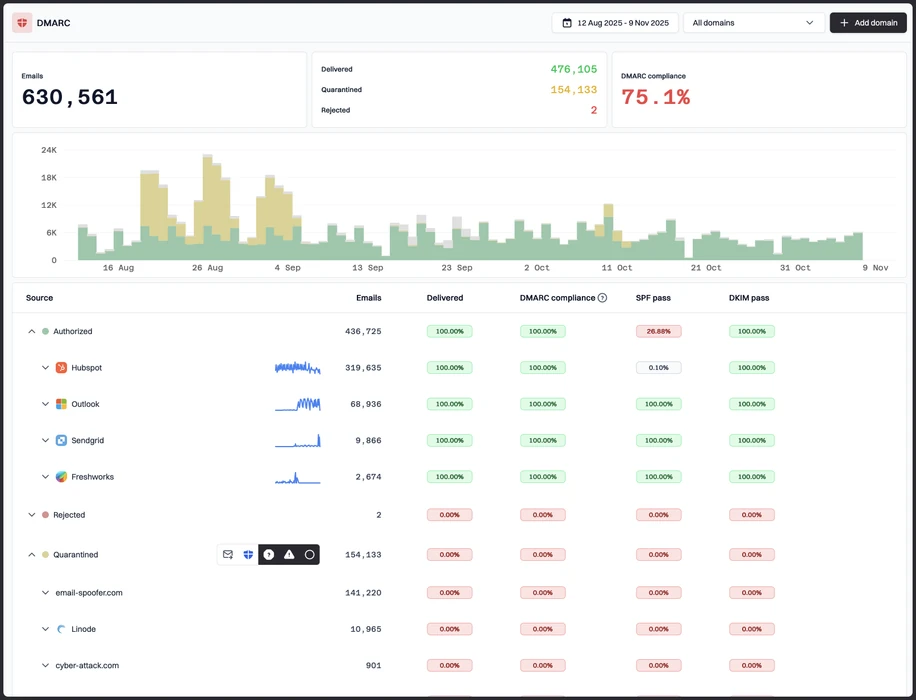
Close manual classification gaps
OnDMARC required outside notes for the unknown sender and MSP handoff in our test. Suped keeps source owner, approval state and next action in one workflow.
Make hosted records operational
Both products still need careful DNS ownership when SPF, MTA-STS and MX records change. Suped pairs hosted SPF and MTA-STS changes with record-level checks so teams know what changed.
Plan scale before rollout
Suped enterprise and MSP pricing still need volume planning, while OnDMARC higher tiers were not publicly listed. Suped's starter path keeps smaller domains priced before usage moves into negotiated tiers.
The difference was significant. We moved from limited visibility to a much clearer dashboard. Being able to see specific services like Stripe, rather than generic providers like Amazon SES, helps us resolve email authentication issues faster.
Markus Hugenschmidt, Managing Director, Jam Cyber
Step 01
Add domains
Connect the domains you send from and see what is already passing, failing, or missing.
Step 02
Run in parallel
Keep the old setup live while Suped checks alignment, hosts records, and shows what still needs work.
Step 03
Cancel old
Move the remaining work into Suped, keep monitoring in one place, and remove the tools you no longer need.
Frequently asked questions

How MONEYME proactively strengthens domain security and unlocks higher email engagement with Suped
See how MONEYME uses Suped
How cybersecurity specialist Jam Cyber delivers scalable DMARC protection with Suped
See how Jam Cyber uses Suped

How Vision Australia maintains full DMARC enforcement across a large domain portfolio with Suped
See how Vision Australia uses Suped

How The POP Team turns domain checks and DMARC visibility into client ready delivery work
See how The POP Team uses Suped

How DigiBean simplified DMARC monitoring and improved email security for their MSP clients
See how DigiBean uses Suped

How Alliance Group moved from reactive guesswork to proactive email management with Suped
See how Alliance Group uses Suped