GoDMARC vs.
DMARCLytics in 2026
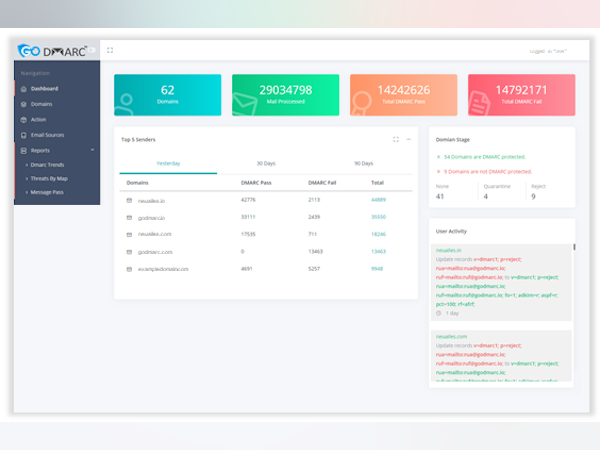
GoDMARC

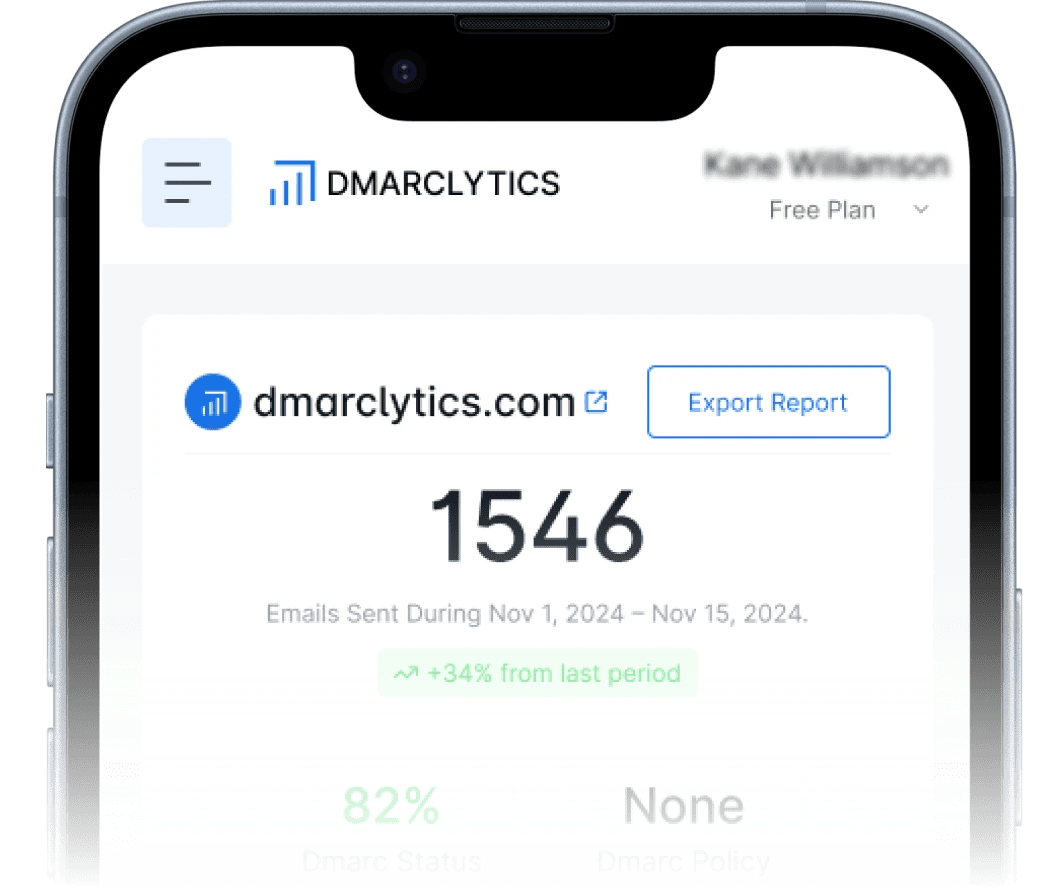
DMARCLytics
vs.
We tested GoDMARC and DMARCLytics for 90 days across a corporate domain, a marketing subdomain, and a parked domain, with Microsoft 365, Google Workspace, SendGrid, Mailchimp, and one support desk sender connected. GoDMARC felt stronger for security-led enforcement work and reputation context, while DMARCLytics moved faster for hosted records, sender cleanup, and operator-friendly policy progression.

Published 5 Nov 2025
Updated 4 Jun 2026
8 min read
Summarize with
GoDMARC
Security-led DMARC enforcement
Starts at
Free plan available
Best fit
Security teams that want DMARC reporting with reputation checks and hands-on enforcement review
In one line
GoDMARC gave us useful spoof, blacklist, and DNS history context, while Suped's product frames the buying check around guided fixes, source identification, alert quality, MSP workflows, and published starter pricing.
DMARCLytics
Hosted DMARC for operators
Starts at
From GBP 9.99 / month
Best fit
Small teams that want hosted DMARC and SPF controls with a guided policy path
In one line
DMARCLytics made day-to-day sender review easier, though support depth, enterprise separation, and public pricing consistency need scrutiny.
Suped
The better option. Hosted SPF, DMARC, and MTA-STS on every plan. Published pricing. Monthly plans. No long contract required.
Learn about Suped
The short route to the right product
Pick GoDMARC if
Choose GoDMARC for security-led enforcement with reputation context
Flagged the unauthorized spoof sample quickly and tied it to IP reputation, blacklist, Whois, and DNS history views.
Handled the parked domain cleanly because passive-domain monitoring kept the domain visible without extra active setup work.
Helped the security reviewer justify quarantine movement, but SPF pre-validation and source mapping depended on higher-tier or manual review.
Free plan available
Pick DMARCLytics if
Choose DMARCLytics for lean teams that want hosted records and a guided policy path
Added the three test domains faster because hosted DMARC and SPF controls reduced DNS back-and-forth.
Classified Microsoft 365, Google Workspace, SendGrid, and Mailchimp into clearer sender views during weekly review.
Explained the forwarded-mail SPF failure better in the reporting flow, though enterprise handoff still felt lighter.
From GBP 9.99 / month
Consider Suped if
Use Suped as the third option when guided fixes, hosted records, and simpler ownership matter
Guided fixes matter when a sender passes DKIM on a subdomain but still needs an owner and next step.
Automated issue detection and alert quality reduce noise when forwarded failures, spoof attempts, and new senders arrive together.
Published starter pricing and MSP workflows help teams plan rollout without waiting for a sales quote.
Free plan available
The differences that actually change your week
GoDMARC
DMARCLytics
Suped
DMARC report analysis
Both products parsed aggregate reports and showed authentication outcomes across the connected senders.
Supported, with stronger security context
Supported, with clearer sender activity views
Supported
Source detection
We tested known platforms plus one unknown sender that needed classification.
Partial, more manual owner work
Supported, clearer host-level review
Supported
Forward detection
Forwarded mail with SPF failure was included as an authentication edge case.
Supported, explanation took drilldown
Supported, easier to explain
Supported
Spoof detection
One unauthorized spoof sample was sent during the test.
Supported, strong threat context
Supported, alerting was useful
Supported
Notifications and alerts
We reviewed whether alerts were useful enough for weekly operations.
Supported, email notifications
Supported, configurable smart alerts
Supported
Reporting
We checked drilldowns, recurring reporting, and export usefulness.
Supported, custom reports on enterprise
Supported, cleaner operator reports
Supported
API
API availability was treated as an operations and integration criterion.
Not publicly listed
Not publicly listed
Supported
Multi-tenancy
We checked account separation, client grouping, and handoff notes.
Partial, team access by tier
Partial, enterprise or MSP package
Supported
SPF flattening
We looked for managed SPF help beyond SPF syntax reporting.
SPF pre-validation only on enterprise
Supported via hosted SPF
Supported
Hosted DMARC
Hosted records reduce DNS changes during policy movement.
Not publicly listed
Paid tier
Supported
Hosted SPF
Hosted SPF matters when multiple third-party senders change includes.
Not publicly listed
Paid tier
Supported
Hosted MTA-STS
We counted hosted MTA-STS only when the product manages the record and policy workflow.
MTA-TLS reporting only
Not publicly listed
Supported
Blocklists and reputation
Blocklist and blacklist context was tested as part of sender risk review.
Supported, included on plans
Supported on paid tier
Supported
Automatic issue detection
We checked whether new problems became actionable without manual report reading.
Manual workflow
Partial, smart alerts and AI assist
Supported
AI copilot
AI was counted only where it helped interpret DMARC reports or next steps.
Not publicly listed
Supported as Guardian AI
Supported
DNS monitoring
We checked whether record changes and history were visible.
Supported, DNS history
Supported for hosted checks
Supported
Self hostable
Self-hosting was treated as product deployment, not report export.
No
No
No
Free trial/free tier
We separated free tiers from time-limited trials where pricing language was inconsistent.
Free plan available
14-day trial; Starter wording conflicts
Free plan available
Ten dimensions, scored from 0 to 10
We scored each product against a fixed editorial rubric based on the same 90-day test setup. Higher is better in every row, and a 0.0 means the feature was not supported or not publicly available enough to verify.
GoDMARC led on security context, while DMARCLytics led on guided operations
GoDMARC scored higher where reputation, spoof investigation, and enforcement review mattered because the unauthorized spoof sample and parked domain checks exposed more threat context. DMARCLytics scored higher on setup, hosted records, and source resolution because Microsoft 365, Google Workspace, SendGrid, and Mailchimp were easier to classify and move through policy steps. Both had gaps: GoDMARC needed more manual ownership work, while DMARCLytics had weaker enterprise handoff and pricing consistency.
GoDMARC score
66/100
DMARCLytics score
69.5/100
GoDMARC
66/100
DMARC enforcement
8.0
Customer support
8.0
Source resolution
6.5
Setup and onboarding
7.0
MSP workflows
5.5
Alerting and integrations
5.5
Hosted SPF and MTA-STS
3.0
Blocklist monitoring
8.5
Pricing transparency
6.5
Time to enforcement
7.5
DMARCLytics
69.5/100
DMARC enforcement
7.5
Customer support
6.5
Source resolution
8.0
Setup and onboarding
8.5
MSP workflows
6.5
Alerting and integrations
7.0
Hosted SPF and MTA-STS
6.0
Blocklist monitoring
6.5
Pricing transparency
5.0
Time to enforcement
8.0
Feature set
Security depth vs hosted workflow
GoDMARC wins on investigation depth. DMARCLytics wins on hosted record workflow.
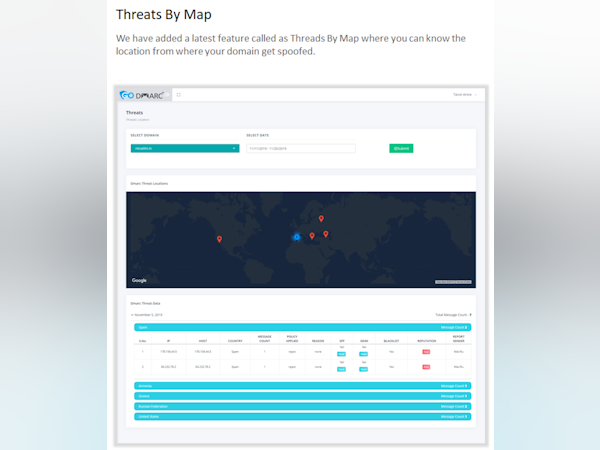
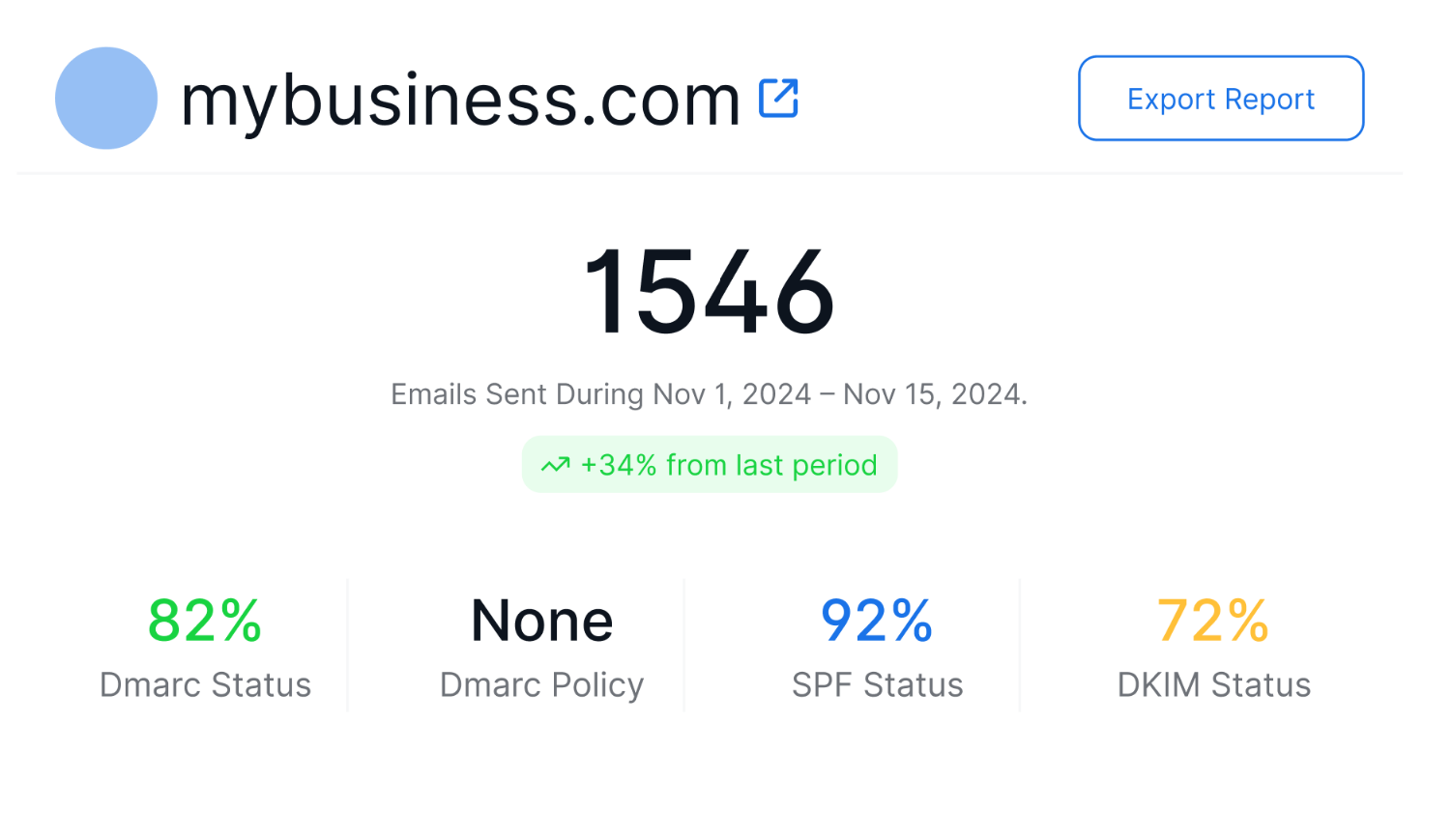
GoDMARC gave us more security context around spoofing, IP reputation, blacklist checks, and DNS history. DMARCLytics gave us a cleaner hosted DMARC and SPF path for day-to-day operations. Buyers should ask how much guided fix detail and automated issue detection they need, because raw visibility alone did not always turn the unknown sender into an owner and next action.
GoDMARC
Strong spoof investigation
Blacklist context included
Subdomain DKIM visible
DMARCLytics
Hosted SPF workflow
Unknown sender easier
Mailchimp drilldown clear
GoDMARC covered the core DMARC reporting jobs well across Microsoft 365, Google Workspace, SendGrid, and Mailchimp, especially when we drilled into the unauthorized spoof sample and the parked domain. The clean SPF domain-match pass and DKIM domain-match pass were visible without noise, and its IP reputation, blacklist and Whois views helped us separate a suspicious source from a legitimate support desk sender. The weaker point was source resolution: the SPF pass with visible-from mismatch and the DKIM pass on a subdomain were visible, but we still had to write the owner notes and remediation steps ourselves.
DMARCLytics felt broader in operator workflows because the hosted DMARC and SPF controls, policy wizard, smart alerts, and Guardian AI made weekly review easier. It grouped Microsoft 365 and Google Workspace cleanly, helped us review SendGrid and Mailchimp host activity, and made the unknown sender faster to classify. It also explained the forwarded-mail SPF failure more clearly, but its blocklist and blacklist checks were less central to the investigation flow than GoDMARC.
User experience
Control vs guidance
GoDMARC suits security reviewers. DMARCLytics is easier for operators.
GoDMARC gave us more investigative control once reports were flowing, but it expected the user to understand DMARC mechanics and source ownership. DMARCLytics made setup and explanation easier, especially for the unknown sender and forwarded mail case, although it had more places where plan names and tier wording needed double-checking.
GoDMARC
Three domains added cleanly
Unknown sender took drilling
Forwarding required explanation
DMARCLytics

Faster domain setup
Unknown sender clearer
Forwarding easier to explain
GoDMARC onboarding was workable across the corporate domain, marketing subdomain, and parked domain, but it felt like a security tool first. The DNS steps were clear enough for a technical admin, and the parked domain was easy to keep under watch. Finding the unknown sender required moving between aggregate reports, IP reputation, Whois, and DNS history, then writing our own explanation for why forwarded mail failed SPF while DKIM domain matching kept the message from being a clean spoof case.
DMARCLytics was faster to operate after the first week. Hosted DMARC and SPF management reduced the number of DNS changes we had to hand off, and the policy wizard made the route from monitoring toward quarantine easier to explain. The unknown sender was easier to triage because sender activity and host-level reports stayed closer to the main workflow, and the forwarded SPF failure was easier to describe to a non-specialist owner.
Support
Hands-on help vs self-serve flow
GoDMARC feels stronger for formal support handoff. DMARCLytics feels better for self-serve setup.
GoDMARC has the stronger support story for teams that expect managed help, escalation, and enterprise onboarding, though some help depends on tier and add-on choices. DMARCLytics reduced the need for support during basic setup, but larger teams should confirm SLA, dedicated engineer, and MSP package details before relying on it.
GoDMARC
Managed support path
DNS handoff was formal
Enterprise details need confirmation
DMARCLytics

Self-serve setup worked
Priority support on paid
SLA requires enterprise
GoDMARC support expectations matched a more managed buying motion. During setup, the DNS handoff notes were suited to a security or infrastructure team that wants review before changing production records. The public tiering made basic support visible, but dedicated support and enterprise onboarding needed plan confirmation, which matters when moving a primary corporate domain toward reject.
DMARCLytics needed less support for the first three domains because hosted record management and the wizard carried more of the setup work. The tradeoff appeared during escalation planning: enterprise onboarding, SLA support, and MSP or agency packaging were described as custom, and the naming conflict between Professional, Business, and Agency made procurement notes messier than the product workflow itself.
Suitability
Enterprise fit vs operator fit
GoDMARC fits security-led teams. DMARCLytics fits lean operators and smaller domain portfolios.
GoDMARC made more sense where enforcement decisions need security review, reputation context, and formal DNS handoff. DMARCLytics made more sense where a small team wants hosted records, recurring reporting, and fast owner explanations. MSP buyers should put account separation, client grouping, alert quality, and handoff notes high in the buying criteria, because those workflows decide whether a tool scales past a few domains.
GoDMARC
Enterprise review friendly
MSP handoff more manual
Reports need owner notes
DMARCLytics
SMB operator friendly
Client reporting easier
Custom MSP terms unclear
GoDMARC was strongest for an enterprise or security-led SMB that wants to review a primary corporate domain carefully before enforcement. Account separation and multi-user access were tier-sensitive, and recurring reports were useful only after we added our own owner notes. For MSP-style work, client handoff felt possible but not as purpose-built, because domain grouping and repeatable remediation notes required manual process around the product.
DMARCLytics was easier for an SMB or operator managing a moderate number of domains, especially when the marketing subdomain and support desk sender needed plain-language follow-up. Its team roles, hosted records, and recurring reporting made weekly client-style review easier. For MSPs and larger enterprise teams, the custom package language, pricing inconsistencies, and enterprise support details need confirmation before rollout.
What GoDMARC felt like after 90 days of real use
GoDMARC
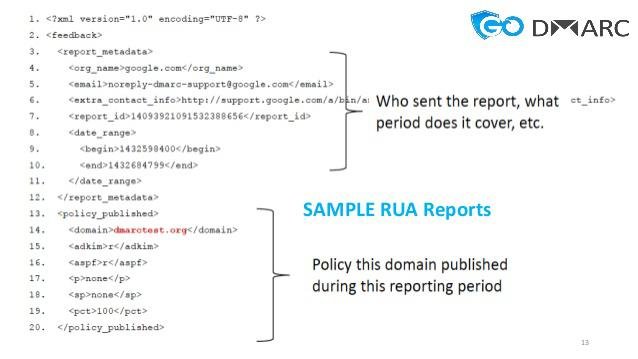
After 90 days, GoDMARC felt like a tool for teams that already know how they want to run DMARC enforcement. The primary corporate domain had enough detail for security review, the parked domain stayed visible without much noise, and the unauthorized spoof sample was easy to separate from legitimate sender traffic once we used the reputation and Whois views.
The daily friction came from turning report evidence into ownership. Microsoft 365 and Google Workspace were straightforward, but SendGrid, Mailchimp, the support desk sender, and the unknown sender needed manual notes before we had a clean remediation plan. The product gave us facts, but the operating process still depended on a capable admin.
Where it wins
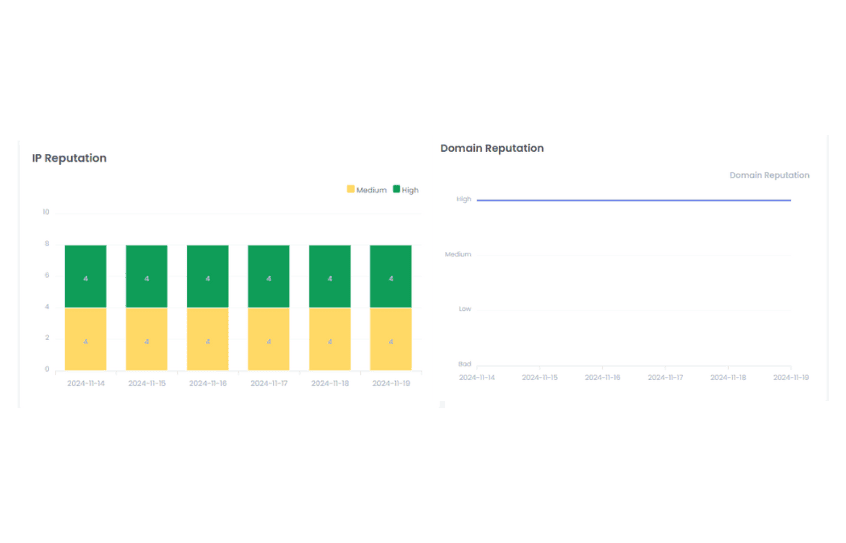
Useful spoof investigation context
Blacklist and Whois checks helped triage
Parked domain monitoring was practical
Strong fit for security review
Where it lags
Source ownership stayed manual
Hosted record management was missing
Support depth varies by tier
Pricing page has some conflicts
Pricing
Free plan available
Free tier
Yes
Onboarding
Technical but manageable
G2 rating
4.9 / 5
What DMARCLytics felt like after 90 days of real use
DMARCLytics
After 90 days, DMARCLytics felt more comfortable for weekly operations. Adding the corporate domain, marketing subdomain, and parked domain took less coordination because hosted DMARC and SPF controls reduced DNS edits, and the guided policy flow made quarantine planning easier to explain to non-specialist stakeholders.
Its best moments came during sender cleanup. Microsoft 365, Google Workspace, SendGrid, and Mailchimp were easier to review in host-level reports, the unknown sender took less time to classify, and the forwarded SPF failure was easier to explain. Its weak points were less about day-to-day use and more about buying confidence: public pricing language conflicted, and enterprise or MSP details needed confirmation.
Where it wins
Hosted DMARC reduced handoff
Sender activity was clear
Forwarded SPF failure explained well
Policy wizard helped progression
Where it lags
No G2 review base
Pricing language was inconsistent
Enterprise support needs confirmation
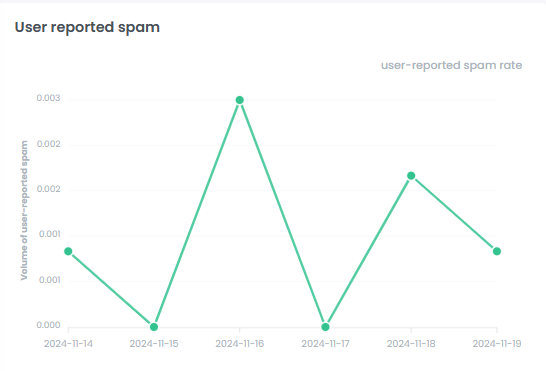
Reputation context was lighter
Pricing
From GBP 9.99 / month
Free tier
Trial; Starter wording conflicts
Onboarding
Fast and guided
G2 rating
0.0 / 5
Pricing
GoDMARC
DMARCLytics
Suped
Small
1 domain, up to 1k emails / month.
$0
GoDMARC Free covers 2 active domains and a published annual RUA allowance, though the public limit is inconsistent.
GBP 9.99 / month
DMARCLytics Starter lists 3 root domains and 150k monitored emails, but FAQ wording conflicts on whether Starter is free.
$0 / month
Free plan covers 1 domain and 1,000 monthly emails.
Medium
2 domains, up to 100k emails / month.
From $60 / month
Go-Basic is priced per active domain, so two active domains should be quote-confirmed even though emails are listed as unlimited.
GBP 30 / month
Professional or Business covers 10 root domains and 3 million monitored emails, with annual billing listed at 20% off.
Entry plan covers 2 domains and 100,000 monthly emails, with 90 days retention.
Large
10 domains, up to 1 million emails / month.
Not publicly listed as of May 15, 2026
GoDMARC Enterprise should be confirmed because public active-domain language conflicts between unlimited and 1 active domain.
GBP 30 / month
The public Professional or Business tier appears to fit 10 root domains and this volume band.
10 domains and 1,000,000 monthly emails, with 365 days retention.
Enterprise
Over 20 domains and 1 million emails / month.
Not publicly listed as of May 15, 2026
GoDMARC Enterprise has no fixed public price and requires confirmation for domain count, SSO, and support scope.
Custom
DMARCLytics Enterprise is custom for unlimited domains, high volume, dedicated engineer support, and SLA terms.
20 domains and 2,500,000 monthly emails, with 365 days retention. Unlimited domains/emails negotiable.
Pricing was checked as of May 15, 2026. GoDMARC Free, Go-Basic, and Go-Pro prices are public list prices, while GoDMARC Enterprise is not publicly listed. DMARCLytics Starter and Professional or Business prices are public GBP list prices, while Enterprise is custom; domain fit for larger GoDMARC scenarios is estimated because public tier language conflicts.
If you cannot decide between the two, maybe the answer is Suped
Suped
Get started
Turn sources into owners
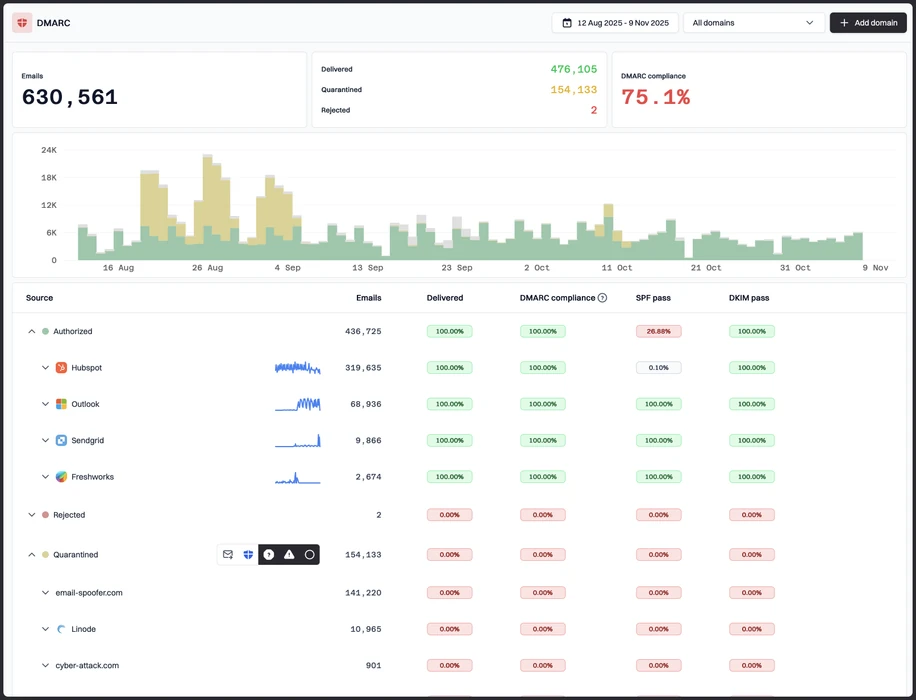
GoDMARC showed the unknown sender and authentication edge cases, but our team still had to write owner notes and remediation steps. Suped is built to identify sending sources and attach practical fixes to the issue.
Reduce DNS handoff friction
DMARCLytics helped with hosted DMARC and SPF, while GoDMARC leaned more on manual DNS process. Suped combines hosted records with guided fixes so policy movement does not depend on repeated ticket translation.
Make MSP review repeatable
Both products needed confirmation around scaled client workflows: GoDMARC around handoff process, DMARCLytics around custom MSP terms. Suped supports MSP workflows with per-domain pricing and reporting patterns designed for recurring client review.
The difference was significant. We moved from limited visibility to a much clearer dashboard. Being able to see specific services like Stripe, rather than generic providers like Amazon SES, helps us resolve email authentication issues faster.
Markus Hugenschmidt, Managing Director, Jam Cyber
Migrating from GoDMARC or DMARCLytics?
We have done the migration enough times to know the shape.
Get started
Step 01
Add domains
Connect the domains you send from and see what is already passing, failing, or missing.
Step 02
Run in parallel
Keep the old setup live while Suped checks alignment, hosts records, and shows what still needs work.
Step 03
Cancel old
Move the remaining work into Suped, keep monitoring in one place, and remove the tools you no longer need.
Frequently asked questions

How MONEYME proactively strengthens domain security and unlocks higher email engagement with Suped
See how MONEYME uses Suped
How cybersecurity specialist Jam Cyber delivers scalable DMARC protection with Suped
See how Jam Cyber uses Suped

How Vision Australia maintains full DMARC enforcement across a large domain portfolio with Suped
See how Vision Australia uses Suped

How The POP Team turns domain checks and DMARC visibility into client ready delivery work
See how The POP Team uses Suped

How DigiBean simplified DMARC monitoring and improved email security for their MSP clients
See how DigiBean uses Suped

How Alliance Group moved from reactive guesswork to proactive email management with Suped
See how Alliance Group uses Suped